Disclosure: This post contains affiliate links. If you book through our links, we may earn a small commission at no extra cost to you. Thanks for supporting Faceted Travel!
Table of Contents
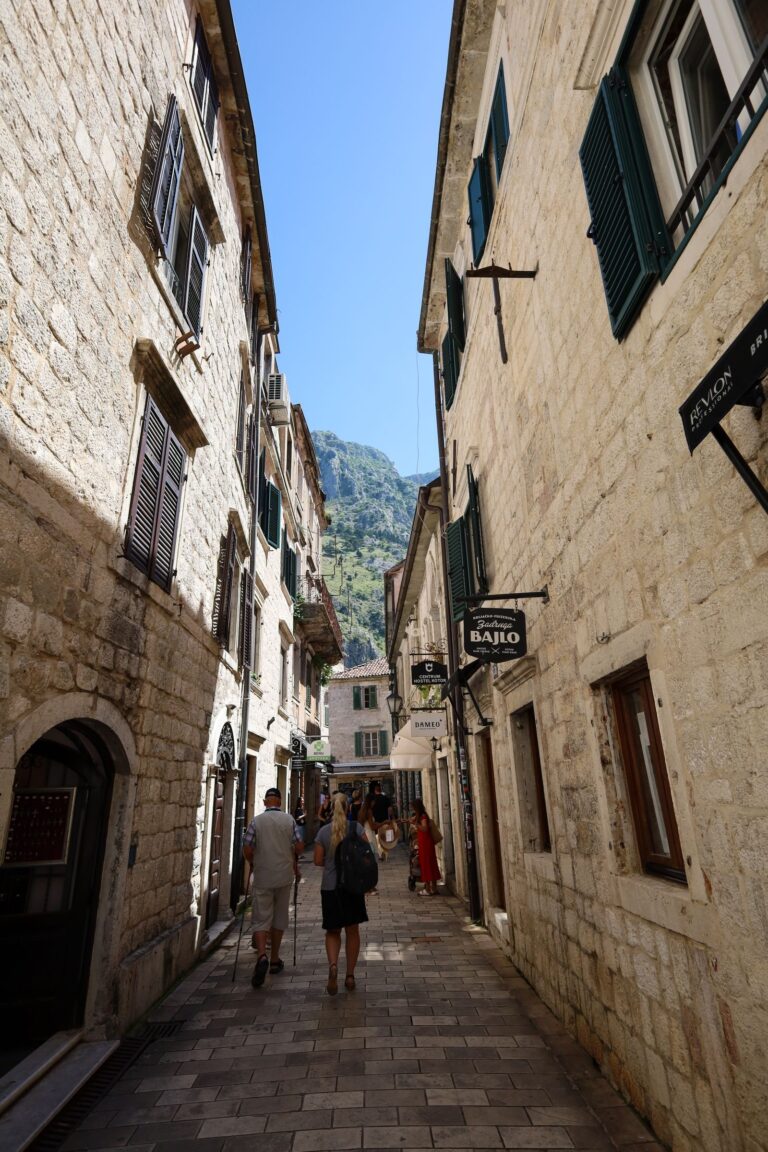
There are twenty five hairpin turns on the old road from Kotor up to Lovcen, and by number nine Kimberly had stopped taking photos and started holding the door handle. By number seventeen we had climbed high enough that the entire Bay of Kotor was laid out below us like a relief map, the cruise ships reduced to white grains of rice, and we pulled over at a gravel turnout and did not say much for a while.
That road is the reason to come. Lovcen National Park and the old royal capital of Cetinje sit an hour inland from the coast, and together they are the single best day trip in Montenegro that most visitors never make. They are where the country stops being a beach destination and starts being a place with a mountain-shaped soul, which is exactly how Montenegrins tend to describe it themselves.
Why This Pairing Makes Sense
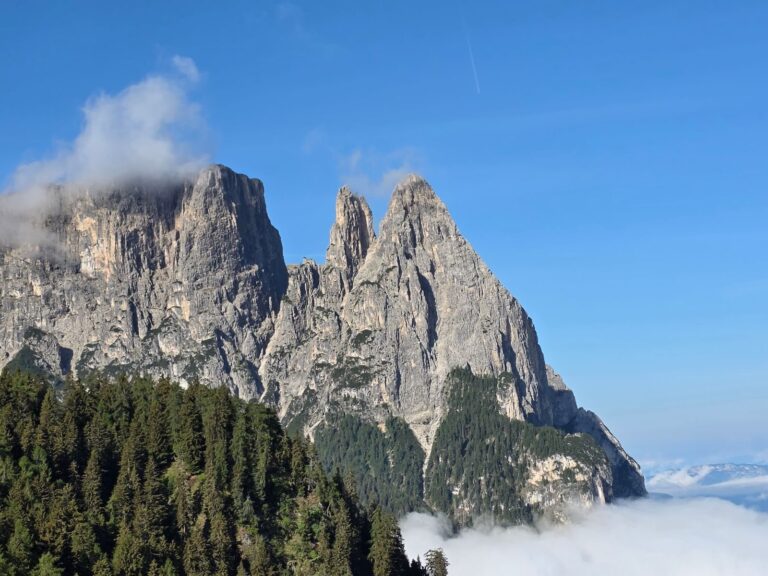
Lovcen is a national park built around two black-rock peaks, one of which gives the country its name. Montenegro, in Venetian, means black mountain, and this is the mountain. Cetinje sits at the park’s northeastern edge, a small town of about 14,000 that was the capital of the independent Kingdom of Montenegro until 1918 and still holds the palaces, monastery, and embassies from that era.
You can do both comfortably in one day from Kotor, Budva, or Podgorica. The park gives you the views and the mausoleum; Cetinje gives you the history and the lunch. Doing one without the other is a missed opportunity.
Driving the Serpentine Road
The old Kotor to Cetinje road, sometimes labeled the Kotor Serpentine or simply P1, is a single-lane switchback climb that gains around 900 meters in about 8 km of horizontal distance. It is paved, it is in decent condition, and it has low stone walls in most of the exposed places. It is also narrow enough that meeting a tour van means one of you is reversing.
A few honest notes. Drive it uphill from Kotor rather than downhill if you can, because uphill traffic has the inside line and better sightlines. Go early, before the tour vans start at around nine. Use low gear rather than riding the brakes. And if anyone in the car has a real fear of heights, take the newer road through Trojica and Njegusi instead, which is wider and only slightly longer.
The famous viewpoint is around the twenty-first turn, where the road doubles back and gives you the whole bay with the Verige Strait in the distance. There is space for four or five cars. If it is full, keep going, there is another turnout two minutes up.
Njegusi, and the Reason to Stop
About two thirds of the way up, the road passes through Njegusi, a village of stone houses on a high plateau that is the ancestral home of the Petrovic-Njegos dynasty. It is also, and this is not a small thing, the origin of njeguski prsut, the smoked and air-dried ham that shows up on every meze plate in the country.
Stop here. Several family-run places along the road serve a plate of prsut, njeguski sir (the local cheese, aged in oil), olives, and bread for around 10 to 15 euros, and it is one of the best simple meals in Montenegro. The combination of altitude, salt air from the Adriatic, and mountain air is what gives the ham its flavor, and eating it 40 minutes from where it was cured tastes noticeably different from eating it on the coast.
The Njegos Mausoleum on Jezerski Vrh
The centerpiece of Lovcen National Park is the mausoleum of Petar II Petrovic-Njegos, the prince-bishop, poet, and philosopher who is roughly Montenegro’s Shakespeare and George Washington combined. He asked to be buried on the mountain, and he is, at 1,657 meters on the peak called Jezerski Vrh.
Getting to it means climbing 461 steps through a tunnel cut into the rock. They are wide, evenly spaced, and lit, and there are landings to catch your breath. Take your time. At the top you emerge onto a terrace guarded by two enormous granite caryatids in traditional dress, and then into a chapel containing the black granite sarcophagus and a 28-ton statue of Njegos himself carved from a single block.
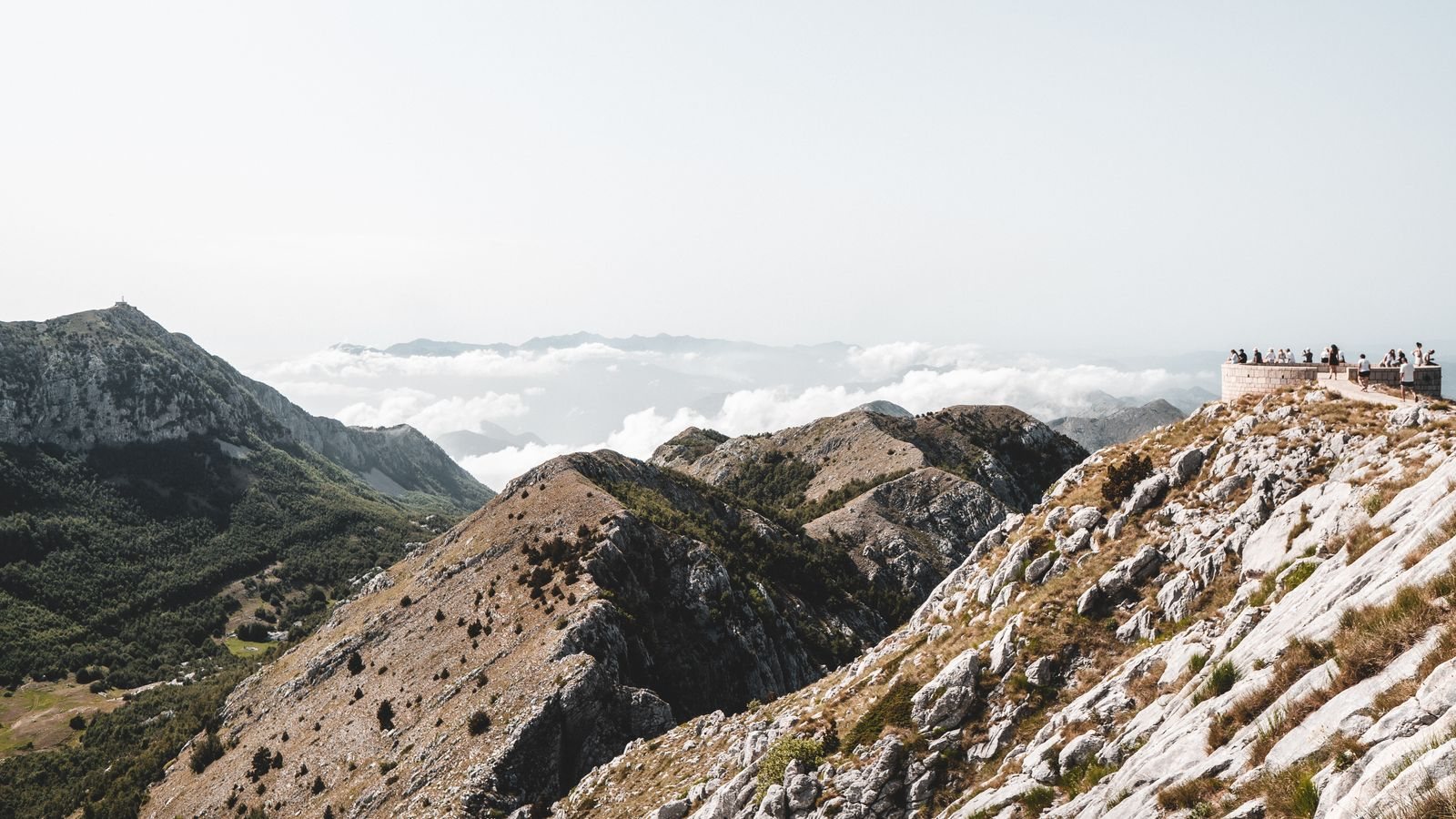
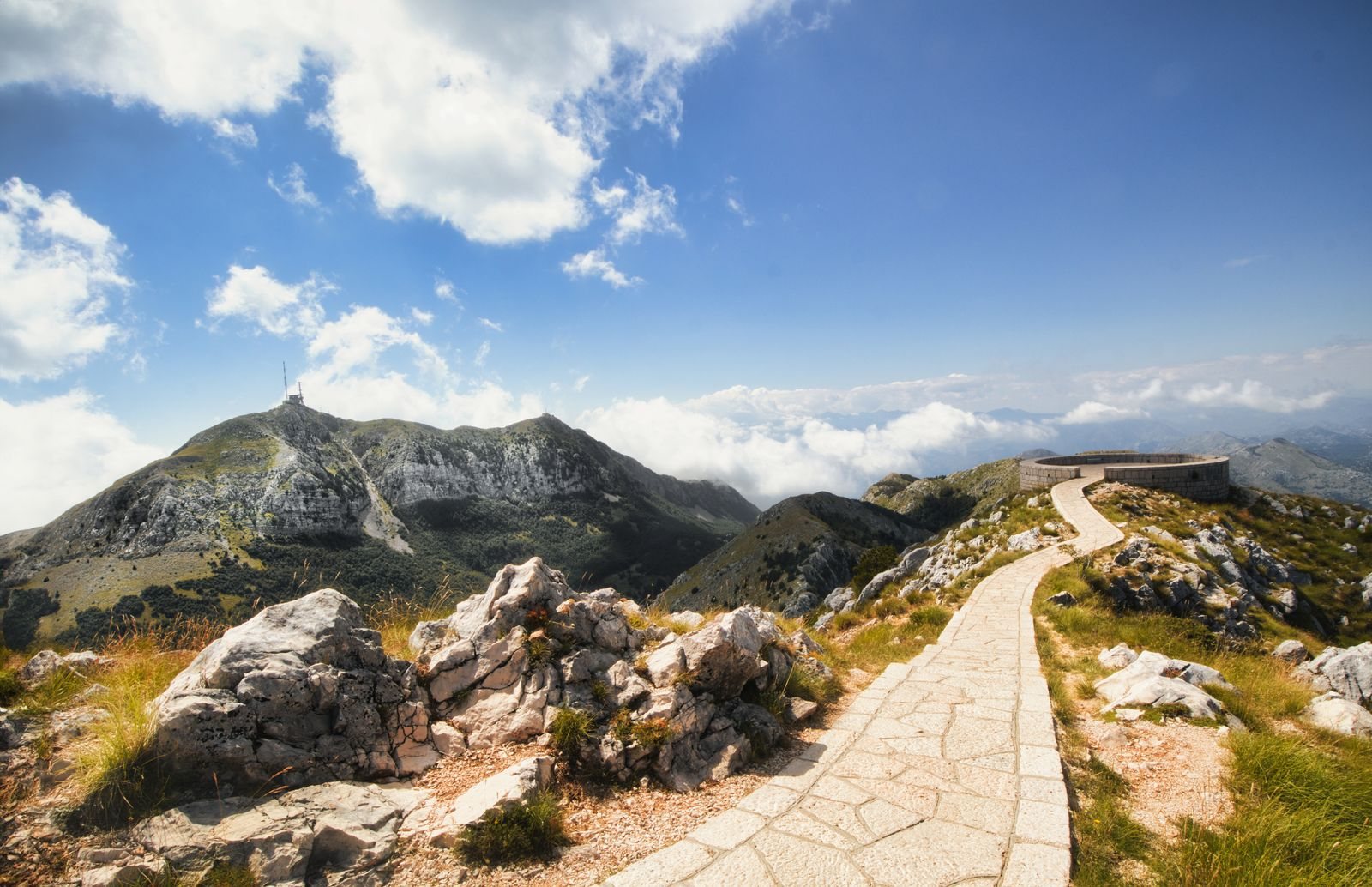
Behind the mausoleum, a circular viewing platform gives you what is genuinely one of the great panoramas in Europe. On a clear day you can see the Adriatic and the Bay of Kotor to the west, the Albanian Alps and Lake Skadar to the southeast, and the Durmitor massif to the north. We have been up twice and had the full sweep once. The other time we were inside a cloud, which was atmospheric in its own way but not what we drove up for.
Entry is around 5 euros for adults. Bring a layer. It is routinely 10 to 12 degrees cooler than the coast, and it is windy almost always.
Hiking and the Rest of the Park
Lovcen is not only the mausoleum. The park covers about 62 square kilometers of karst, beech forest, and high meadow, and it has a well-marked trail network.
Ivanova Korita is the small recreation area at the park’s center, with a visitor point, picnic areas, and the trailheads for most of the easier walks. It is a good place to leave the car.
The Kuk trail is a moderate two hour loop with wildflower meadows in June and long views south.
Stirovnik, at 1,749 meters, is the actual highest peak in the park, slightly taller than Jezerski Vrh but without the monument. It is a straightforward hike of roughly 90 minutes each way from Ivanova Korita and you will likely have it to yourself.
Spring here is remarkable. The meadows in late May and June are full of orchids and gentians, and the park has a genuinely unusual density of endemic plant species because of the way the Mediterranean and Alpine climates collide on the ridge.
Cetinje, the Old Royal Capital
Cetinje is a strange and lovely town. It was the seat of an independent kingdom for over four hundred years, which means a town the size of a large American high school has a former royal palace, a monastery holding significant relics, and a whole street of nineteenth-century embassy buildings from Russia, Britain, France, Italy, and Austria-Hungary. Most of them are now schools, ministries, and galleries.
King Nikola’s Palace is the standout. The interiors are largely intact, with the furniture, weapons, portraits, and medals of the last Montenegrin king, and the whole thing has the slightly melancholy feel of a small country that punched above its weight and then got absorbed. Around 5 euros.
Cetinje Monastery, founded in 1484 and rebuilt several times, is still an active Orthodox monastery and holds two relics of real significance: the right hand of St. John the Baptist and a fragment of the True Cross. Whatever you believe about relics, watching the reverence with which people approach them is genuinely moving. Dress modestly, cover shoulders and knees.
Biljarda, Njegos’s own residence, is named for the billiard table he had hauled up the mountain by donkey in the 1840s, which tells you a lot about the man. It now houses a museum about his life and work, and there is a superb relief map of Montenegro built by the Austro-Hungarians in 1917 in a pavilion behind it.
Have lunch on the main pedestrian street, Njegoseva. There are half a dozen cafes with outdoor tables and it is the kind of place where locals sit for two hours over one coffee, which we found ourselves doing too.
Practical Logistics
Getting there. From Kotor, the serpentine road takes about an hour to the park entrance. From Budva it is about 50 minutes via Cetinje on a normal road. From Podgorica it is about 40 minutes to Cetinje on a fast highway.
Park entry is charged per vehicle at the gates, roughly 2 to 5 euros depending on the season, and the mausoleum is a separate ticket.
Best route for a full day. Drive up the serpentine from Kotor in the morning, stop at Njegusi for prsut, do the mausoleum around midday, drive down to Cetinje for the palace and monastery in the afternoon, and return to the coast via the fast road through Budva. That way you drive the scary road once, uphill, in good light.
Season. The mausoleum is typically open May through October, with limited or no access in winter when the road can be snowed in. Cetinje is a year-round town.
What It Costs
This is an inexpensive day out. Park entry, mausoleum ticket, palace, and monastery together come to roughly 15 euros a person. Lunch in Njegusi or Cetinje is 10 to 20 euros. Fuel from Kotor and back is maybe 15 euros. Even with a guided tour it stays reasonable, and we lay out the full country-wide budget in how much does a trip to Montenegro cost.
If you would rather not drive the serpentine yourself, small-group day tours from Kotor and Budva run 40 to 70 euros and usually combine Lovcen and Cetinje with either Lake Skadar or the Bay.
Where to Stay
Most people do this as a day trip from the coast, and that is the right call for a first visit. If you want to stay, Cetinje has a handful of small guesthouses that are cheap and pleasant, and there are mountain lodges and eco-cabins around Ivanova Korita inside the park that are wonderful in summer and very quiet.
Staying up here for one night has one specific advantage: you get the mausoleum at opening, before the first tour van from Kotor arrives, and that is a completely different experience.
Where to Book
We book our Montenegro accommodation through Booking.com, which covers both the Cetinje guesthouses and the mountain cabins around Ivanova Korita. Availability inside the park is genuinely limited, so book early for July and August.
For guided Lovcen and Cetinje day tours from Kotor or Budva, including the ones that skip the driving entirely, we use Viator. If anyone in your group is nervous about the serpentine road, this is money well spent.
Our Honest Take
Montenegro’s coast is beautiful and busy. Lovcen and Cetinje are beautiful and empty, and they explain the country in a way the coast never quite does. Standing at the mausoleum with the Adriatic on one side and the Albanian Alps on the other, you understand why a nation that could have been absorbed a dozen times over kept insisting it was a nation.
Give it a full day. Do not try to squeeze it into an afternoon between beaches.
For more on building the trip around this, read how to plan a trip to Montenegro, our full Montenegro road trip itinerary, and the Kotor travel guide, since Kotor is where most people start the climb.