Disclosure: This post contains affiliate links. If you book through our links, we may earn a small commission at no extra cost to you. Thanks for supporting Faceted Travel!
Table of Contents
- Before You Start: Three Logistics Decisions
- Days 1 and 2: Ljubljana
- Days 3, 4 and 5: The Julian Alps
- Days 6 and 7: The Soca Valley
- Day 8: The Karst and the Caves
- Days 9 and 10: The Adriatic Coast
- The Shorter Versions
- Driving in Slovenia: What to Actually Expect
- What Each Stretch Actually Costs
- When to Drive This Route
- Where to Book
- Our Honest Take
Slovenia is the only country we have driven where you can wake up under alpine peaks, eat lunch in a cave region, and swim in the Adriatic before dinner. The whole place is about the size of New Jersey, the roads are excellent, and almost nothing is more than two hours from anything else.
That compactness is also the trap. Because everything is close, first-time visitors try to base in one spot and day-trip to all of it, and they end up spending their week in the car looking at the same stretch of motorway. We did exactly that on our first trip.
This is the loop we drive now. Ten days, four bases, roughly 700 kilometers total, arranged so that you are unpacking four times instead of ten and every drive is under two hours.
Before You Start: Three Logistics Decisions
Buy the vignette. Slovenian motorways require a toll sticker. A one-week vignette is around 16 euros and a monthly is around 32. Rental cars from Ljubljana usually have one already, but confirm. Cars rented in Italy, Austria or Croatia usually do not, and the fines are steep. Buy at any border petrol station.
Rent the smallest car you can live with. Village lanes and the Vrsic Pass hairpins are not the place for a large SUV. Manual transmissions are the default and much cheaper.
Fly into Ljubljana if you can, Venice or Zagreb if you cannot. Ljubljana airport is small and 25 minutes from the city. Venice Marco Polo is roughly three hours away and often much cheaper, and it lets you tack on a night in Venice at either end.
We go deeper on all of this in how to plan a trip to Slovenia.
Days 1 and 2: Ljubljana
Start in the capital, partly because it is where your car and your jet lag are, and partly because Ljubljana is the most underrated small capital in Europe.
The old town is pedestrianized, the Ljubljanica river runs through the middle of it lined with cafes, and the whole center can be walked in an afternoon. Ride the funicular to the castle for the view, wander the Central Market, cross the Triple Bridge and the Dragon Bridge, and then do the thing the city is actually for: sit by the river with a drink and watch the evening happen.
Day 1: arrive, settle in, walk the old town, dinner riverside.
Day 2: castle in the morning, Tivoli Park or the Metelkova street-art quarter in the afternoon, and consider a half-day out to Skocjan Caves if you want to split the two cave systems apart rather than doing them back to back.
Do not take the car out of the garage. Ljubljana’s center is closed to traffic and parking is a nuisance. Two nights here, car parked, is the right call.
Full detail in our Ljubljana guide.
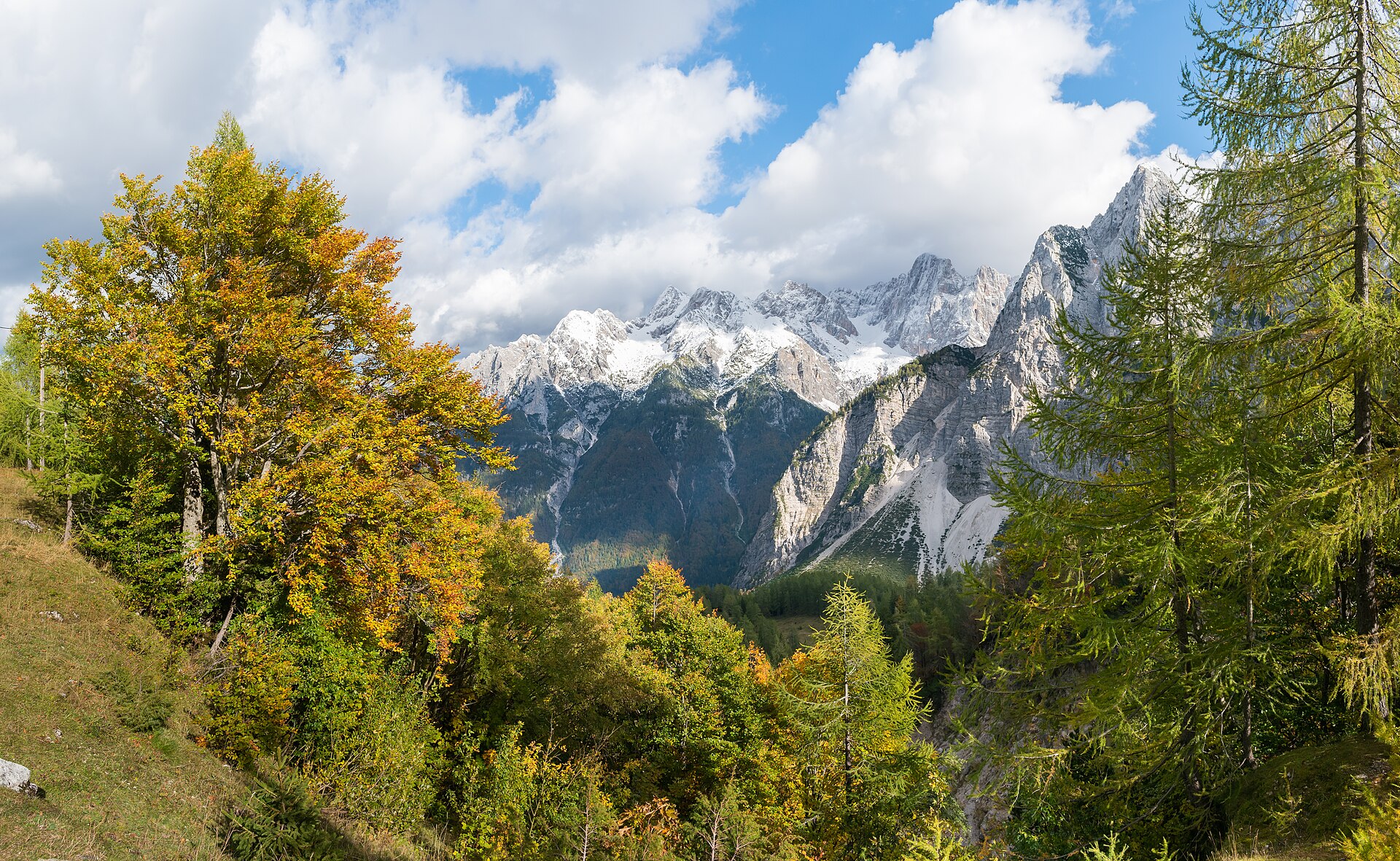
Days 3, 4 and 5: The Julian Alps
Drive north. Ljubljana to Lake Bled is 40 minutes, and Bled to Lake Bohinj is another 30.
Here is the single most useful piece of advice in this whole itinerary: see Bled, sleep in Bohinj. Bled is genuinely beautiful and genuinely overrun. Arrive before 9am, walk the lake path, take the pletna boat to the island, ring the bell, eat a cream cake, and be gone by lunchtime. Our Lake Bled guide covers how to do it without the crush.
Then base yourself at Bohinj for three nights. It is bigger, quieter, cheaper, and it sits inside Triglav National Park.
Day 3: morning at Bled, afternoon transfer to Bohinj, easy evening walk from Ribcev Laz.
Day 4: Vogel cable car early for the panorama, then the Savica waterfall, then swim in the lake. Or walk the full 12-kilometer lake loop, which is one of the best free things to do in the country.
Day 5: the Mostnica Gorge walk from Stara Fuzina in the morning, then drive the Vrsic Pass in the afternoon if it is open (typically late May through October). Fifty numbered hairpins over the highest pass in Slovenia, with the Russian Chapel near the bottom and views that make you stop constantly. Give it a full half-day, not ninety minutes.
Our Lake Bohinj guide has the full breakdown of where to stay in the valley.
Days 6 and 7: The Soca Valley
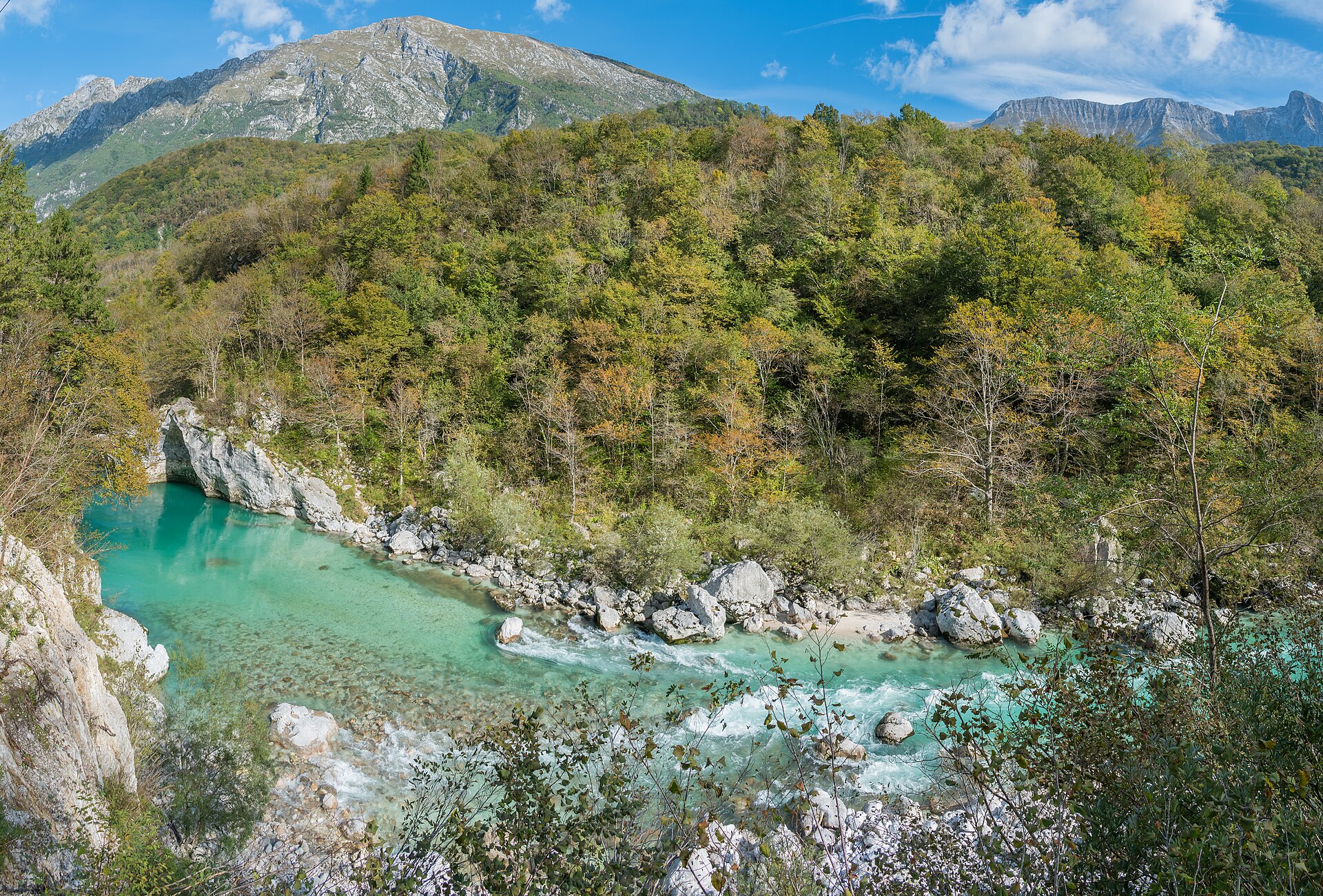
If you drive the Vrsic Pass, it dumps you straight into the Soca Valley, which is where we would send anyone who thinks they have already seen the best of Slovenia.
The Soca river is a shade of turquoise that photographs look edited. The valley runs from Bovec in the north through Kobarid to Tolmin, all of it framed by limestone peaks, all of it far less visited than the lakes.
Day 6: base in Bovec or Kobarid. Walk the Soca Trail sections near Bovec, see the Great Soca Gorge, and if you have the appetite, this is the best whitewater rafting and kayaking in the country.
Day 7: the Kozjak waterfall walk near Kobarid (short, easy, and the most beautiful waterfall in Slovenia in our opinion), plus the Kobarid Museum, which tells the story of the First World War Isonzo Front and is far better than a small-town museum has any right to be.
Two nights is right. One is possible if you are tight, but you will feel it.
Day 8: The Karst and the Caves
Drive south. Bovec to Postojna is roughly two hours, and this is the longest leg of the trip.
Spend the day on the caves and the castle. Take the earliest Postojna Cave tour you can get, ride the underground train, walk the chambers, meet the olm, then drive nine kilometers up the road to Predjama Castle, wedged into a cliff face. Our full Postojna Cave and Predjama Castle guide has the ticketing and timing detail.
If you would rather have the UNESCO underground river canyon, swap in Skocjan Caves instead, 35 minutes further southwest. Do not do both on the same day. They blur.
Sleep in Postojna, in the Karst wine villages, or push on to the coast, which is only another 45 minutes.
Days 9 and 10: The Adriatic Coast
Slovenia’s coastline is 46 kilometers long. It is also completely charming, and most itineraries skip it entirely.
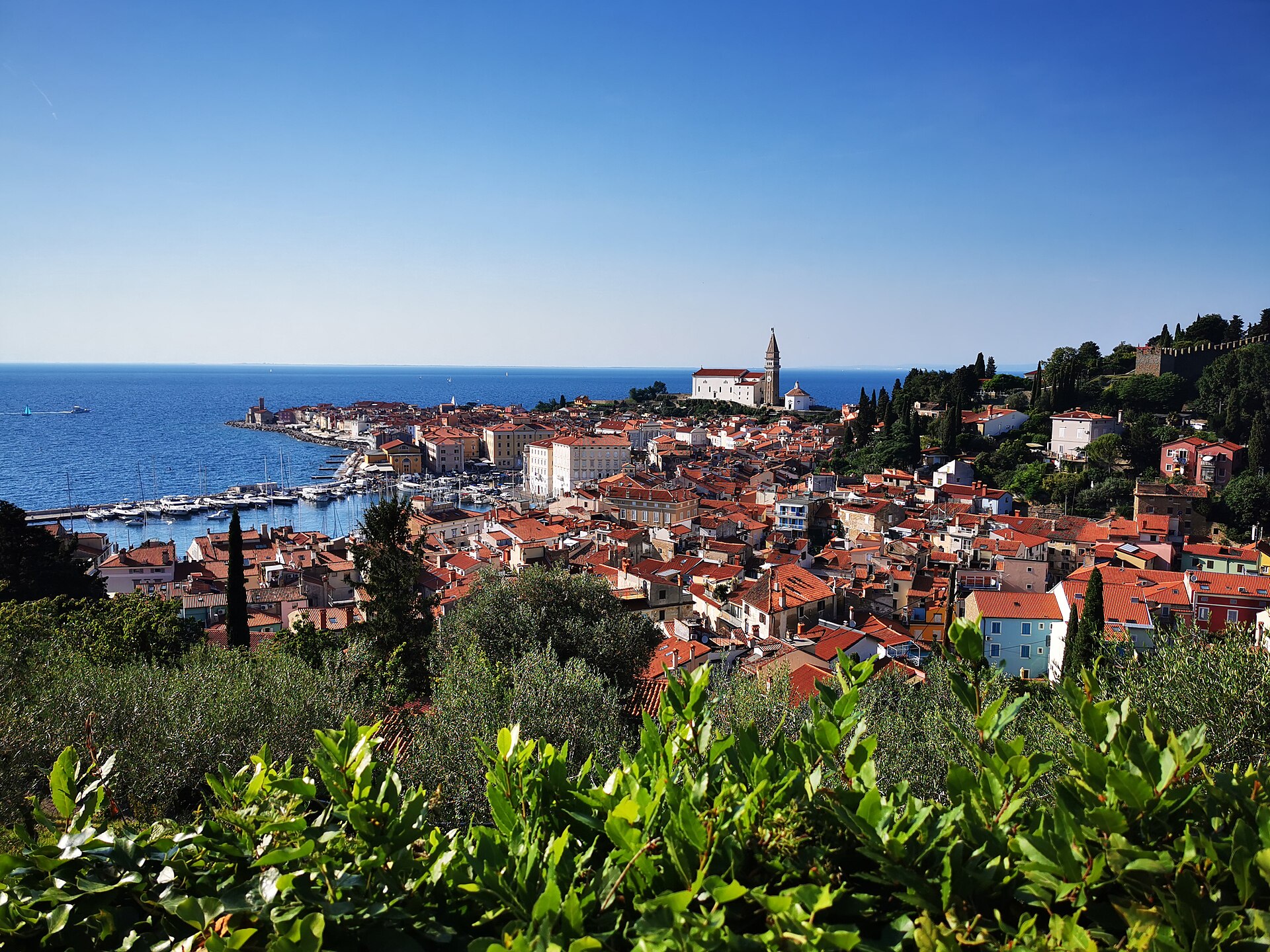
Piran is the reason to come: a Venetian-era town on a peninsula, marble main square, bell tower you can climb, seafood restaurants along the waterfront, and the kind of narrow-lane old town that rewards getting lost. Park in the Fornace garage outside town and take the free shuttle in, because driving into Piran is not really an option.
Day 9: arrive, climb the St George’s bell tower for the view down the peninsula, swim off the rocks, and eat grilled fish and Malvazija wine at sunset.
Day 10: morning in Piran, or drive up to the Karst for a wine tasting, or take the coastal path to Portoroz. Then it is 75 minutes back to Ljubljana airport.
Our Piran guide covers the details.
The Shorter Versions
Seven days: Ljubljana 2, Bohinj 3 (with Bled as a morning), Postojna and the coast 2. Drop the Soca Valley. It hurts, but it is the cleanest cut.
Five days: Ljubljana 2, Bohinj 2, one long day covering Postojna and Predjama on the way to the airport. No coast.
Two weeks: add Maribor and the Styrian wine country in the east, Goriska Brda for wine, and either the Dolomites or a few days on the Croatian side of Istria. Slovenia links to Rovinj and Istria in about two hours from Piran, which makes a combined loop very easy.
Driving in Slovenia: What to Actually Expect
The driving is the easy part of this trip, which surprises people who picture alpine roads and brace for something harder.
The motorways are excellent and the speed limit is 130 km/h. Signage is clear, and most signs use international symbols alongside Slovenian.
Headlights are required at all times, day and night, year round. Rental cars usually handle this automatically, but check.
Winter tires or chains are legally required from mid-November through mid-March, and the police do enforce it.
Village roads narrow fast. Two-way lanes in places like Stara Fuzina or the Karst wine villages are genuinely one car wide with pullouts. Slow down and be patient.
Parking in old towns is either impossible or paid. Ljubljana, Bled and Piran all want you in a garage on the edge of town. Piran in particular has no realistic on-street option in summer.
Alcohol limits are strict, 0.05 percent, and lower for new drivers. The wine regions are wonderful and they are also a reason to have a designated driver or stay the night.
Fuel is widely available on the motorways and thinner in the Soca Valley and over the Vrsic Pass, so fill up in Bovec before you climb.
What Each Stretch Actually Costs
Slovenia is the best value week in western Europe right now, and the numbers are worth knowing.
Fuel: roughly 90 to 120 euros for the full 700-kilometer loop.
Vignette: 16 euros for a week.
Accommodation: 70 to 130 euros a night for a good mid-range double, less in Bohinj villages and Postojna, more in Bled and Piran in August.
Meals: 12 to 20 euros for a main outside Ljubljana, 15 to 25 in the capital and on the coast.
Attractions: Postojna plus Predjama combined around 45 euros, Vogel cable car around 27 euros return, Bled pletna boat around 20 euros.
The full breakdown is in how much does a trip to Slovenia cost.
When to Drive This Route
June and September are the sweet spot. Everything is open, the Vrsic Pass is reliably clear, the lakes are warm enough to swim, and the crowds are manageable.
July and August are hot, busy and expensive, and Bled genuinely suffers. The coast is at its best though.
May and October are lovely and cheaper, but check the Vrsic Pass status, because snow closes it at both ends of the season and that changes the whole routing.
Winter turns this into a different trip entirely: Ljubljana’s Christmas market, skiing at Vogel, and the caves at their quietest. The coast and the Soca Valley are largely shut.
Timing detail is in best time to visit Slovenia.
Where to Book
- Accommodation: we book the whole loop through Booking.com’s Slovenia listings, filtering for free parking at every stop outside Ljubljana and Piran.
- Cave tickets, cable cars, rafting and guided days: Viator’s Slovenia listings cover Postojna, Bled, Soca rafting and transfers if you want a carless version of parts of this.
- Travel insurance: mountain driving, alpine hiking and a rental car make this a trip we would not do uninsured. Our reasoning is in best travel insurance for Europe.
Our Honest Take
Ten days is the right length for Slovenia and almost nobody gives it that. The country gets treated as a two-day stopover between Venice and Croatia, and the people who do that come away thinking it is a nice lake with a church on an island.
Drive this loop instead. Four bases, short hops, and by the end you will have seen alpine peaks, a turquoise river, a cave system with its own railway, a castle in a cliff, and a Venetian town on the Adriatic, all within a country you can cross in three hours.
The one thing we would change about our own trips: sleep in Bohinj rather than Bled, and give the Soca Valley the two nights it deserves. Those two decisions turn a good Slovenia trip into a great one.
Keep planning: start with how to plan a trip to Slovenia, read our Lake Bohinj and Ljubljana guides for the two anchors of the route, and if you are extending into Croatia, our Istria food and wine guide picks up right where Piran leaves off.