Disclosure: This post contains affiliate links. If you book through our links, we may earn a small commission at no extra cost to you. Thanks for supporting Faceted Travel!
Table of Contents
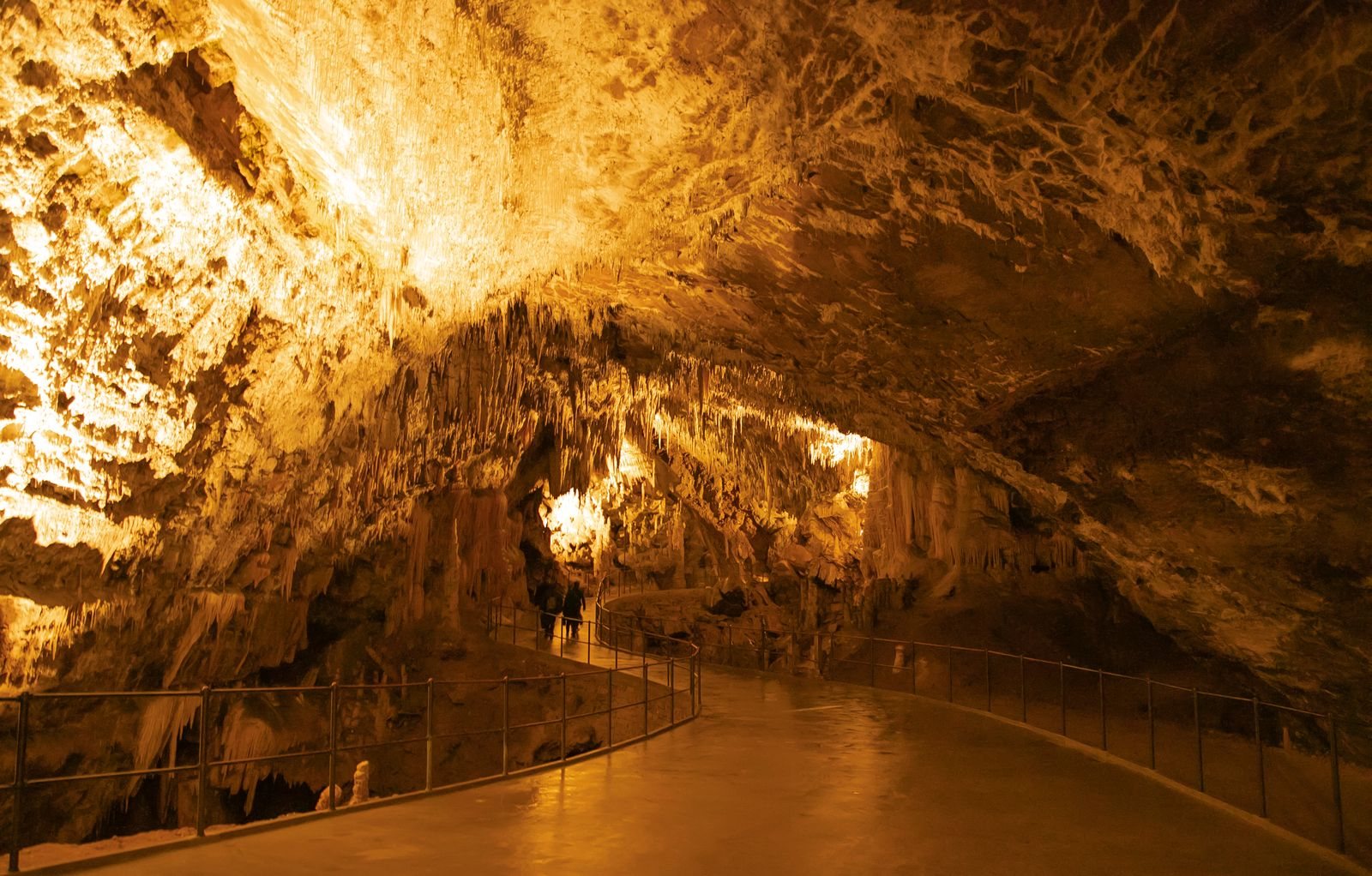
We almost skipped Postojna. It was the most heavily marketed thing in Slovenia, the parking lot looked like a theme park, and we had convinced ourselves it would be a tourist trap. Then a small electric train carried us two kilometers into a mountain, the walls opened into a chamber the size of a cathedral, and we spent the next ninety minutes with our mouths open.
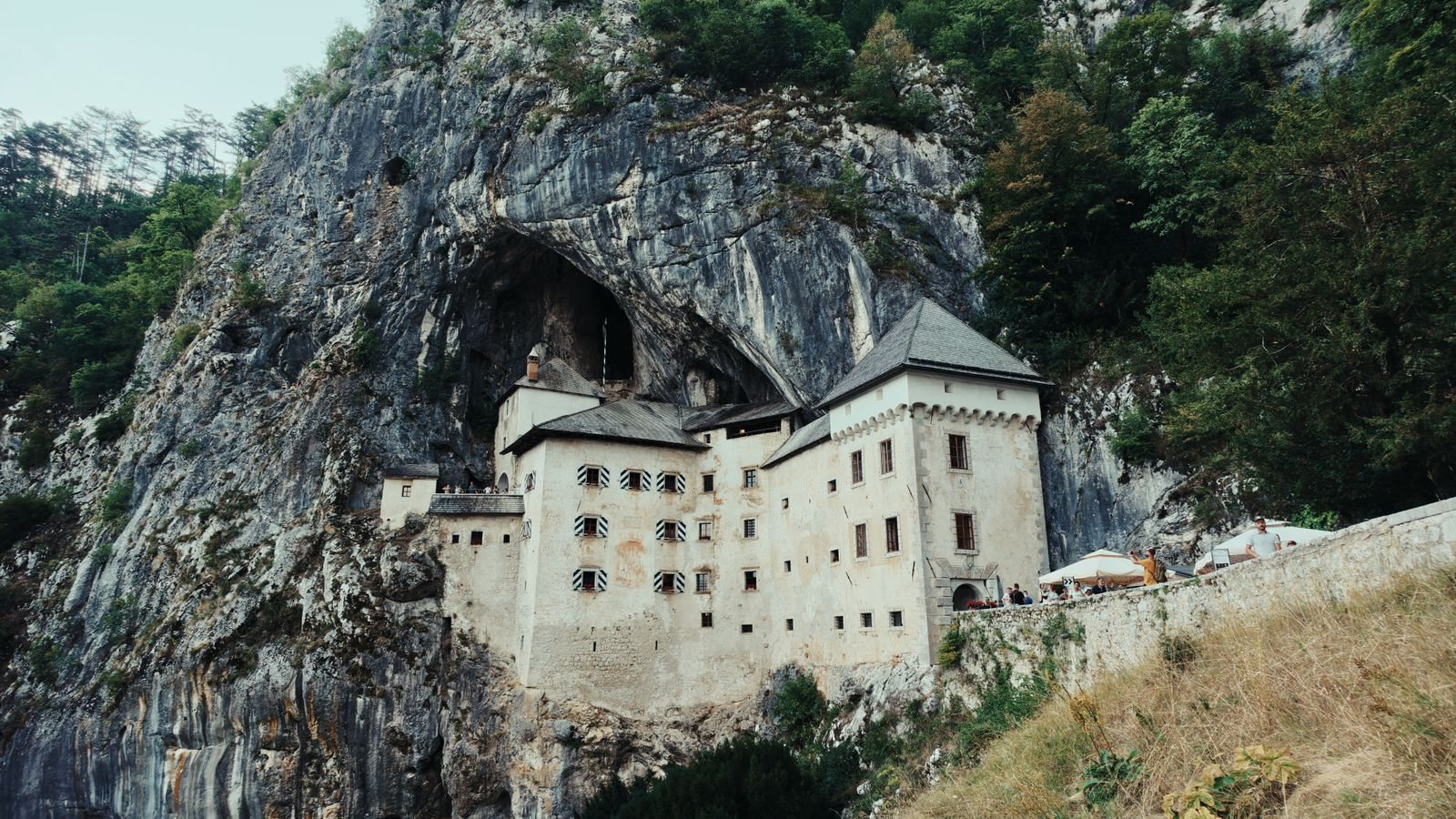
Postojna Cave is genuinely one of the most impressive things we have seen in Europe, and Predjama Castle, nine kilometers up the road, is the perfect companion to it: a Renaissance fortress built directly into the mouth of a cliff cave, looking like something invented for a film set.
Together they make the best half-day in southwestern Slovenia. Here is how to do them properly, what tickets to buy, and the mistakes that cost us time on our first visit.
Postojna Cave: What You Are Actually Seeing
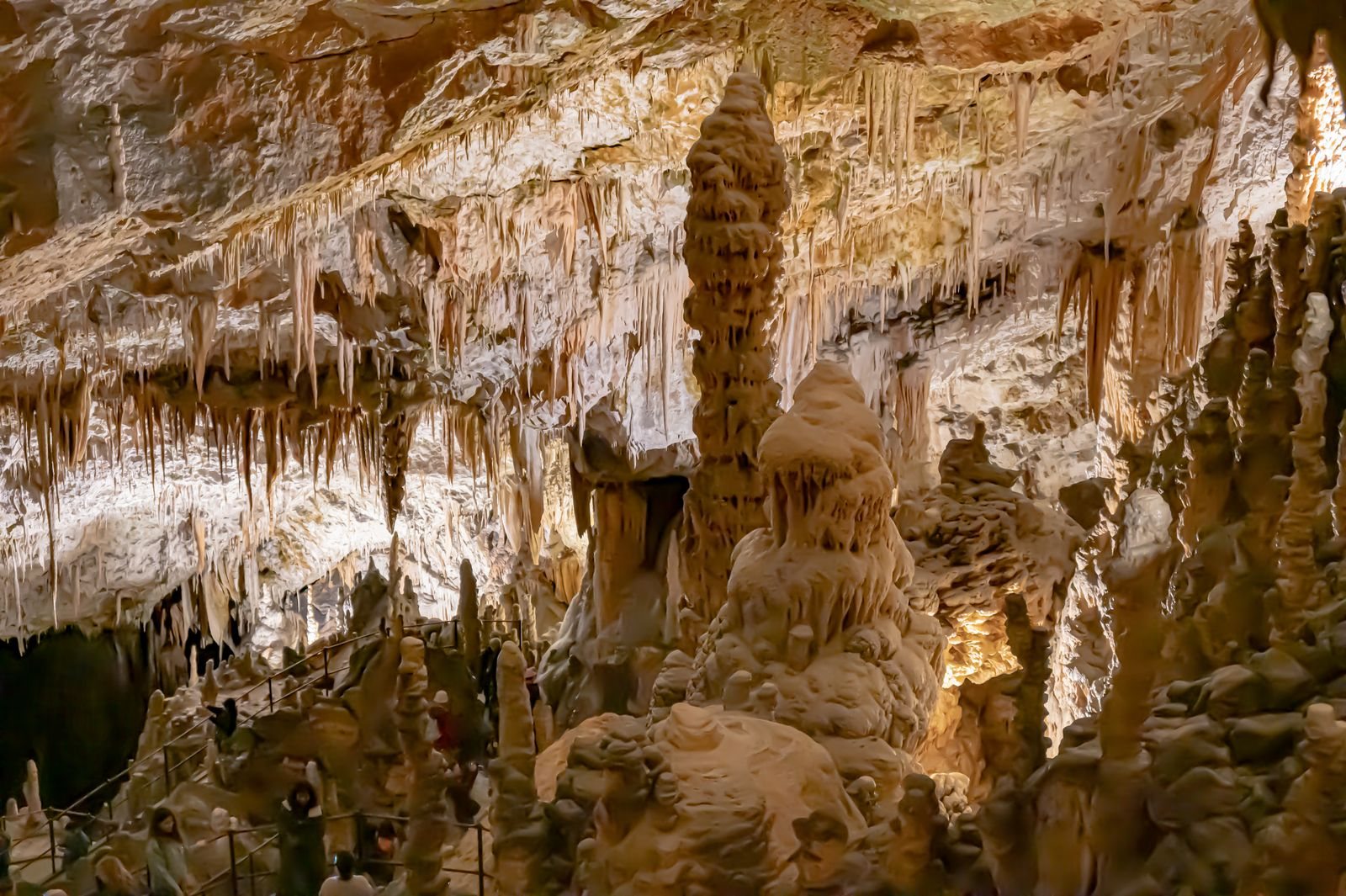
Postojna is a karst cave system carved by the Pivka river over roughly two million years. The full network runs more than 24 kilometers. The visitor route covers about five of those, and it is the only cave in the world with a permanent underground railway.
That railway is the part nobody prepares you for. You board an open electric train at the entrance and ride roughly ten minutes deep into the mountain, ducking under low rock, passing chambers lit in sequence as you go. It is fast, it is loud, and it is a genuinely thrilling piece of Victorian-era engineering (the first tracks went in during the 1870s).
The train drops you at the start of a 1.5 kilometer walking loop through the most decorated chambers. The highlights come in order:
The Spaghetti Hall, hung with thousands of impossibly thin white straw stalactites.
The Russian Bridge, built by prisoners of war in 1916, spanning a chasm between two chambers.
The Beautiful Caves, a corridor of red and white formations that is the most photographed stretch of the route.
Brilliant, a five-meter pure white stalagmite that has become the symbol of the whole system.
The Concert Hall, a chamber that seats 10,000 people and has hosted actual orchestras. This is also where the tour ends and where you catch the train back out.
There is one more thing you should not miss: the olm, or human fish. It is a blind, pale, cave-dwelling amphibian that lives up to a hundred years and can survive a decade without eating. There is a live vivarium near the end of the walking route. It is a strange, slightly haunting animal and it is found almost nowhere else on earth.
Practical Details for Postojna Cave
The tour lasts about 90 minutes door to door: 10 minutes in on the train, 60 minutes walking, 10 minutes back out, plus queuing.
It is 10 degrees Celsius year round. That is 50 Fahrenheit, and it feels colder than it sounds because the humidity is near 100 percent. We saw people in August in shorts and t-shirts genuinely miserable by the halfway point. Bring a jacket. Rental capes are available at the entrance if you forget.
Wear real shoes. The path is paved but permanently damp and slick in places.
Tours run on a fixed schedule in multiple languages, roughly hourly in low season and every half hour in summer. You get an audio guide device rather than a live guide for most of it.
Book online in advance in July and August. Time slots do sell out, and the walk-up line at the ticket hall can be forty minutes on a wet afternoon.
The walking route is largely accessible and there is a step-free option, but confirm at the ticket desk when you arrive.
Photography is allowed without flash. Bring a phone that handles low light, because it is genuinely dark and the lighting is dramatic rather than bright.
Predjama Castle: The Fortress in the Cliff
Nine kilometers from Postojna, the road climbs into a small valley and then you see it: a four-story castle wedged into a 123-meter limestone overhang, with a cave system running out the back of it.
Predjama has been in that cliff in some form since the 13th century. The current Renaissance building dates to the 1570s. The reason it exists there is straightforward and brilliant: the cave behind it provided water, storage, and a secret escape route, which made the fortress nearly impossible to starve out.
Its most famous resident was Erazem Lueger, a 15th-century robber baron who held out against an imperial siege for over a year. The legend is that he taunted his besiegers by throwing fresh cherries down at them, food he was resupplying through the cave tunnels. He was eventually killed, according to the story, when a bribed servant signalled the exact moment Erazem visited the castle’s outhouse, which took a direct cannon hit.
The interior is a self-guided audio tour through about twenty rooms across four levels: the chapel, the great hall, the kitchen, the dungeon, and the cave passages at the top that were the entire strategic point of the place. It takes 45 minutes to an hour.
Even if you skip going inside, drive up for the exterior. The view of the castle from the parking area is the shot everyone comes for, and it is free.
How to Combine Them in One Day
This is the part we got wrong the first time. Here is what we would do now.
Buy the combined Postojna plus Predjama ticket. It saves roughly 20 percent over separate tickets and it is sold at the Postojna ticket hall or online.
Take the earliest cave tour of the day. The 9am or 10am slot is meaningfully quieter, the train is less crowded, and you get better photographs without a wall of people in them.
Drive to Predjama afterward. It is a ten-minute drive and there is a shuttle in summer if you are carless. Arriving around midday is fine because Predjama is never as busy as the cave.
Budget four to five hours total, including lunch. That is a comfortable half-day, and it leaves the afternoon for Ljubljana, the coast, or Lake Bled.
There is also a Predjama cave tour offered separately in summer, taking you into the passages behind the castle. It is a good add-on if you have caving enthusiasm left after Postojna, but it is not essential.
Postojna vs Skocjan: Which Cave Should You Pick?
If you only have time for one cave in Slovenia, this is the real decision.
Postojna is the spectacle. It is bigger in terms of visitor experience, it has the train, it has the most decorated chambers, and it is the easier visit with kids or limited mobility. It is also busier and more commercial.
Skocjan, about 35 minutes southwest, is the one that stays with you. It is a UNESCO World Heritage site built around an enormous underground river canyon, with a footbridge 45 meters above the water in a chamber so large that the far walls disappear into the dark. There is no train, no photography on the main route, and a lot more stairs.
Our honest take: Postojna is more impressive to look at, Skocjan is more impressive to stand in. If you can do both, put a day between them so they do not blur together, which is a mistake we made and describe in how to plan a trip to Slovenia. If you can only do one and you have kids, choose Postojna. If you want the memory, choose Skocjan.
Getting There
Postojna sits almost exactly halfway between Ljubljana and the Slovenian coast, right off the A1 motorway, which makes it a natural stop rather than a detour.
From Ljubljana: 50 minutes by car, about 55 kilometers. There are also frequent buses to Postojna town plus a shuttle or a 25-minute walk to the cave.
From Piran or Portoroz: about an hour. This pairs beautifully with a coastal stay, which we cover in our Piran guide.
From Lake Bled or Bohinj: roughly 90 minutes.
From Trieste, Italy: about an hour.
From Rijeka or the Istrian coast of Croatia: 90 minutes to two hours, which makes it an easy stop if you are linking Slovenia with Rovinj and Istria.
Parking at the cave is paid and plentiful. Parking at Predjama is free.
Where to Eat
The Postojna complex has a large restaurant and several fast-food style counters. It is fine, it is convenient, and it is priced for a captive audience.
We would rather drive into Postojna town, five minutes away, where there are proper local restaurants at Slovenian rather than attraction prices. Look for jota, grilled meats, and the regional pršut (air-dried ham from the Karst), which is excellent here and pairs with the Teran red wine grown on the same limestone.
Expect 12 to 20 euros for a main in town, noticeably more inside the complex.
Practical Tips
Combined tickets are the only sensible way to buy if you are doing both sites.
Bring a warm layer regardless of season. We cannot say this enough.
The last cave tour is usually mid-afternoon in winter, as early as 3pm. Check the day’s schedule before you build an itinerary around it.
Both sites are busiest between 11am and 2pm with coach groups from Ljubljana and cruise passengers from Trieste and Koper.
Allow extra time in summer for the shuttle and the ticket queue.
Where to Book
- Accommodation: Booking.com’s Slovenia listings cover Postojna town, which is a cheap and practical overnight if you want the first cave tour of the day.
- Cave tours, combined tickets and day trips from Ljubljana: Viator’s Slovenia listings include Postojna and Predjama packages with transport, which is the easy answer if you are not driving.
- Travel insurance: our thinking on why we carry it in Europe is in best travel insurance for Europe.
Our Honest Take
Postojna is commercial and it is still worth it. The train ride into the mountain is unlike anything else we have done, the chambers are genuinely enormous, and the olm alone justifies the ticket. Yes, there is a gift shop. There is also two million years of geology behind it.
Predjama is the better story and the better photograph, and it takes an hour. Doing them separately would be a waste of a good pairing.
Our one piece of real advice: book the earliest slot of the day, bring a jacket, and do not try to add Skocjan to the same afternoon. Give this half a day, do it properly, and then go get lunch in Postojna town rather than in the complex.
Keep planning your Slovenia trip: work out the route with how to plan a trip to Slovenia, price it with how much does a trip to Slovenia cost, and pick your dates with best time to visit Slovenia.