Disclosure: This post contains affiliate links. If you book through our links, we may earn a small commission at no extra cost to you. Thanks for supporting Faceted Travel!
Table of Contents
The first thing that surprised us about Madeira was the vertical. We had pictured a mellow Atlantic island with beach chairs and a cocktail menu, and instead we landed on a volcanic wall rising 6,000 feet out of the ocean with villages glued to the sides of it. Within an hour of leaving the airport we were driving through a cloud, and twenty minutes later we were above the cloud looking down at it.
Madeira is Portugal, but it does not feel like the mainland. It sits closer to Morocco than to Lisbon, it is subtropical, and it rewards people who like hiking, dramatic viewpoints, and food that has not been sanded down for tourists. If you have already worked through the mainland highlights in our Porto travel guide and Sintra travel guide, this is the natural next chapter.
Here is everything we wish we had known before we went.
Why Madeira Is Worth the Extra Flight
Madeira takes effort. It is a 90 minute flight from Lisbon or a longer haul from most of Europe, and the airport has a famous runway built out on stilts over the ocean. That effort filters the crowds in a way that we appreciated immediately.
What you get in return is an island that packs an absurd amount of variety into 35 miles. In one day we walked a misty laurel forest that has been growing since before the last ice age, ate grilled limpets at a seaside shack, and watched the sun set from a cliff nearly half a mile straight above the water. There is no other place in Portugal where you can do that.
The other thing worth naming: Madeira is a year-round destination. Winter highs sit in the low 60s Fahrenheit, summer highs rarely break the mid 80s, and the ocean stays swimmable most of the year. We visited in shoulder season and had genuinely perfect weather for eight straight days, which almost never happens to us.
Getting There and Getting Around
Flights land at Cristiano Ronaldo International Airport (FNC) in Santa Cruz, about 20 minutes east of Funchal. TAP Air Portugal runs frequent connections from Lisbon and Porto, and low cost carriers serve it directly from the UK and Germany. If you are pairing Madeira with mainland Portugal, book the island leg as a separate ticket and check both options, since the price gap can be significant. Our guide to timing flight purchases covers how we approach that.
Rent a car. We rarely say this so bluntly, but Madeira without a car means missing most of the island. Public buses connect the main towns and they are cheap, but the schedules are built for residents rather than visitors, and the viewpoints you actually came for sit at the end of roads no bus takes.
A few honest warnings about driving here. The grades are steep enough that you want a car with real power, not the cheapest economy option. Some village roads are single lane with passing pullouts. And parking in central Funchal is genuinely difficult, so we recommend a hotel with parking included or a garage nearby.
If driving mountain switchbacks sounds like the opposite of a vacation, the workaround is to base yourself in Funchal and book day tours to the north coast, Pico do Arieiro, and the levada walks. That covers maybe 70 percent of the island without you ever touching a steering wheel.
Where to Base Yourself
Funchal is the obvious choice and the right one for most first timers. It has the restaurants, the harbor, the cable car, the botanical gardens, and enough hotels at every price point that you can find something that works. The Lido and Sao Martinho areas west of the center have the sea-view hotels, while the old town puts you in walking distance of the best dinners.
Ponta do Sol on the southwest coast is sunnier and quieter, and it has become the island’s remote work hub. We liked it as a change of pace but it is thin on dining options.
Sao Vicente or Porto Moniz on the north coast are dramatic, green, and much wetter. Worth a night if you want to be near the natural pools and the north coast hikes, not worth a whole week.
Machico and Canical in the east put you near the airport and the Ponta de Sao Lourenco trail, and they run cheaper than Funchal.
Our recommendation for a first week: five nights in Funchal, two nights on the north coast. That splits the driving nicely and lets you catch the north coast in both evening and morning light.
The Levada Walks
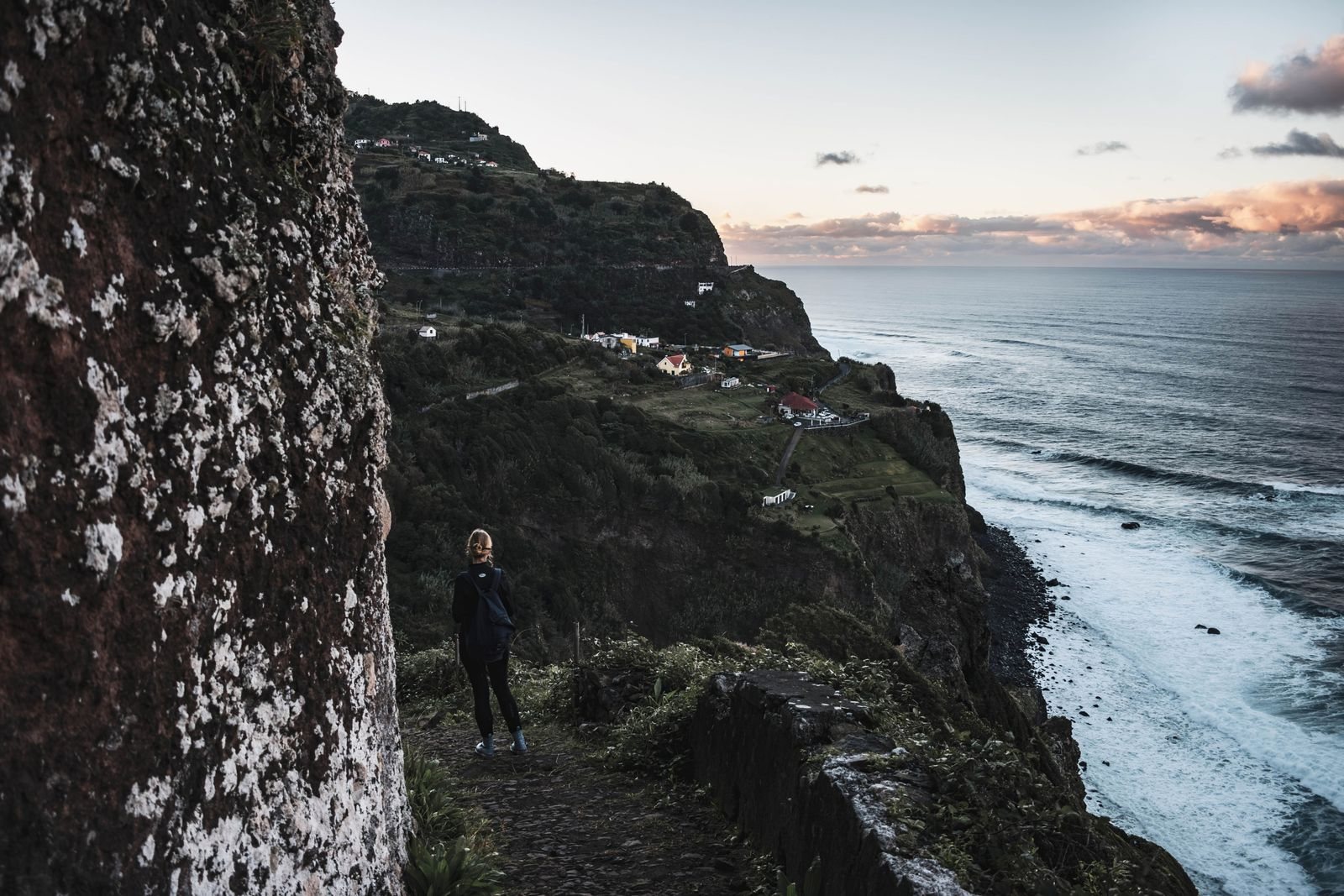
Madeira’s levadas are the reason a lot of people come. They are irrigation channels, some of them 500 years old, cut into the mountainsides to carry water from the rainy north to the dry south. Alongside each channel runs a maintenance footpath, and those footpaths add up to something like 1,300 miles of trail across the island.
The magic of a levada walk is that the water has to run at a gentle grade, so the trail does too. You get mountain scenery without mountain climbing.
Levada do Caldeirao Verde is the one we would send anyone on first. About 8 miles round trip through laurel forest to a waterfall dropping into a green bowl. Bring a headlamp, because you pass through four unlit tunnels and they are longer than you expect.
Levada das 25 Fontes is the most photographed and the most crowded. Beautiful, but go early or accept company.
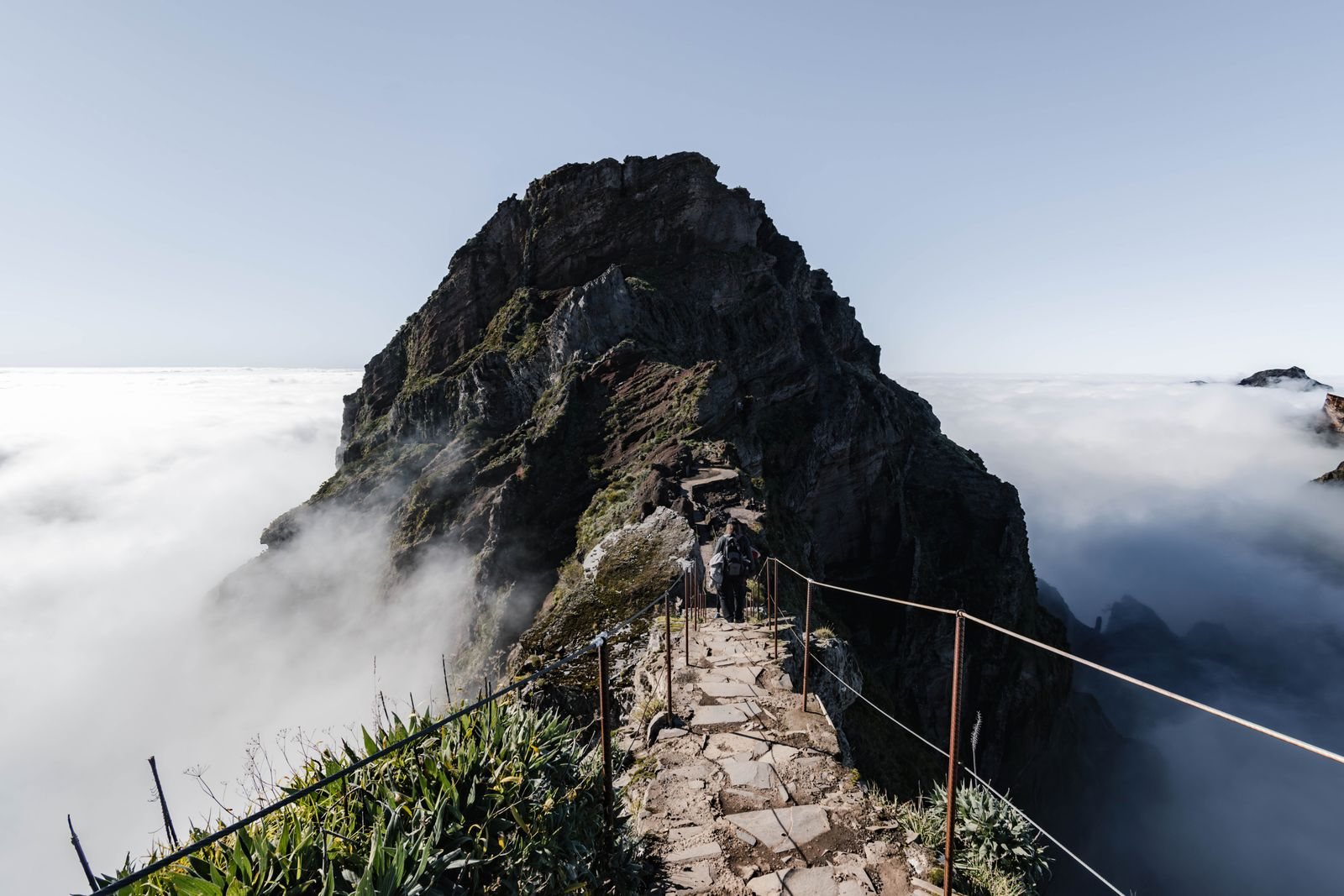
Vereda do Areeiro to Pico Ruivo is not a levada, it is a proper ridge hike between the island’s two highest peaks. Roughly 4.5 miles one way with serious exposure and stairs cut into the rock. This was our favorite morning on the island. Start before sunrise, park at Pico do Arieiro, and you will watch the sun come up over a sea of cloud.
A practical note: Madeira now charges a small fee for many official trails and you register online in advance. Check the current requirements before you go, since the system has changed more than once.
Funchal Beyond the Cruise Ships
Funchal gets cruise traffic, and the streets near the port reflect that. Walk ten minutes inland and it turns back into a working Portuguese city.
Mercado dos Lavradores is the central market. Go in the morning, look at the scabbardfish (black, deep sea, genuinely alien looking) and the custard apples, and be ready for aggressive fruit sampling upstairs. It is a hard sell, so decide your price before you taste.
Zona Velha, the old town, has a street of painted doors called Rua de Santa Maria that is more charming than the internet made us expect. This is where we ate best.
The Monte cable car climbs from the waterfront to the hilltop village of Monte, where you will find the tropical gardens and the church where the last emperor of Austria is buried. The famous wicker toboggan ride down is a two minute novelty run by men in straw hats, and it costs more than it should, but we did it anyway and laughed the whole way.
Blandy’s Wine Lodge is the place to understand Madeira wine, which is a fortified wine deliberately heated during aging. That sounds like a flaw and it is the entire point. The tasting flight was one of the better hours we spent indoors on this trip.
The Drives You Should Not Skip
Pico do Arieiro at sunrise. Drive up in the dark, arrive above the clouds, watch the light hit the peaks. Bring a real jacket, because it can be 40 degrees up there while Funchal is 70.
Ponta de Sao Lourenco. The island’s eastern tip is bare, red, and windswept, which is nothing like the rest of Madeira. A 5 mile out and back trail runs the length of the peninsula with ocean on both sides.
Porto Moniz natural pools. Volcanic rock pools on the north coast, filled and flushed by the Atlantic. Swim when the sea is calm and admire from a distance when it is not.
Fanal Forest. Ancient, twisted laurel trees on a high plateau that is usually wrapped in fog. It is either the most atmospheric place on the island or a gray field with cows, depending entirely on the weather that hour.
Cabo Girao skywalk. A glass platform hanging over a 1,900 foot drop. Short visit, big payoff.

What to Eat and Drink
Espetada is beef skewered on a bay laurel branch and grilled over wood, traditionally hung from a stand at your table. Order it with milho frito, fried cubes of cornmeal.
Bolo do caco is a flat garlic bread cooked on a stone. It arrives at every meal and you will eat all of it.
Lapas, grilled limpets with garlic butter and lemon, are the seaside snack to order.
Espada com banana, black scabbardfish with fried banana, sounds wrong and works. Try it once.
Poncha is the local drink: aguardente, honey, and citrus juice, stirred with a wooden tool called a caralhinho. It is stronger than it tastes. We learned this.
Madeira wine ranges from dry Sercial to sweet Malmsey. Buy a bottle to bring home, since it is nearly indestructible once opened.
How Many Days Do You Need
Four days is the minimum to see the island without rushing. Seven is the number we would defend. Ten if you want to hike seriously or add a day trip to Porto Santo, the neighboring island with the sandy beach Madeira does not have.
A workable seven day shape: two days in and around Funchal, one day on the Arieiro to Ruivo ridge, one day on the north coast, one levada day, one east coast day at Sao Lourenco, and one deliberately unplanned day for weather. That last one matters more here than anywhere else in Portugal, because Madeira’s weather is intensely local. It can be pouring in Sao Vicente and cloudless in Funchal at the same moment.
Where to Book
We book almost everything for Portugal through two places, and Madeira was no exception.
- Hotels and apartments: Search Madeira stays on Booking.com. Funchal has the deepest inventory, and free cancellation is worth having on an island where weather can reshape your plans.
- Tours and activities: Browse Madeira tours on Viator. Sunrise Pico do Arieiro trips, levada walks with transport, dolphin and whale watching, and 4×4 island tours are all easy to book here, and the guided levada options solve the trailhead-to-endpoint transport problem.
For a longer Portugal trip, our complete guide to planning a trip to Portugal covers budgets, transport between regions, and how to sequence the mainland with the islands.
A Few Things We Would Do Differently
We underestimated the microclimates and packed for one island instead of four. Bring layers, a rain shell, and real hiking shoes even if you do not plan to hike much, because the levada paths get slick.
We also front-loaded the trip with driving and wore ourselves out. If we went back, we would alternate a big driving day with a low key one.
And we would build in Porto Santo. Everyone we met who took the ferry over came back saying it was the calmest day of their trip.
Keep planning your Portugal trip: Start with our complete guide to planning a trip to Portugal for budgets and logistics, then read our Porto travel guide for the north and our Algarve travel guide if you want beaches after the mountains.