Disclosure: This post contains affiliate links. If you book through our links, we may earn a small commission at no extra cost to you. Thanks for supporting Faceted Travel!
Table of Contents
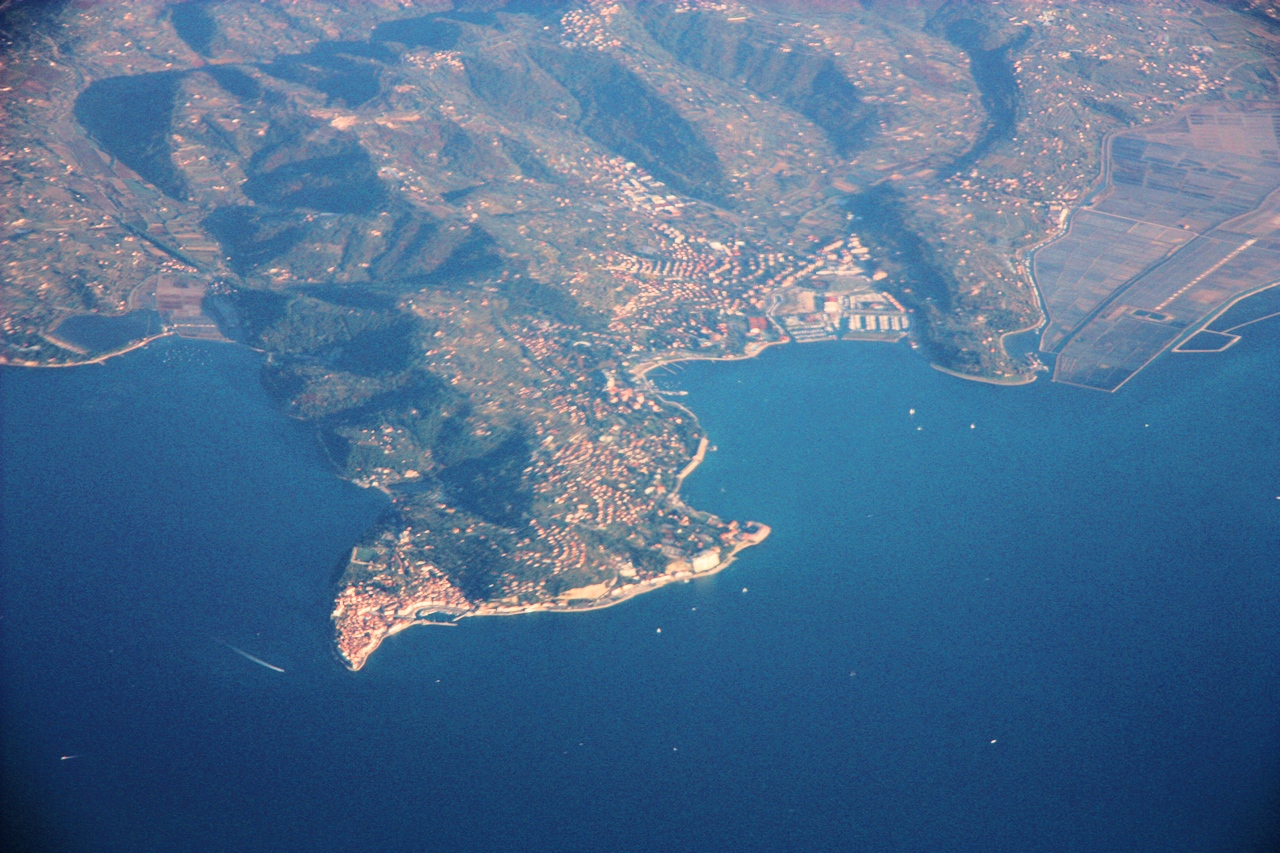
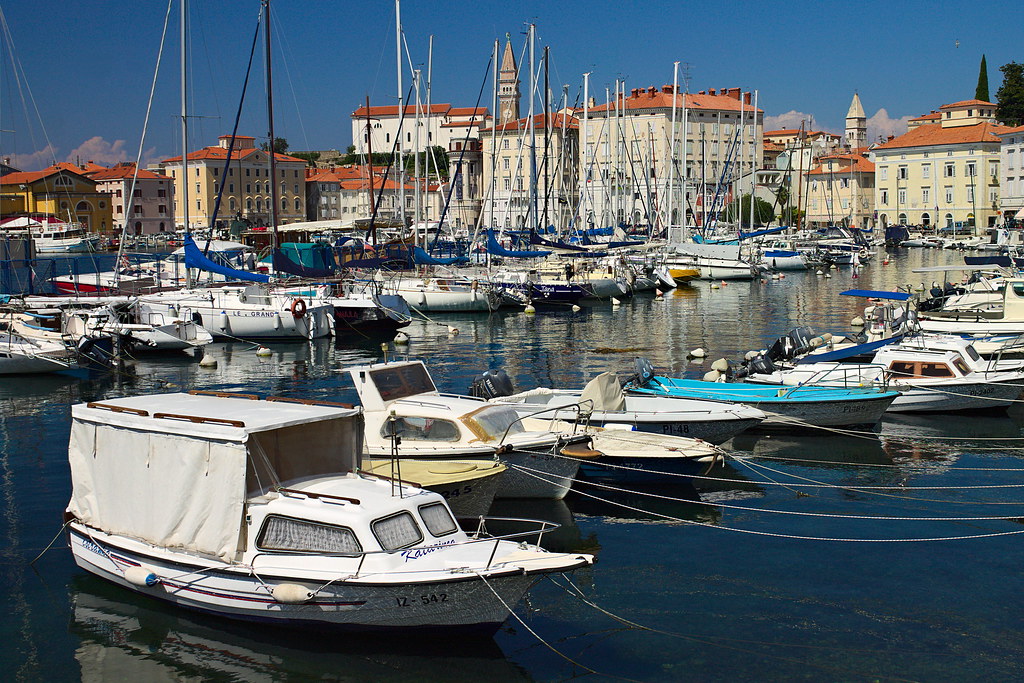
The first time we walked into Tartini Square, we genuinely could not believe Piran isn’t twice as famous as it is. This tiny walled town on the tip of a narrow peninsula looks like Venice shrank itself, moved to Slovenia’s 29 miles of coastline, and decided to relax: marble-paved squares, Venetian bell towers, terracotta roofs stacked down to a turquoise Adriatic, and not a single car in the old town to spoil it.
We came to Piran as a day trip from Ljubljana and immediately wished we had booked two nights. So learn from us: Piran deserves more than an afternoon. Here’s everything we wish we’d known before we went, from where to eat the best seafood of our trip to why you should absolutely climb the bell tower even if the stairs terrify you.
Why Visit Piran
Slovenia gets talked about for the Julian Alps, Lake Bled, and Ljubljana’s dragon bridges, but its little wedge of Adriatic coast is the country’s best-kept secret. Piran was ruled by Venice for over 500 years, and it shows in every carved stone window and winged lion. The town is compact enough to explore in a day, gorgeous enough to fill three, and far cheaper than anything comparable in Italy or Croatia.
What sealed it for us is the atmosphere. Cars are banned from the old town, so evenings are all footsteps, clinking glasses, and waves against the seawall. Sunset from the Punta lighthouse, with the entire town glowing orange behind you, is one of those travel moments that costs nothing and stays with you forever.
When to Go
Piran has a mild Mediterranean climate, and each season plays differently.
Summer (June through August)
Peak season brings warm seas, long evenings, and the biggest crowds, though “crowded” in Piran is still gentle compared to Dubrovnik or the Amalfi Coast. Expect highs around 85°F, busy waterfront restaurants, and the need to book rooms well ahead. July’s Tartini Festival fills churches and squares with classical music.
Shoulder Season (April, May, September, October)
This is our pick. May and September give you 70s temperatures, swimmable water by late summer’s end, and the town largely to yourself on weekdays. Hotel prices drop noticeably, and the light for photography turns soft and golden.
Winter (November through March)
Piran in winter is quiet and moody, with some restaurants closed and the odd bora wind howling down the Adriatic. But rooms are cheap, the seafood is still excellent, and the empty lanes have real romance if you pack a warm coat.
Things to Do in Piran
Tartini Square
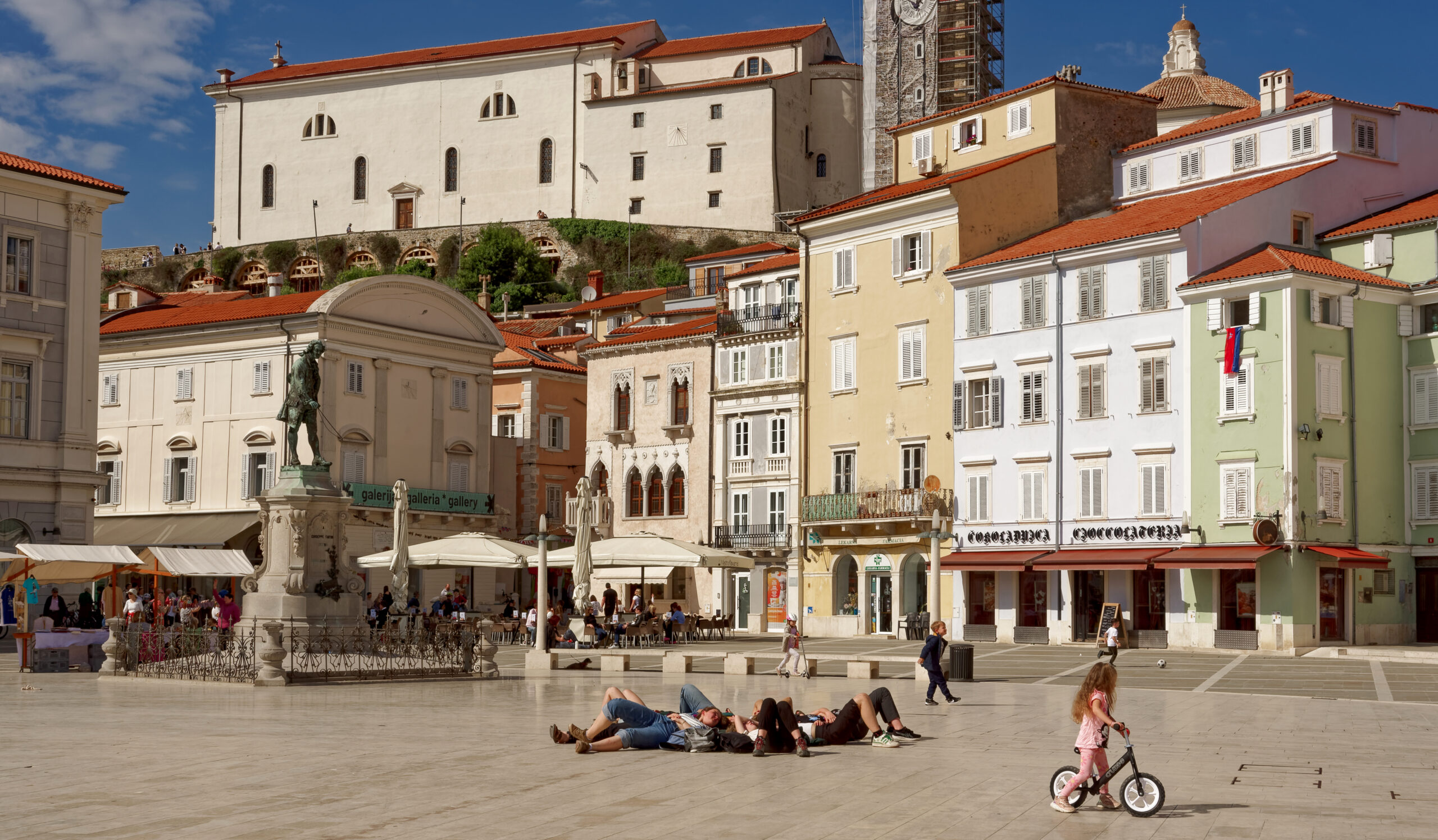
The heart of town is this gleaming oval of white marble, named for violinist Giuseppe Tartini, who was born here in 1692. His statue stands mid-square, surrounded by Venetian-Gothic palaces, including the striking red 15th-century Venetian House. Grab a coffee at one of the cafés on the square’s edge and just watch the town go by; it’s the best people-watching in Slovenia.
Climb the Bell Tower of St. George’s Church
St. George’s Parish Church presides over Piran from a terrace above town, and its freestanding bell tower is a smaller sibling of the campanile in Venice’s St. Mark’s Square. The climb up the wooden stairs is steep and slightly rickety, and completely worth it: from the top, the whole peninsula fans out below you, red roofs narrowing to the lighthouse point, with Croatia visible to the south and, on clear days, the Italian Alps to the north.
Walk the Town Walls
Piran’s medieval walls still crown the hill behind town, and for a few euros you can climb the towers. Go in the late afternoon when the sun angles across the rooftops. The view down over the terracotta jumble to the sea is the classic Piran photo, and it’s even better in person.
Swim off the Rocks
There’s no sandy beach in Piran, and honestly we didn’t miss it. Locals swim from concrete platforms and smooth rocks along the seawall promenade, with ladders straight into clear, deep water. Bring water shoes and a towel, claim a spot, and alternate swimming with sunbathing like a local. The water quality is superb.
Wander the Back Lanes
Half of Piran’s magic lives in its unnamed alleys: laundry strung between shutters, cats asleep on windowsills, sudden staircases that dead-end at someone’s front door or open onto a view of the sea. Put the map away for an hour and get purposely lost. The town is so small you can’t stay lost for long.
Day Trip to the Sečovlje Salt Pans
Just south of Piran, the Sečovlje Salina Nature Park has been producing salt by hand for 700 years. The flat, silvery landscape of salt fields and wooden channels feels like another planet, and the migratory birds are spectacular in spring and fall. Pick up a bag of fleur de sel; it’s the best souvenir on the coast.
Taste the Coast: Seafood and Malvazija
Piran’s restaurants serve some of the best seafood we’ve eaten anywhere in Europe, at prices that made us double-check the bill. Look for sea bass baked in salt, black cuttlefish risotto, and simple grilled squid with olive oil and garlic. Pair everything with Malvazija, the crisp local white wine from the hills of Slovenian Istria. Our favorite meals were at the family-run konobas a street or two back from the waterfront, where the menus are shorter and the fish came off a boat that morning.
Where to Eat
We planned two nights in Piran and ended up planning our days around meals. A few pointers from happy experience. Start with breakfast on Tartini Square: strong macchiato, fresh pastry, and the morning light on the marble. For lunch, follow the locals to the konobas in the lanes behind the harbor, where a plate of grilled squid, chard with potatoes, and a glass of Malvazija runs about half what you’d pay across the border in Italy.
Dinner is Piran’s showcase. Order whatever the server says came in that morning; we had a whole salt-baked sea bass filleted tableside that still ranks among our favorite meals in Europe. The black cuttlefish risotto is the local classic, dyed dramatically with ink and deeply savory. Finish with a scoop of gelato on the seawall promenade, which stays lively past sunset all summer.
Two practical notes: waterfront restaurants on the promenade charge a premium for the view and are still good, but the best value hides one or two streets back. And reserve dinner in July and August, because the good rooms fill with diners from Portorož every evening.
Day Trips from Piran
Piran anchors the Slovenian coast, and everything nearby is close. Izola, a working fishing town 15 minutes away, has a scruffier charm and even cheaper seafood. Koper, the coast’s biggest town, mixes a Venetian old core with real-city energy. Inland, the Karst region hides two of Slovenia’s blockbusters: the Škocjan Caves, a UNESCO-listed underground canyon that left us speechless, and Predjama Castle, built impossibly into a cliff face. Either pairs with wine tasting in the Istrian hills, where family cellars pour Malvazija and the red Refošk alongside home-cured prosciutto. All are doable by rental car, tour, or (for the coastal towns) local bus.
Where to Stay
Inside the old town, small boutique hotels and apartments occupy centuries-old buildings; you’ll trade elevators and parking for atmosphere you cannot buy elsewhere. Waterfront rooms cost more but the sound of the sea through an open window is worth it. Budget travelers should look at Portorož, the modern resort town a 30-minute seafront walk away, where larger hotels bring prices down and a pleasant promenade connects you to Piran.
One practical note: you cannot drive into the old town. Park at the Fornače garage at the edge of town (hotels usually validate) and walk or take the free shuttle in.
Where to Book
- Hotels: Booking.com’s Piran listings cover the old town and Portorož; filter for sea view rooms in the old town and book several months ahead for July and August.
- Tours and activities: Viator’s Piran and Slovenian coast tours include coastal boat trips, Sečovlje salt pan visits, Istria wine tastings, and day tours combining Piran with Ljubljana or the Škocjan Caves.
How to Get There and Around
Piran is about 90 minutes from Ljubljana by car, and buses run several times daily from the capital via Koper. Coming from Italy, Trieste is under an hour away, and in summer a passenger ferry connects Piran with Venice, which is a wonderfully scenic way to arrive. Once you’re in town, everything is on foot: the whole old town is a 10-minute walk end to end, though the hills and staircases will earn you that second scoop of gelato.
Suggested Itinerary: Two Days in Piran
Day 1: Morning coffee on Tartini Square, then climb the bell tower before the heat. Long seafood lunch, afternoon swim off the promenade rocks, sunset walk to the Punta lighthouse, dinner in a back-lane konoba.
Day 2: Morning at the town walls, then a half-day trip to the Sečovlje salt pans. Return for a lazy afternoon of swimming and gelato, and one last golden-hour wander before dinner.
If you have a third day, add a boat trip along the Istrian coast or a wine tasting inland; the vineyards are 20 minutes away.
Budget Tips
Piran is one of the cheapest Adriatic old towns you can visit. Our best money-savers: visit in shoulder season when rooms drop 30 to 40 percent, eat your big meal at lunch when many konobas offer set menus, swim free off the rocks instead of paying for beach clubs in Portorož, and take the bus from Ljubljana rather than renting a car you’ll just have to park. Slovenia uses the euro, cards are accepted almost everywhere, and tipping 10 percent for good service is appreciated but not obligatory.
What to Pack
Piran’s cobbles and staircases are beautiful and slippery, so bring shoes with grip and leave the heels at home. Water shoes earn their space for the rocky swim spots, and a quick-dry towel means you can swim whenever the mood strikes, which will be often. Summer calls for serious sunscreen (the marble square reflects light like a mirror), a hat, and a light layer for evening sea breezes. In shoulder season, add a warmer jacket for after dark and a compact umbrella. A daypack for salt-pan and cave day trips rounds it out. Everything else you forget can be bought in town or in Portorož.
Is Piran Worth It?
Absolutely, and we’d say it’s the single most rewarding half-day-to-two-day stop in Slovenia. It has the Venetian beauty of towns twice as famous at half the price and a tenth of the crowds. Pair it with the capital and the mountains and you have one of Europe’s most varied small-country itineraries: alpine lakes in the morning, Adriatic sunsets by evening.
Piran works beautifully as part of a larger Slovenia loop. Spend a couple of days in Ljubljana, detour to the mountains at Lake Bled, then finish on the coast with salt on your skin and Malvazija in your glass. If you’re still sketching out the season for your trip, our guide to the best time to visit Europe breaks down month-by-month sweet spots across the continent.
Keep Reading