Disclosure: This post contains affiliate links. If you book through our links, we may earn a small commission at no extra cost to you. Thanks for supporting Faceted Travel!
Table of Contents
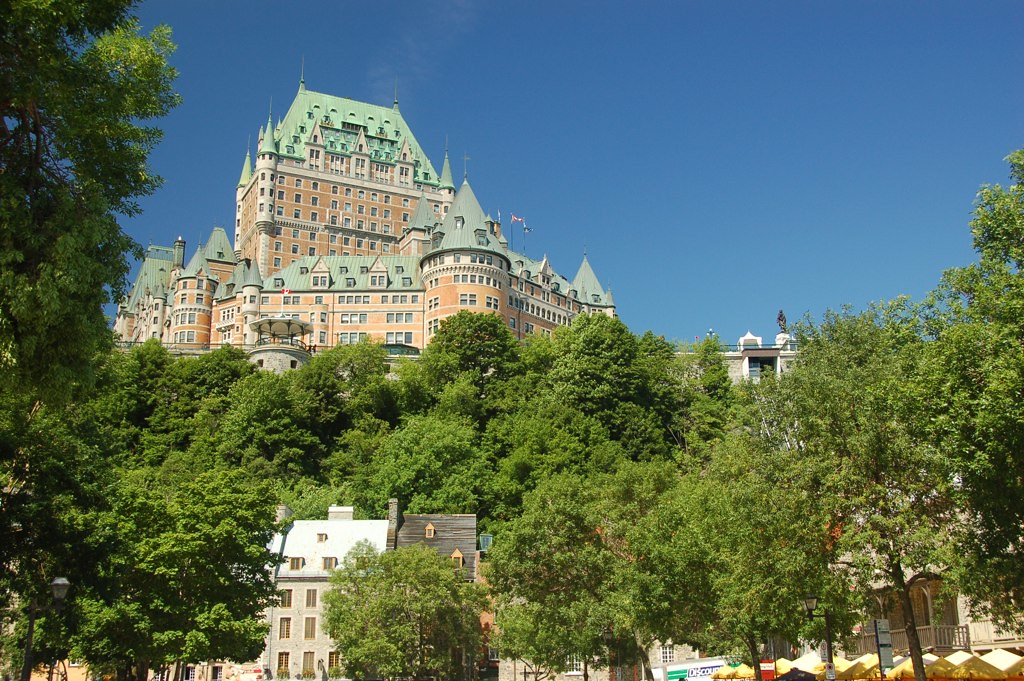
The first time we walked through the stone gate into Old Quebec, Todd stopped mid-step and said it felt like we had accidentally flown to France. Cobblestone lanes climbed past cafes with chalkboard menus, a horse-drawn calèche clattered by, and the green copper roofs of the Château Frontenac glowed above it all. We were still in Canada, a short flight from home, and yet everything about the light, the language, and the smell of fresh crêpes said otherwise.
That contrast is exactly why we keep sending friends to Quebec City when they want the feel of Europe without the transatlantic flight. This guide covers when to go, where to stay, the things actually worth your time, where to eat until your coat buttons strain, and the day trips that turn a long weekend into a proper trip.
Why Visit Quebec City?
Quebec City is the oldest walled city north of Mexico, and it wears that history out in the open. The fortifications still ring the Old Town, the narrow streets still follow their 400-year-old paths, and French is the language of daily life. UNESCO named the historic district a World Heritage Site, and once you spend an afternoon wandering it, you understand why.
What makes it special for us is how compact and walkable it all is. You can cross Old Quebec on foot in twenty minutes, which means you are never far from a bakery, a viewpoint, or a bench with a lake-sized view of the St. Lawrence River. It has the romance of a European capital with the friendliness and easy logistics of a Canadian city, and almost everyone in the tourist areas switches happily to English the moment they hear you struggle with “bonjour.”
If you have ever loved the cobblestones of a historic American city like Charleston or the walkability of Boston, Quebec City will feel like their older, French-speaking cousin.
When to Visit Quebec City
Every season here has a distinct personality, so the best time depends on what you want.
Summer (June to August)
Summer is the crowd favorite for good reason. Days are warm, the terraces are full, and festivals fill the calendar, including the massive Festival d’été in July. This is the easiest time to visit if you want long days for walking and dining outdoors. It is also the busiest and priciest stretch, so book your hotel early.
Fall (September to October)
Fall might be our personal favorite. The surrounding hills turn gold and crimson, the summer crowds thin out, and there is a crispness that makes a bowl of onion soup feel earned. Île d’Orléans and the Montmorency Falls area are stunning with the color.
Winter (November to March)
Winter is when Quebec City leans fully into its fairy-tale reputation. Snow blankets the copper roofs, the Old Town glows with lights, and the Carnaval de Québec brings ice sculptures and outdoor parties in February. It is genuinely cold, often well below freezing, so this is a trip for people who embrace winter rather than tolerate it. Pack like you mean it.
Spring (April to May)
Spring is the quiet shoulder season. Snow lingers early, then gives way to sugar-shack season, when maple syrup is harvested and celebrated all over the region. Prices are lower and crowds are light, though some attractions keep shorter hours.
How to Get There and Get Around
Quebec City has its own international airport (YQB), and we have found connecting flights simple from most major hubs. Many travelers also fly into Montreal and take the scenic train or drive the three hours northeast, which is a lovely add-on if you want to see both cities.
Once you arrive, you almost certainly will not need a car for the city itself. Old Quebec is a walking town, full stop. The streets are steep and often cobbled, so bring comfortable shoes with good grip. We only recommend renting a car if you plan to explore Île d’Orléans, the Charlevoix region, or other spots beyond the city, and even then you can reach many of them on a guided day tour instead.
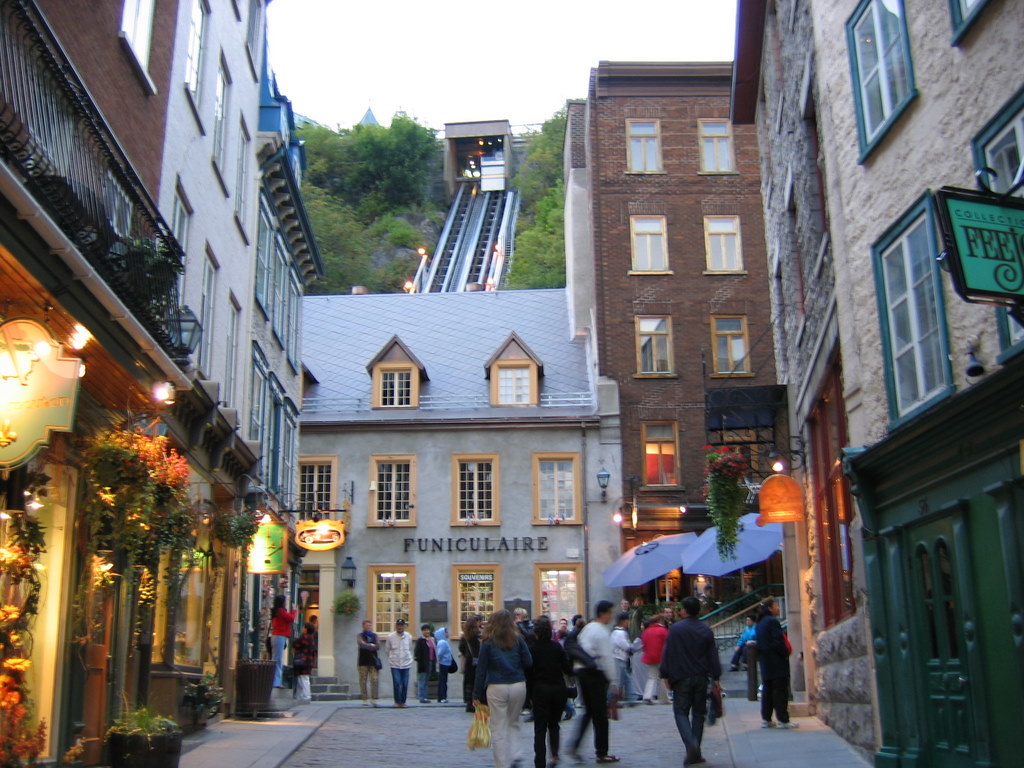
One thing to know: the Old Town is split into Upper Town (Haute-Ville) on the cliff and Lower Town (Basse-Ville) along the river. A short funicular connects the two for a couple of dollars, or you can take the photogenic Breakneck Stairs if your knees are willing.
Where to Stay in Quebec City
Your neighborhood choice shapes the whole trip, so here is how we think about it.
Old Upper Town (Haute-Ville)
This is the postcard. Staying inside the walls puts you steps from the Château Frontenac, Dufferin Terrace, and the main sights. It is the most atmospheric and the most convenient, though also the priciest and the busiest. If it is your first visit and you want to walk out the door into the magic, stay here.
Old Lower Town (Basse-Ville)
Down by the river, the Petit-Champlain and Place Royale area is arguably even prettier, with flower-draped stone buildings and boutique hotels. It is quieter at night once the day-trippers leave, and we love it for a romantic stay.
Saint-Roch and Outside the Walls
For better value and a more local, less touristy vibe, look just outside the fortifications in neighborhoods like Saint-Roch, which has a great food and craft-beer scene. You trade a few minutes of walking for lower prices and more elbow room. We use Booking.com to compare boutique hotels inside the walls against better-value options a few blocks out, and most listings offer free cancellation.
Best Things to Do in Quebec City
You could spend two days doing nothing but wandering, and it would be time well spent. But these are the highlights we send everyone to.
Walk the Old Town and the Ramparts
Start with no plan. Let yourself get lost in the lanes of Upper Town, then trace the top of the old city walls, the only remaining fortified walls of a city north of Mexico. Interpretive panels along the way explain the sieges and history, and the views over the rooftops are worth the climb.
Château Frontenac and Dufferin Terrace
The Château Frontenac is the most photographed hotel in the world, and even if you are not staying there, you can walk through the lobby and admire it. Right in front, the long boardwalk of Dufferin Terrace hugs the cliff with sweeping views of the St. Lawrence. In winter it even has an old-fashioned toboggan slide.
Quartier Petit-Champlain and Place Royale
The oldest commercial district in North America is a warren of narrow streets, art galleries, and cafes. Place Royale, with the little stone church of Notre-Dame-des-Victoires, marks the very spot where the city was founded in 1608. This is where our cameras always fill up fastest.
Montmorency Falls
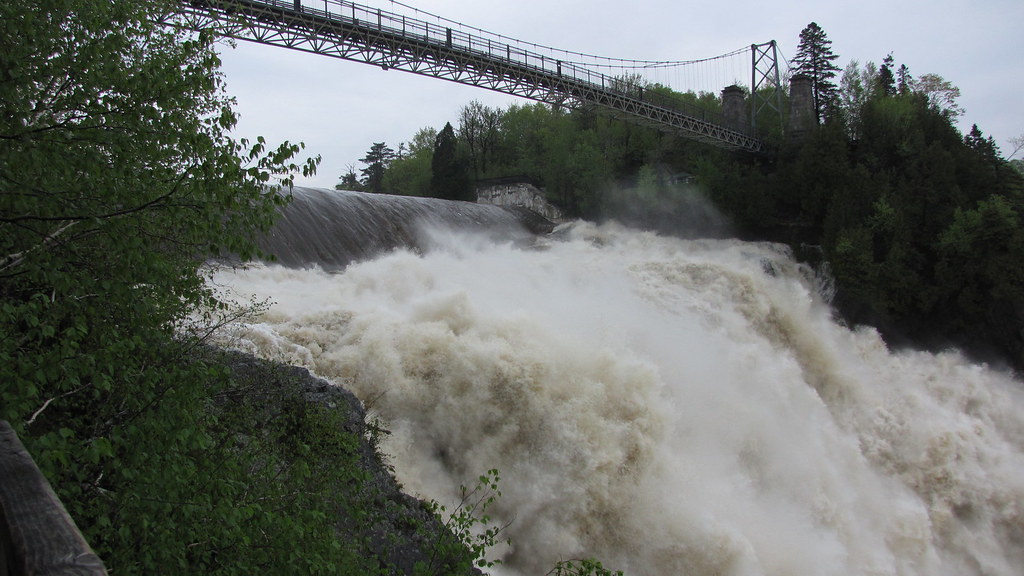
Just fifteen minutes from downtown, Montmorency Falls plunges 272 feet, which is actually higher than Niagara. You can walk a suspension bridge right over the top, ride a cable car, or climb the panoramic staircase. It is an easy and dramatic half-day trip.
La Citadelle and the Plains of Abraham
The star-shaped Citadelle is still an active military installation and home to the Royal 22e Régiment. In summer you can catch the Changing of the Guard. Nearby, the Plains of Abraham is a huge park on the site of the pivotal 1759 battle, now perfect for a picnic or a stroll.
Where to Eat in Quebec City
Quebec cuisine is hearty, French-rooted, and built for the climate, which is to say we ate very well and regretted nothing.
Start with poutine, the province’s gift to comfort food: fries, cheese curds, and gravy, done far better here than the versions you have had elsewhere. Try tourtière, a spiced meat pie that shows up especially around the holidays, and do not skip the maple everything, from taffy poured on snow to maple pie.
For a proper sit-down meal, the Old Town is full of cozy French bistros serving duck, game, and fresh Quebec cheeses. Aux Anciens Canadiens, set in one of the oldest houses in the city, is touristy but fun for traditional dishes. For something more current and local, head to Saint-Roch, where the restaurants skew creative and the crowd is younger. And save room for a café au lait and a pastry in Petit-Champlain, ideally at a sidewalk table where you can watch the street.
Day Trips from Quebec City
If you have more than a couple of days, the surrounding region rewards you.
Île d’Orléans, a rural island just outside the city, is a loop of farm stands, wineries, cider houses, and strawberry fields, a delicious and scenic drive. The Charlevoix region farther northeast is a coastal stretch of rolling hills, charming villages, and whale-watching near Tadoussac in summer and fall. And the Sainte-Anne-de-Beaupré basilica, a major pilgrimage site, pairs naturally with a Montmorency Falls stop. Many of these can be booked as guided day tours if you would rather not drive.
For a bigger add-on, Montreal is about three hours away and makes a natural two-city trip, while nature lovers who caught the Canada bug should put Banff National Park out west on the wish list for a completely different side of the country.
What to Pack and Practical Tips
Layers are the answer in every season, because the weather off the river shifts quickly. In winter, that means a serious coat, insulated boots, hat, and gloves, no exceptions. In summer, bring a light jacket for the evenings and, above all, comfortable walking shoes for the cobblestones.
A few more tips we learned the easy and hard way: the currency is the Canadian dollar, and cards are accepted almost everywhere. A few words of French are appreciated even though English is widely spoken in tourist areas, so a friendly “bonjour” goes a long way. And if you visit in winter, embrace it rather than hide from it, because the city is at its most magical under snow.
If you are mapping out a broader trip and want a framework for timing, budgeting, and pacing, our guide on how to plan a trip to Europe applies surprisingly well to Old Quebec, since it really does travel like a slice of France.
Where to Book
Here is how we line up the pieces for a Quebec City trip:
- Hotels: We use Booking.com to compare stays inside the walls against better-value boutiques in Saint-Roch, most with free cancellation.
- Tours and experiences: Viator has guided Old Town walks, Montmorency Falls and Île d’Orléans day trips, food tours, and winter experiences.
Booking a few key things ahead, especially in summer and during Carnaval, saves you money and stress, and it lets you spend your actual trip wandering instead of scrambling.
Final Thoughts
Quebec City is one of those rare places that delivers exactly the feeling you came for and then a few you did not expect. You arrive for the European look and stay for the warmth of the people, the depth of the history, and the sense that you have slipped somewhere much farther from home than you really are. Whether you come for summer terraces or a snow-globe winter, we think you will leave already planning the next visit.
If this sparked some wanderlust, keep the planning going with our Boston travel guide for another walkable, history-rich city, our New York City travel guide for a bigger Northeast add-on, and our guide to the best time to visit Europe for when you are ready to cross the ocean for the real thing.