Disclosure: This post contains affiliate links. If you book through our links, we may earn a small commission at no extra cost to you. Thanks for supporting Faceted Travel!
Table of Contents
- Why the Great Smoky Mountains Are So Special
- When to Visit the Great Smoky Mountains
- Getting There and Getting Around
- The Best Things to Do in the Smokies
- The Best Hikes in the Smokies
- Wildlife and Safety in Bear Country
- Where to Stay
- What to Pack
- How Many Days Do You Need in the Smokies
- Frequently Asked Questions About the Smokies
- Where to Book
- Final Thoughts
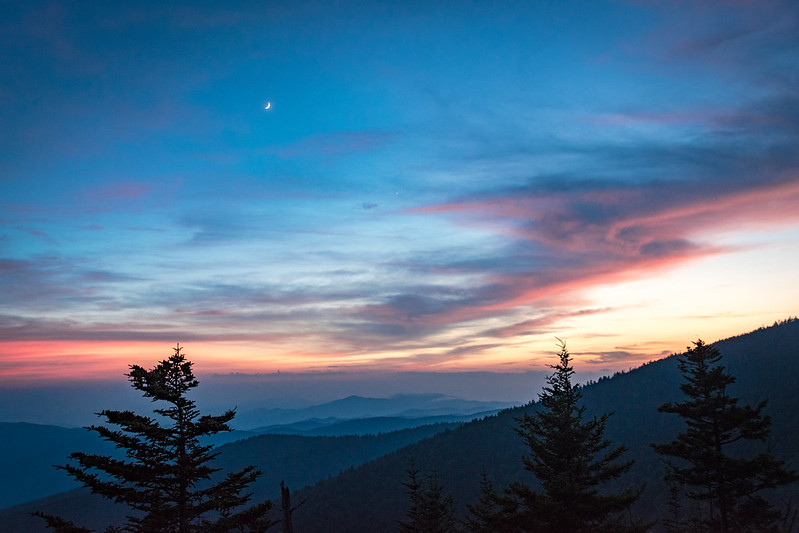
The first time we drove into the Great Smoky Mountains and watched that famous blue haze settle over ridge after ridge, we understood instantly why this is the most visited national park in the country. It is misty, ancient, green beyond belief, and somehow both grand and gentle at the same time.
We are Todd and Kimberly, and the Smokies have pulled us back again and again, in summer green, in fiery fall color, and in the quiet of early spring. Straddling the border of Tennessee and North Carolina, this park is free to enter, wildly biodiverse, and far easier to reach than the big western parks. Here is everything we have learned about planning a great Smoky Mountains trip.
Why the Great Smoky Mountains Are So Special
The Smokies are the most visited national park in the United States, and it is not particularly close. More than half a million acres of protected forest, over 850 miles of trails, and one of the most biodiverse temperate ecosystems on earth all sit within a day’s drive of a huge chunk of the country.
The park is famous for its mist, the soft blue smoke that gives the mountains their name, rising off the dense forest. It is also famous for its wildlife, especially black bears, which number around 1,500 here. Add in wildflowers, waterfalls, historic Appalachian cabins, and synchronous fireflies in early summer, and you have a park with something remarkable in every season.
And here is the kicker: entry is free. The Smokies are one of the only major national parks with no entrance fee, though you now need a paid parking tag to park anywhere in the park.
When to Visit the Great Smoky Mountains
Each season offers something different, so it really comes down to what you want.
Fall (mid-October to early November)
Fall is the headliner. The Smokies put on one of the best autumn color shows in the country, and the timing of peak color shifts with elevation, so the season stretches out for weeks. It is also the busiest and most beautiful time, so expect crowds and book lodging far ahead.
Summer (June to August)
Summer is lush, warm, and green, with long days and full access to high-elevation roads and trails. It is peak family season, so towns like Gatlinburg and Pigeon Forge are packed. Early June also brings the famous synchronous firefly display, which requires a lottery to view.
Spring (March to May)
Spring is wildflower season, and the Smokies are nicknamed the Wildflower National Park for good reason. Waterfalls run full from snowmelt and rain. Weather is unpredictable, so pack layers, but the crowds are lighter than summer or fall.
Winter (December to February)
Winter is quiet and stark, with bare trees opening up long views you cannot see in summer. Some higher roads, including the road to Clingmans Dome, close for the season. It is our pick for solitude.
Getting There and Getting Around
The two main gateway towns are Gatlinburg, Tennessee, on the north side, and Cherokee, North Carolina, on the south. Most visitors fly into Knoxville, Tennessee, about an hour from the park, or make it a road trip. The Smokies pair beautifully with a wider Southeast itinerary, and we often combine a visit with our Nashville travel guide a few hours west, or a swing through Charleston and Savannah.
You will want a car. There is no public transit inside the park, and the highlights are spread out along scenic roads. Remember the parking tag: any stop longer than 15 minutes requires a Park It Forward tag, available daily, weekly, or annually, and easy to buy online or at visitor centers.

Newfound Gap Road is the main route across the park and a spectacular drive in its own right, climbing from lush lowland forest to spruce-fir highlands in about an hour.
The Best Things to Do in the Smokies
Cades Cove
If you do one thing, make it Cades Cove. This broad, green valley ringed by mountains has an 11-mile loop road, abundant wildlife (your best bear and deer odds in the park), historic churches and cabins, and trailheads to waterfalls. Go early or near closing to beat traffic, and consider biking the loop on the vehicle-free mornings.
Clingmans Dome
At 6,643 feet, Clingmans Dome is the highest point in the park and in Tennessee. A steep half-mile paved path leads to an observation tower with a 360-degree view over the endless ridges. On a clear day it is unforgettable. The access road closes in winter.
Waterfalls
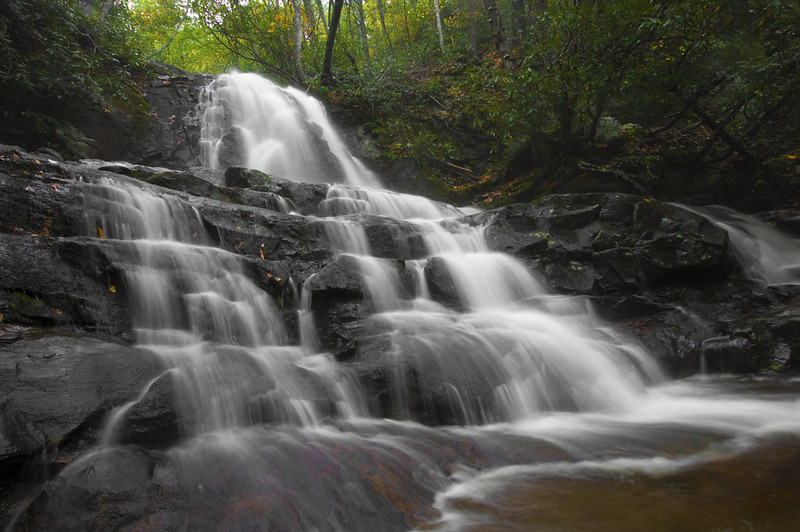
The Smokies are loaded with waterfalls. Laurel Falls is a popular paved hike, Grotto Falls lets you walk behind the water, and Abrams Falls in Cades Cove rewards a longer hike with a powerful cascade. Always respect slippery rocks near the falls.
Roaring Fork and Historic Cabins
The Roaring Fork Motor Nature Trail is a narrow, one-way loop near Gatlinburg with rushing streams, mossy forest, and preserved Appalachian homesteads. It is a gorgeous, low-effort way to feel deep in the mountains.
If this kind of mountain scenery is your thing, you will likely love our guides to Glacier National Park, Rocky Mountain National Park, and Yellowstone too.
The Best Hikes in the Smokies
With more than 850 miles of trails, the Smokies reward hikers of every level. For an easy, rewarding walk, Laurel Falls is a paved 2.6-mile round trip to a pretty 80-foot waterfall, making it one of the most popular hikes in the park (go early to beat the crowds). The Clingmans Dome path is short but steep, just half a mile each way to the highest viewpoint in the park.
For a moderate adventure, the hike to Grotto Falls along the Trillium Gap Trail lets you actually walk behind a waterfall, and you may share the trail with the llamas that resupply the backcountry lodge. Abrams Falls in Cades Cove is a 5-mile round trip to a powerful, photogenic cascade.
Serious hikers can tackle a stretch of the Appalachian Trail, which runs along the park’s spine, or the challenging climb to Andrews Bald or Mount LeConte for huge summit views. Wherever you go, download an offline map (cell service is unreliable), wear sturdy shoes, carry water and layers, and start early, both to find parking and to leave time before the common afternoon storms. Always keep your distance from wildlife on the trail.
Wildlife and Safety in Bear Country
The Smokies are black bear country, with roughly two bears per square mile. Seeing one is a highlight, but it comes with responsibility. Keep at least 50 yards away, never feed wildlife, store food properly, and use the bear-proof trash cans. A bear that learns to associate people with food often ends up dead, so giving them space genuinely protects them.
Beyond bears, watch for elk near Cataloochee and the Oconaluftee area on the North Carolina side, where they were reintroduced and now thrive. Dawn and dusk are the best viewing times across the park.
Where to Stay
You have two main approaches: stay in a gateway town, or camp inside the park.
Gatlinburg and Pigeon Forge on the Tennessee side are lively, family-friendly, and packed with cabins, hotels, restaurants, and attractions (Pigeon Forge is home to Dollywood). Townsend, nearby, bills itself as the quiet side and sits close to Cades Cove. On the North Carolina side, Cherokee and Bryson City are smaller and more low-key.
Renting a mountain cabin is the classic Smokies experience, and there are thousands to choose from at every price point. For hotels and cabins, we compare options well in advance, especially for fall.
The park itself has developed campgrounds like Elkmont, Cades Cove, and Smokemont, which book up fast in peak season. Reserve early on Recreation.gov.
What to Pack
Mountain weather is changeable, and elevation matters here. It can be 20 degrees cooler and much wetter at Clingmans Dome than in Gatlinburg, so always bring a layer and a rain jacket. The Smokies are one of the rainiest spots in the eastern US, which is exactly why they are so green.
Good hiking shoes, bug spray (summer), and a downloaded map are essentials, since cell service is spotty to nonexistent in much of the park. If you are visiting in fall, bring warmer layers for the high overlooks at sunrise.
How Many Days Do You Need in the Smokies
For a satisfying first visit, plan on two to three full days. One day for the Tennessee side (Cades Cove, the Roaring Fork loop, and a waterfall hike near Gatlinburg), one day for Newfound Gap Road and Clingmans Dome with stops along the way, and a third for the quieter North Carolina side (Cataloochee for elk, or more hiking) makes a well-rounded trip.
If you only have a day, prioritize Cades Cove in the morning and the Newfound Gap drive in the afternoon. If you have a week, you could hike a different trail every day and still not run out, and you would have time to fold in nearby towns and attractions. Because the park is free and easy to reach, it is also a great long-weekend destination.
Frequently Asked Questions About the Smokies
Do you have to pay to enter the Great Smoky Mountains? There is no entrance fee, which makes the Smokies unusual among major national parks. However, since 2023 you do need a paid Park It Forward parking tag to park anywhere in the park for more than 15 minutes. Tags are inexpensive and available daily, weekly, or annually online and at visitor centers.
What is the best time to visit the Smoky Mountains? Fall (mid-October to early November) is the most popular for its spectacular foliage, while summer is greenest and busiest. We love early fall for color and spring for wildflowers and full waterfalls. Winter is quietest and opens up long views through the bare trees, though some high roads close.
Will I see a bear in the Smokies? Quite possibly. The park is home to around 1,500 black bears, and Cades Cove is one of the most reliable places to spot them, especially at dawn and dusk. Always keep at least 50 yards away, never feed wildlife, and store food properly, both for your safety and the bears’.
Where to Book
Here is how we put a Smokies trip together:
Cabins and Hotels: We compare cabins in Gatlinburg, Pigeon Forge, and Townsend, plus hotels, on Booking.com. Book early for fall color and summer weekends, when the best places go fast.
Tours and Experiences: Guided hikes, white-water rafting near Bryson City, horseback rides, and Gatlinburg attractions are easy to compare and reserve on Viator. A guided wildlife or waterfall hike is a great way to learn the park.
Parking Tag: Buy your Park It Forward tag directly through the official park system, not a third party.
Final Thoughts
The Great Smoky Mountains reward you whether you came for a single scenic drive or a week of hard hiking. Wake up early for Cades Cove, drive Newfound Gap with the windows down, chase a waterfall or two, and give the bears their space. The mist will do the rest.
If you are building a bigger Southeast or national parks trip, pair this with our guides to Nashville, Charleston, and the Grand Teton and Zion parks out west. Happy trails.