Disclosure: This post contains affiliate links. If you book through our links, we may earn a small commission at no extra cost to you. Thanks for supporting Faceted Travel!
Table of Contents
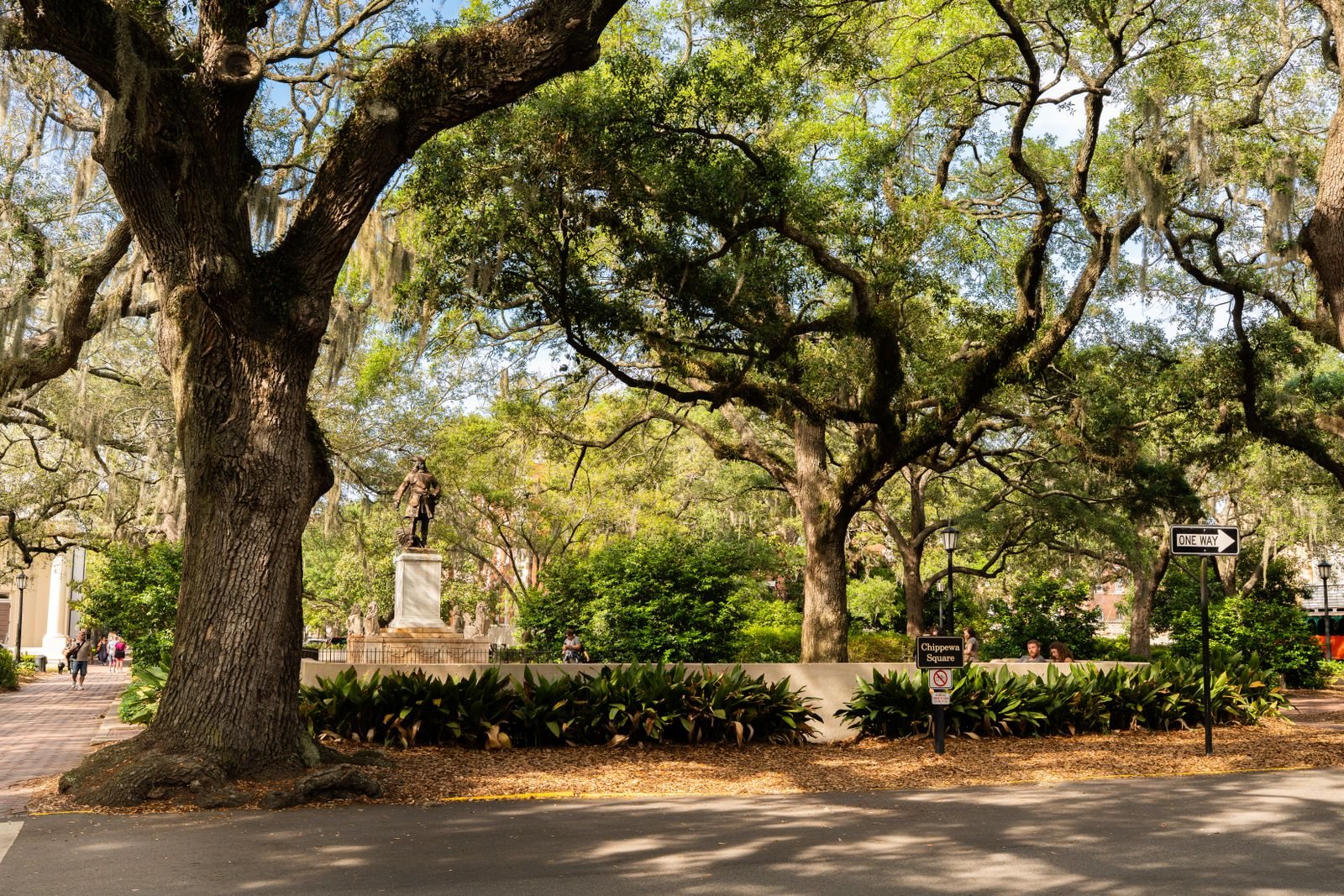
Savannah doesn’t feel like anywhere else in America. The first time we walked under the live oaks on Jones Street — Spanish moss hanging like curtains, gas lamps flickering against 200-year-old brick — we both slowed down without meaning to. That’s what this city does. It makes you slow down.
We’ve road-tripped through most of the South, from New Orleans to Nashville, and Savannah remains the most beautiful walking city of them all. Here’s everything you need to plan your trip.
Why Visit Savannah?
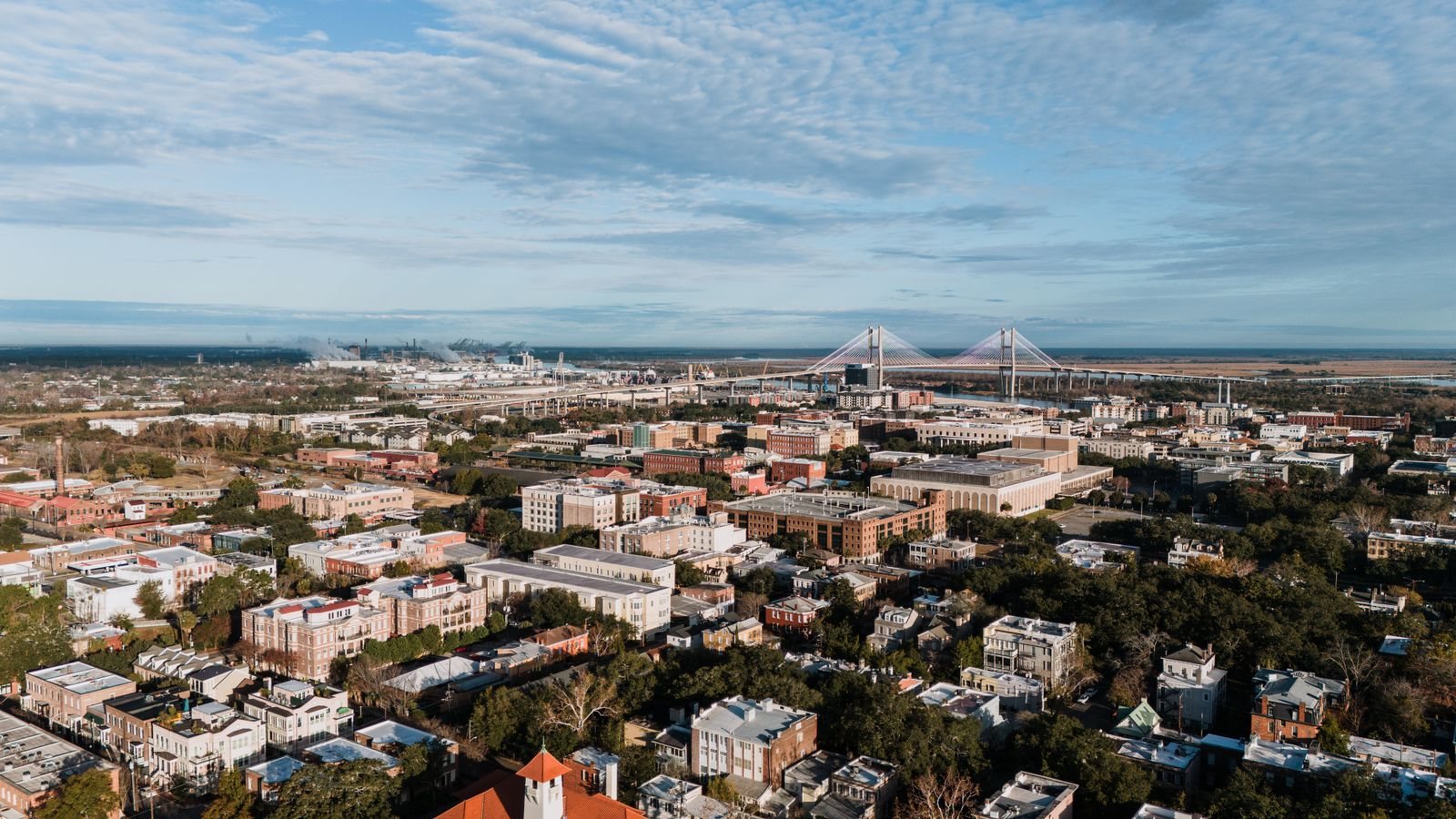
Savannah is America’s first planned city, laid out in 1733 around a grid of public squares — and 22 of those original squares survive today, each one a small park shaded by oaks and ringed by antebellum mansions. The entire Historic District is a National Historic Landmark, and it’s compact enough to explore entirely on foot.
But Savannah isn’t a museum. It’s a living, slightly eccentric Southern city with a serious food scene, a thriving art school (SCAD) that keeps the energy young, rooftop bars overlooking the river, and a ghost story on every corner. It’s romantic, walkable, affordable by coastal-city standards, and genuinely fun.
When to Go to Savannah
Best time: March through May and September through November. Spring is glorious — azaleas bloom in the squares in March and April, and temperatures sit in the 70s°F. Fall brings warm days, cooler evenings, and thinner crowds.
Summer (June–August): Hot and seriously humid, with highs in the 90s°F and afternoon thunderstorms. It’s doable if you plan mornings outside and afternoons in museums or restaurants, and hotel prices dip.
Winter (December–February): Mild — highs in the 50s and 60s°F — and the city is beautifully decorated for the holidays. This is the quietest, cheapest season.
Heads up: St. Patrick’s Day is enormous in Savannah — one of the largest celebrations in the country. It’s a blast, but book months ahead and expect crowds and surge pricing in mid-March.
Getting to Savannah
Savannah/Hilton Head International Airport (SAV) is about 20 minutes northwest of the Historic District, with nonstop flights from most major East Coast and Midwest hubs. A rideshare into downtown runs $25–35.
Savannah is also a perfect road-trip stop: it’s 2 hours from Charleston, 4 hours from Atlanta, and 2.5 hours from Jacksonville. We did it as part of a Lowcountry loop with Charleston and can’t recommend that pairing enough.
Getting around: You won’t need a car in the Historic District — it’s flat, compact, and made for walking. The free DOT shuttle loops the downtown core, and the Chatham Area Transit ferry crosses to Hutchinson Island for skyline views. Rent a car only if you’re adding Tybee Island or Bonaventure Cemetery beyond a tour.
Where to Stay in Savannah
Historic District: This is where you want to be. Staying inside the grid of squares means everything is walkable and you get the gas-lamp evenings to yourself after the day-trippers leave. Boutique inns and B&Bs in restored mansions are the signature Savannah stay — many include wine hours and rooftop terraces.
River Street / Plant Riverside: Right on the Savannah River, with restaurants, live music, and the JW Marriott’s striking power-plant conversion anchoring the western end. Lively (sometimes loud), and steps from everything.
Victorian District / Starland: Just south of Forsyth Park. Quieter, more residential, noticeably cheaper, and home to some of the city’s best coffee shops and murals. A 15–20 minute walk to the center.
Tybee Island: Savannah’s beach town, 20 minutes east. Stay here if a beach is non-negotiable; otherwise visit as a half-day trip.
What to budget: Midrange hotels and inns run $180–280/night; historic boutique properties $250–400. Winter rates drop meaningfully. Book early for spring and any weekend.
👉 Search Savannah hotels on Booking.com
Top Things to Do in Savannah
Walk the Squares
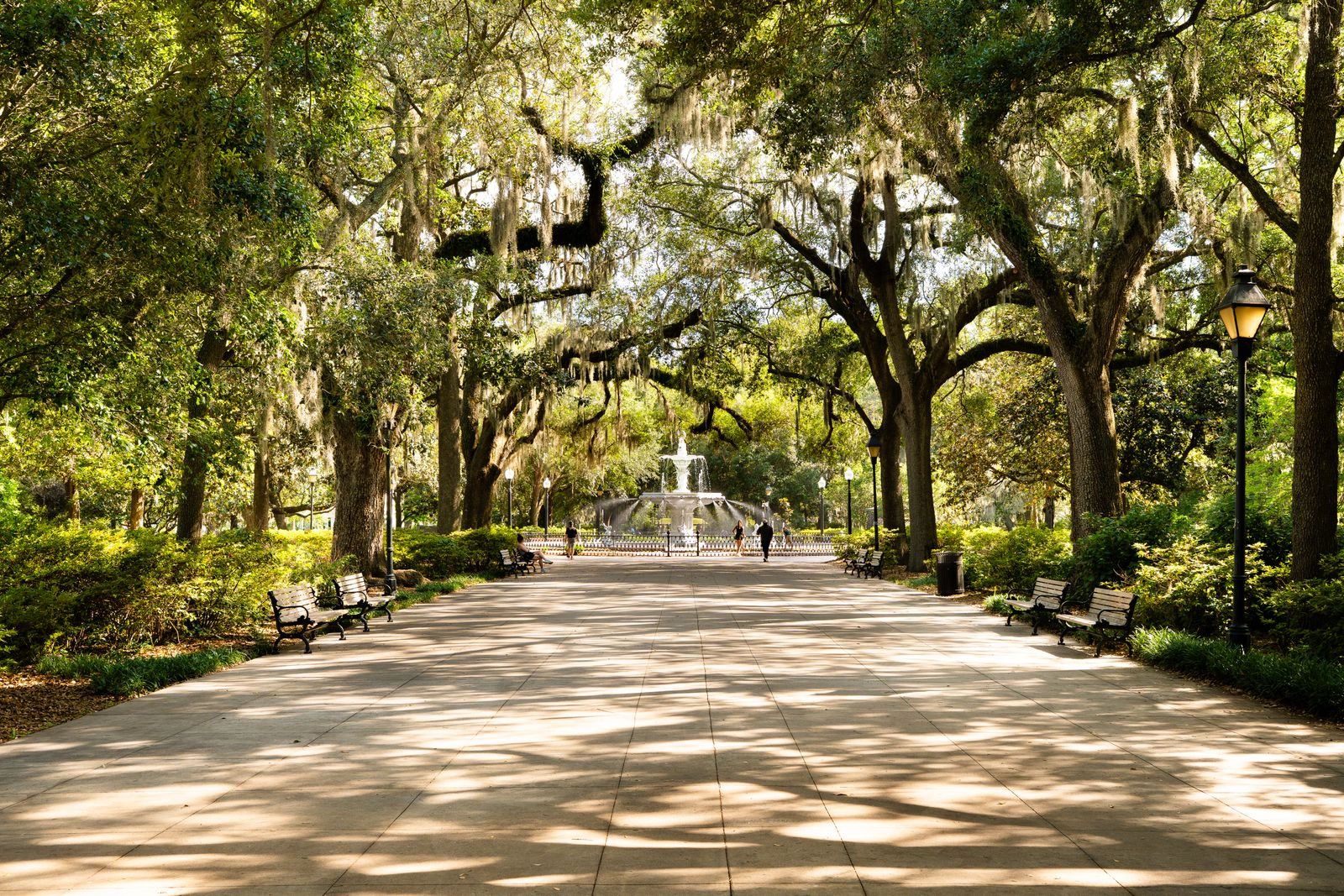
This is the essential Savannah experience, and it’s free. Start at Johnson Square and zigzag south through the grid — Wright Square, Chippewa Square (the Forrest Gump bench scene was filmed here), Madison Square, Monterey Square — until you reach Forsyth Park and its famous 1858 fountain. Every square has its own character and its own canopy of live oaks. Allow a half day and bring coffee.
Take a Historic Trolley or Walking Tour
Savannah’s history is dense — colonial founding, the Revolution, the Civil War, the Civil Rights movement — and a good guide brings the squares to life. The hop-on-hop-off trolleys are an easy overview; the small-group walking tours go deeper.
👉 Browse Savannah tours on Viator
Bonaventure Cemetery
Fifteen minutes east of downtown, Bonaventure is one of the most hauntingly beautiful places in the South — sculpted Victorian monuments under enormous moss-draped oaks on a bluff above the Wilmington River. Made famous by Midnight in the Garden of Good and Evil, it’s free to visit and worth two hours of slow wandering. Guided tours add the stories behind the statues.
River Street and the Plant Riverside District
The old cotton warehouses along the river now hold restaurants, taverns, and candy shops (get a praline sample at River Street Sweets — you’ll smell them before you see them). Walk the cobblestones, watch the massive container ships glide past, and finish with a rooftop drink at Plant Riverside, where the JW Marriott has turned a 1912 power plant into the city’s flashiest gathering spot.
Ghost Tours After Dark
Savannah calls itself America’s most haunted city, and whether or not you believe a word of it, a nighttime ghost tour through the gas-lit squares is tremendous fun. Options range from family-friendly walking tours to late-night pub crawls and hearse rides. It’s the best after-dinner entertainment in town.
Tour a Historic House
The Mercer Williams House (of Midnight fame), the Owens-Thomas House with its rare intact slave quarters and excellent interpretation, and the childhood home of writer Flannery O’Connor each tell a different side of Savannah’s story. The Owens-Thomas House is the one we’d call essential — it deals honestly with the enslaved people who built and ran these mansions.
Half-Day Trip to Tybee Island
Twenty minutes east, Tybee is a low-key Georgia beach town with a wide strand, a climbable 1773 lighthouse, and excellent fried shrimp. Rent a bike, climb the 178 lighthouse steps, then eat at The Crab Shack on the way back. Dolphin-watching cruises leave from the back river.
Forsyth Park and the Starland District
Forsyth Park is Savannah’s Central Park — 30 acres anchored by the iconic cast-iron fountain at its north end. On Saturdays a farmers market fills the south end, and the surrounding Victorian District streets hold some of the city’s most photogenic gingerbread houses. Keep walking south into Starland, the artsy neighborhood reborn around Bull Street: vintage shops, murals, Two Tides Brewing, and the food stalls at Starland Yard. It’s the best window into young, lived-in Savannah beyond the postcard.
SCAD Museum of Art and the City’s Creative Side
The Savannah College of Art and Design quietly runs much of what makes the city feel alive. Its SCAD Museum of Art, built into an 1853 railway depot, stages contemporary exhibitions that would be at home in New York, and shopSCAD on Madison Square sells student and alumni work that makes a far better souvenir than anything on River Street. If you’re visiting in fall, check whether your dates overlap the SCAD Savannah Film Festival — screenings are open to the public.
A Perfect Two-Day Savannah Itinerary
Day 1: Coffee at Collins Quarter, then walk the squares south from Johnson Square to Forsyth Park. Lunch at Mrs. Wilkes (arrive by 10:30 to queue) or Starland Yard. Afternoon house tour at the Owens-Thomas House, then River Street and a praline stop. Dinner downtown, followed by a 9pm ghost tour through the gas-lit squares.
Day 2: Morning at Bonaventure Cemetery while the light is soft. Drive on to Tybee Island — climb the lighthouse, walk the beach, eat fried shrimp. Back to town for golden hour at Forsyth Park’s fountain and a farewell dinner at The Grey (book ahead) or Husk.
Where to Eat in Savannah
Savannah’s food scene punches far above its size — Lowcountry classics, serious Southern fine dining, and a new generation of chefs raising the bar.
The Grey: The city’s most celebrated restaurant, set in a restored 1938 Greyhound bus terminal. Chef Mashama Bailey’s take on Southern food earned a James Beard Award. Book well ahead.
Mrs. Wilkes’ Dining Room: The legendary family-style Southern lunch — fried chicken, biscuits, and a dozen sides passed around shared tables. Cash only, lunch only, and the line forms early. Worth it once in your life.
Husk Savannah: Seasonal Southern cooking in a beautiful old mansion — a more accessible reservation than The Grey with similar ambition.
Leopold’s Ice Cream: Scooping since 1919. The Tutti Frutti is the classic order, and the line moves fast.
Breakfast and coffee: Collins Quarter (Australian-style brunch on Bull Street) and Foxy Loxy in Starland are our picks.
What to budget: A casual lunch runs $15–25 per person; dinner at a good restaurant $50–90 with drinks. To-go cups are legal in the Historic District — Savannah is one of the few US cities where you can stroll the squares with a drink in hand.
Where to Book Your Savannah Trip
Hotels: Search Savannah hotels on Booking.com
Tours & Activities: Browse Savannah tours on Viator — trolley tours, ghost walks, Bonaventure Cemetery tours, Tybee dolphin cruises, and food tours
Getting Here Cheaply: SAV fares fluctuate a lot by season. Our guide to finding cheap flights covers the tools we use — or fly into Jacksonville or Atlanta and drive.
Travel Insurance: For domestic trips it’s optional, but if Savannah is part of a bigger itinerary, our travel insurance guide explains when it’s worth it.
Savannah Travel Tips
Stay inside the Historic District if you can. The magic of Savannah is the evenings and early mornings, when the squares empty out. Day-tripping in misses the best part.
Wear real walking shoes. Brick sidewalks, cobblestones, and oak roots make for charming but uneven terrain. River Street’s cobblestones are genuinely treacherous in flip-flops.
Summer survival: mornings outside, afternoons indoors, and never refuse sweet tea. The humidity is no joke from June through September.
Book St. Patrick’s Day and spring weekends months out. March and April are peak Savannah.
Respect the history. Savannah’s beauty was built by enslaved people, and the best tours and museums (especially the Owens-Thomas House) engage with that honestly. Choose tours that do the history justice.
Savannah FAQ
Is Savannah walkable? Extremely — it might be the most walkable city in the South. The Historic District is flat, compact (roughly one mile by one mile), and organized around shaded squares that make every walk pleasant. Most visitors never need a car downtown.
Is Savannah expensive? It’s reasonable by tourist-city standards. Historic inns cost less than comparable stays in Charleston or New Orleans, and many of the best experiences — the squares, Forsyth Park, Bonaventure, River Street — are free.
Can you really drink in the streets? Yes, within the Historic District you can carry one open alcoholic beverage in a plastic cup (16 oz or less). Bars will happily give you a to-go cup. It’s a Savannah institution — just stay within the district boundaries.
Is Savannah good for families? Very. Kids love the trolleys, the candy shops on River Street, Tybee Island’s beach and lighthouse, and the pirate-and-ghost lore. Many ghost tours offer family-friendly early time slots.
Savannah or Charleston? Our honest answer: both — they’re two hours apart and complement each other perfectly. If you must choose, Savannah is more compact, quirkier, and better value; Charleston has the bigger food scene and beaches. We split the difference with 2–3 nights in each.
How Many Days in Savannah?
Two full days covers the Historic District, a house museum, Bonaventure, and a great dinner or two. Three days lets you add Tybee Island and slow down to Savannah’s actual pace — which is the whole point.
Savannah pairs perfectly with Charleston (2 hours north) for a week-long Lowcountry trip, and road-trippers can continue to New Orleans for the full Southern circuit. However you build the itinerary, leave room for an unhurried evening walk under the oaks. That’s the Savannah you’ll remember.