Disclosure: This post contains affiliate links. If you book through our links, we may earn a small commission at no extra cost to you. Thanks for supporting Faceted Travel!
Table of Contents
- When to Visit Bryce Canyon
- Getting to Bryce Canyon and Getting Around
- Understanding the Hoodoos
- The Best Hikes in Bryce Canyon
- The Scenic Drive and Best Viewpoints
- A Perfect 2-Day Bryce Canyon Itinerary
- Where to Stay near Bryce Canyon
- Bryce Canyon with Kids
- Stargazing at Bryce Canyon
- What to Pack for Bryce Canyon
- Where to Book
- Final Thoughts
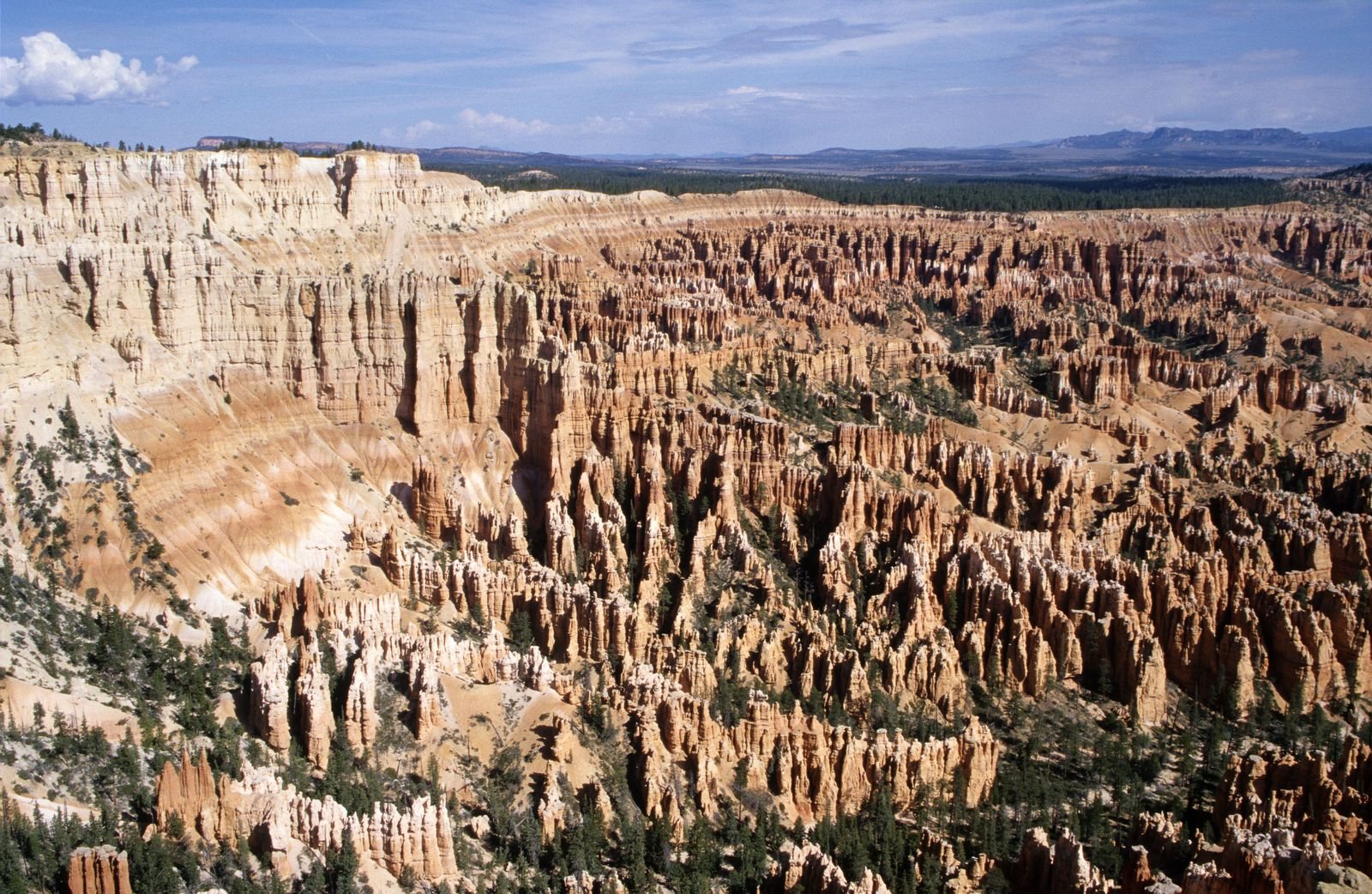
The first time we walked up to Sunset Point at dawn and looked down into the Bryce Amphitheater, neither of us said a word for a full minute. Thousands of orange and pink rock spires, called hoodoos, stood glowing in the early light like a city carved by something other than human hands.
Bryce Canyon is the smallest of Utah’s famous national parks, and in our opinion it punches far above its size. This Bryce Canyon National Park travel guide covers when to go, how to get there, the hikes that take you down among the hoodoos, where to stay, and the stargazing that turns the park into something magical after dark. We live in Denver, so the Colorado Plateau is our backyard playground, and Bryce is one of the spots we send friends to first.
When to Visit Bryce Canyon
Here is the thing most people do not realize about Bryce: it sits high. The rim hovers around 8,000 to 9,100 feet, which makes it dramatically cooler than Zion or the Grand Canyon. That elevation shapes everything about when to go.
Summer (June to August) is peak season and, frankly, the most comfortable time to hike. Daytime highs land in the 70s and 80s while the desert parks below bake past 100. Afternoons can bring quick thunderstorms, so we start hikes early. Expect full parking lots by 9am at the main viewpoints.
Fall (September to October) is our favorite window. The crowds thin after Labor Day, the air turns crisp, and the low-angle light makes the hoodoos glow even richer. Bring layers, because nights drop into the 30s.
Winter (December to March) is Bryce’s secret weapon. Snow settles on the red hoodoos in a contrast you will not see anywhere else on earth, and the park stays open. You can snowshoe the rim trail and have viewpoints nearly to yourself. Some trails close or ice over, so pack traction spikes.
Spring (April to May) is beautiful but unpredictable. We have seen sunny 60-degree afternoons and surprise snow squalls in the same week. Check the forecast and pack for both.
Getting to Bryce Canyon and Getting Around
Bryce Canyon sits in southern Utah, a little off the beaten path, which is part of its charm. The closest major airport is Las Vegas, about 3.5 to 4 hours away by car. Salt Lake City is a roughly 4-hour drive from the north. Most people fly into one of those two, rent a car, and make Bryce part of a larger loop.
That loop is the real magic. Bryce pairs naturally with Zion (about 90 minutes southwest) and the Grand Canyon’s North Rim (about 2.5 hours south). If you are flying into Vegas anyway, our Las Vegas travel guide covers the city side, and our Zion National Park travel guide walks through the park you will almost certainly visit on the same trip.
Inside the park, a free seasonal shuttle runs from spring through fall, looping between the visitor center, the lodge, and the main amphitheater viewpoints. It is genuinely useful in summer when parking fills up. Unlike Zion, though, Bryce lets you drive the full scenic road in your own car any time, which we appreciate for early sunrise missions before the shuttle starts running.
Understanding the Hoodoos
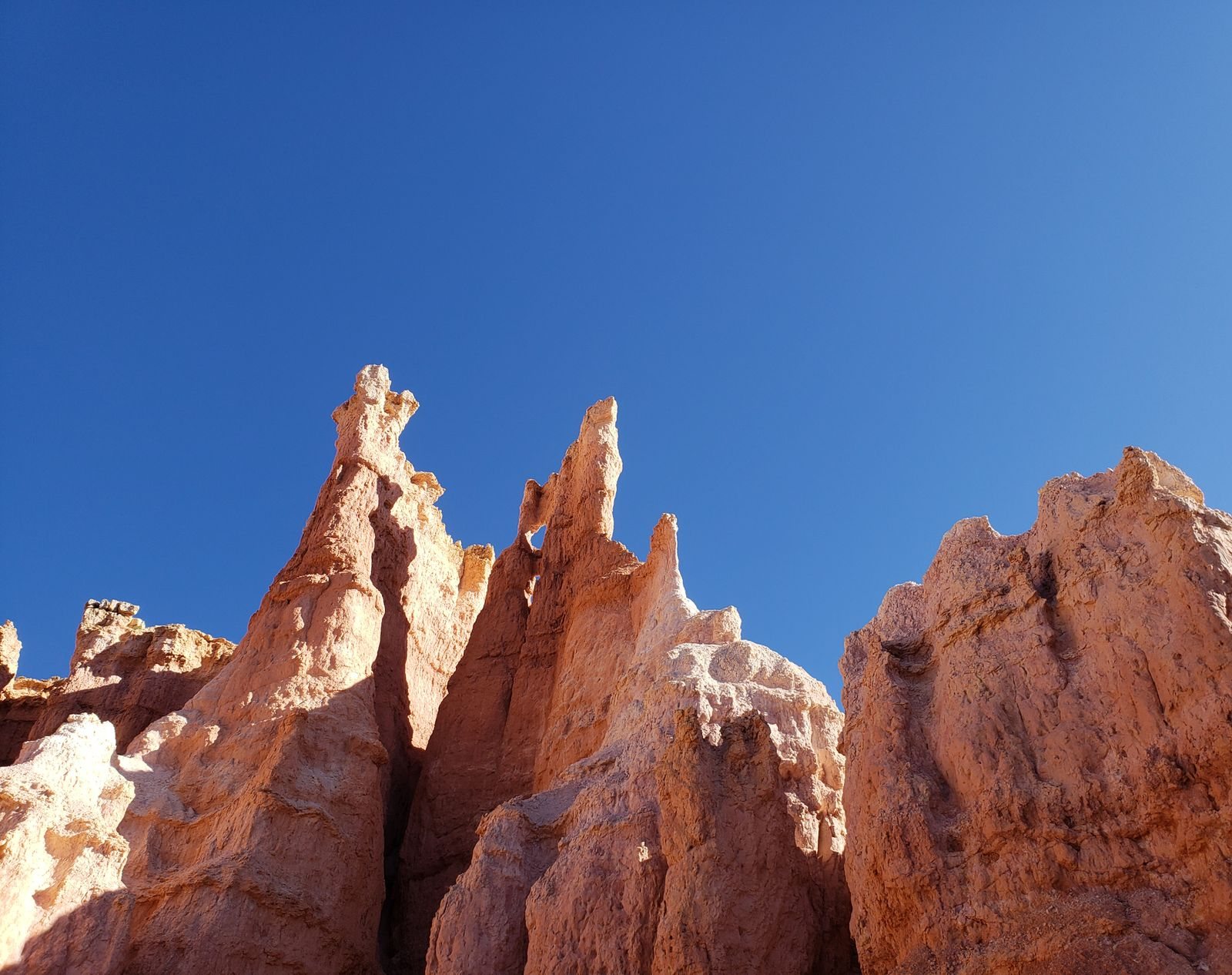
A quick bit of context that makes the park more interesting. Hoodoos are tall, thin spires of rock left behind as softer stone erodes away around harder caps. Bryce is not technically a canyon at all. It is a series of natural amphitheaters carved into the edge of a high plateau, and it holds the largest concentration of hoodoos anywhere on the planet.
The science behind them is surprisingly active. Bryce goes through about 200 freeze-thaw cycles a year, where water seeps into cracks, freezes overnight, expands, and slowly pries the rock apart. The park you see today is temporary on a geologic scale, which somehow makes standing among the hoodoos feel even more special.
The colors come from iron and manganese in the rock. The reds, oranges, and pinks shift hour by hour, which is why sunrise and sunset are non-negotiable here.
The Best Hikes in Bryce Canyon
The viewpoints from the rim are stunning, but Bryce rewards you for going down into it. Walking among the hoodoos, looking up instead of down, is a completely different experience. Here are the hikes we recommend.
Navajo Loop and Queen’s Garden Combo
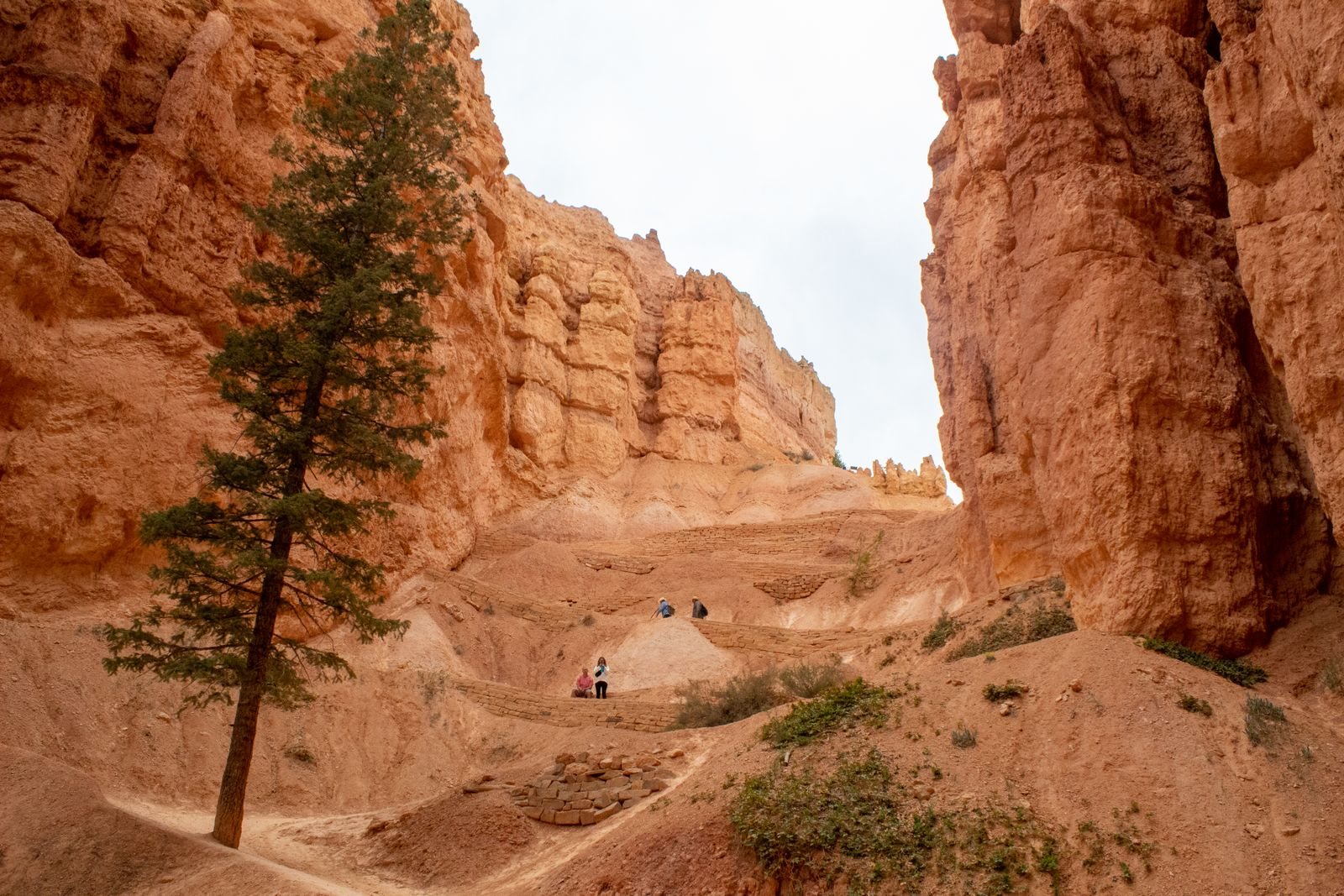
If you do one hike in Bryce, make it this one. The combined loop runs about 3 miles, starts at Sunset Point, and drops you down the famous Wall Street switchbacks between towering walls before winding through Queen’s Garden and back up to Sunrise Point. It is moderate, well marked, and packs more scenery per mile than almost any hike we know. Go clockwise (down Wall Street, up Queen’s Garden) for the gentler climb out.
Peekaboo Loop
For a bigger day, the Peekaboo Loop adds roughly 5.5 miles of hoodoo immersion with more climbing. You can connect it to the Navajo and Queen’s Garden trails for a longer figure-eight. This is the hike where you really feel the scale of the place, weaving past formations like the Wall of Windows. It is also a horse trail, so watch your step.
Fairyland Loop
The Fairyland Loop is the park’s underrated gem: about 8 miles, less crowded because the trailhead sits outside the main shuttle stops, and full of dramatic standalone hoodoos. We hiked it on a fall afternoon and saw maybe a dozen people the whole way. Save it for when you have legs and time to spare.
Easy Rim Walks
Not everyone wants to descend into the amphitheater, and you do not have to. The Rim Trail between Sunrise and Sunset Points is a flat, paved half mile with jaw-dropping views the whole way. Extend it toward Inspiration Point for more. This is the one we recommend for anyone with mobility concerns or young kids.
The Scenic Drive and Best Viewpoints
The park’s main road runs 18 miles to its end at Rainbow Point, climbing to over 9,000 feet along the way. Our strategy: drive all the way to the end first, then stop at the viewpoints on the way back, since they all face the same direction and this keeps you turning right.
The standout overlooks are Bryce Point (the best sunrise spot, overlooking the whole amphitheater), Inspiration Point (tiered views of Silent City), Sunset Point (despite the name, also great at sunrise), and Rainbow Point at the very end, where you can see for a hundred miles on a clear day. For sunrise, we love Bryce Point. For sunset, the namesake Sunset Point delivers.
A Perfect 2-Day Bryce Canyon Itinerary
Day 1: Arrive and check in. Catch sunset at Sunset Point, then grab dinner at the lodge or in nearby Bryce Canyon City. After dark, walk a few steps from your room and look up, because the stargazing here is extraordinary (more on that below).
Day 2: Wake before dawn for sunrise at Bryce Point. After breakfast, hike the Navajo Loop and Queen’s Garden combo while the light is still soft. Spend the afternoon driving the scenic road to Rainbow Point, stopping at the overlooks. If you have energy left, add the Peekaboo Loop or a stretch of the Fairyland Loop.
If you only have one day, do the sunrise plus the Navajo and Queen’s Garden combo plus the scenic drive. Bryce is one of the few national parks you can genuinely experience in a single well-planned day, which is exactly why it slots so well into a bigger road trip.
Where to Stay near Bryce Canyon
Your main options break down into three tiers.
Inside the park, The Lodge at Bryce Canyon is a historic property steps from the rim. It books out months ahead for summer, so reserve early if a rim-walk-before-coffee morning appeals to you.
Just outside the entrance, Bryce Canyon City has a cluster of reliable hotels, including a large resort-style property with restaurants and an evening shuttle. This is where we usually land for the convenience.
For more character and lower prices, the town of Tropic sits about 15 minutes east with cozy inns and cabins. Slightly farther out, Panguitch offers budget motels and a charming historic main street.
Whatever tier you choose, book ahead in summer. Bryce has far fewer rooms than its visitor numbers, and last-minute availability in July is rough.
Bryce Canyon with Kids
Bryce is one of the more family-friendly national parks we have visited. The hoodoos genuinely look like a fairy-tale landscape, which captures kids’ imaginations in a way that big canyon views sometimes do not.
The Queen’s Garden trail is the gentlest way down into the amphitheater, and most school-age kids handle it well. The paved Rim Trail works for strollers. The Junior Ranger program at the visitor center is one of the best in the system, and the park’s ranger-led programs, especially the astronomy talks, are a hit. Just keep the elevation in mind, since little legs tire faster at 8,000 feet, and pack more water and snacks than you think you need.
Stargazing at Bryce Canyon
If we had to name one thing that sets Bryce apart, it might be the night sky. Bryce is a certified International Dark Sky Park, and on a moonless night you can see thousands of stars, the Milky Way arcing overhead, and constellations you have never been able to pick out at home.
The park runs astronomy programs and full-moon hikes through the warmer months, led by rangers and volunteer astronomers with telescopes set up for visitors. Even without a program, just walking to a viewpoint after dark is unforgettable. Bring a red-light flashlight to preserve your night vision, dress far warmer than you expect (the rim gets cold fast after sunset), and give your eyes 20 minutes to adjust.
What to Pack for Bryce Canyon
A few items make a real difference at this elevation and in this climate:
- Layers. Mornings and nights are cold even in summer. We start dawn hikes in a fleece and finish in t-shirts.
- Sun protection. The high-altitude sun is intense. Hats, SPF, and sunglasses are essential.
- Water. At least 2 to 3 liters per person for any real hike. The dry air dehydrates you faster than you realize.
- Sturdy shoes. Trails can be sandy, rocky, and steep on the climbs out.
- Traction spikes if you visit between late fall and early spring.
- A warm layer for stargazing, even in July.
Where to Book
These are the platforms we use to plan our own national park trips:
- Hotels: Booking.com covers Bryce Canyon City, Tropic, and Panguitch, with free cancellation on most properties. That flexibility helps when you are stitching together a multi-park road trip and dates may shift.
- Tours and experiences: Viator runs guided hikes, horseback rides among the hoodoos, ATV tours, and multi-park combo trips from Las Vegas if you would rather skip the driving.
Final Thoughts
Bryce Canyon is proof that the most memorable places are not always the biggest. You can see the headline views in an afternoon, but give it a sunrise, one hike down into the amphitheater, and one night under the stars, and it will stick with you for years. It certainly stuck with us. Start early, dress in layers, and do not skip the descent. Looking up at those hoodoos from the canyon floor is the whole point.
Planning a bigger Southwest adventure? Read our Zion National Park travel guide for the park most travelers pair with Bryce, our Grand Canyon travel guide to round out the classic loop, and our Las Vegas travel guide for the city where most of these road trips begin.