Disclosure: This post contains affiliate links. If you book through our links, we may earn a small commission at no extra cost to you. Thanks for supporting Faceted Travel!
Table of Contents
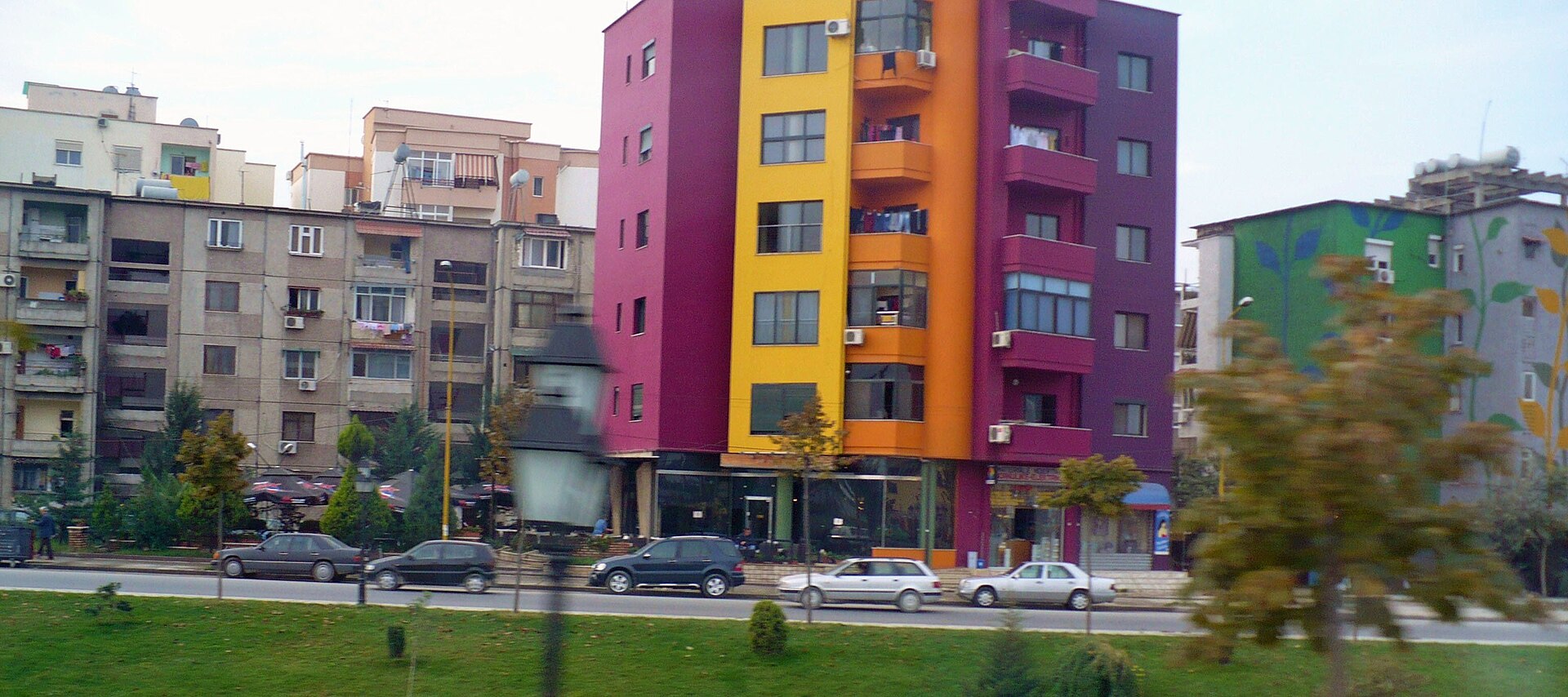
Tirana is the only European capital we have visited where the buildings are painted in clashing primary colors on purpose, and it works. The former mayor started having gray communist blocks repainted in oranges, purples and geometric patterns because he could not afford to fix anything else, and two decades later the whole city carries that energy: broke, loud, improvising, and getting better every year.
Most people give Tirana one night on the way to the beach. That is a mistake. Give it two days and it becomes the part of the trip you talk about afterward.
Why Tirana Surprises People
The city has almost no old town. Tirana was a small Ottoman settlement that became a capital in 1920 and then spent fifty years under one of the most isolated dictatorships in Europe, so what you get instead of medieval lanes is a compressed, visible history of the twentieth century: an Italian fascist boulevard, Soviet style apartment blocks, a concrete pyramid built as a dictator’s mausoleum, and a wall of glass towers going up right now.
It is also small. The center is genuinely walkable, the coffee culture is serious, and the mountains start twenty minutes from the main square. For a fuller picture of how Tirana fits into a wider Albanian route, see our guide to planning a trip to Albania.
Best Things to Do in Tirana
Skanderbeg Square
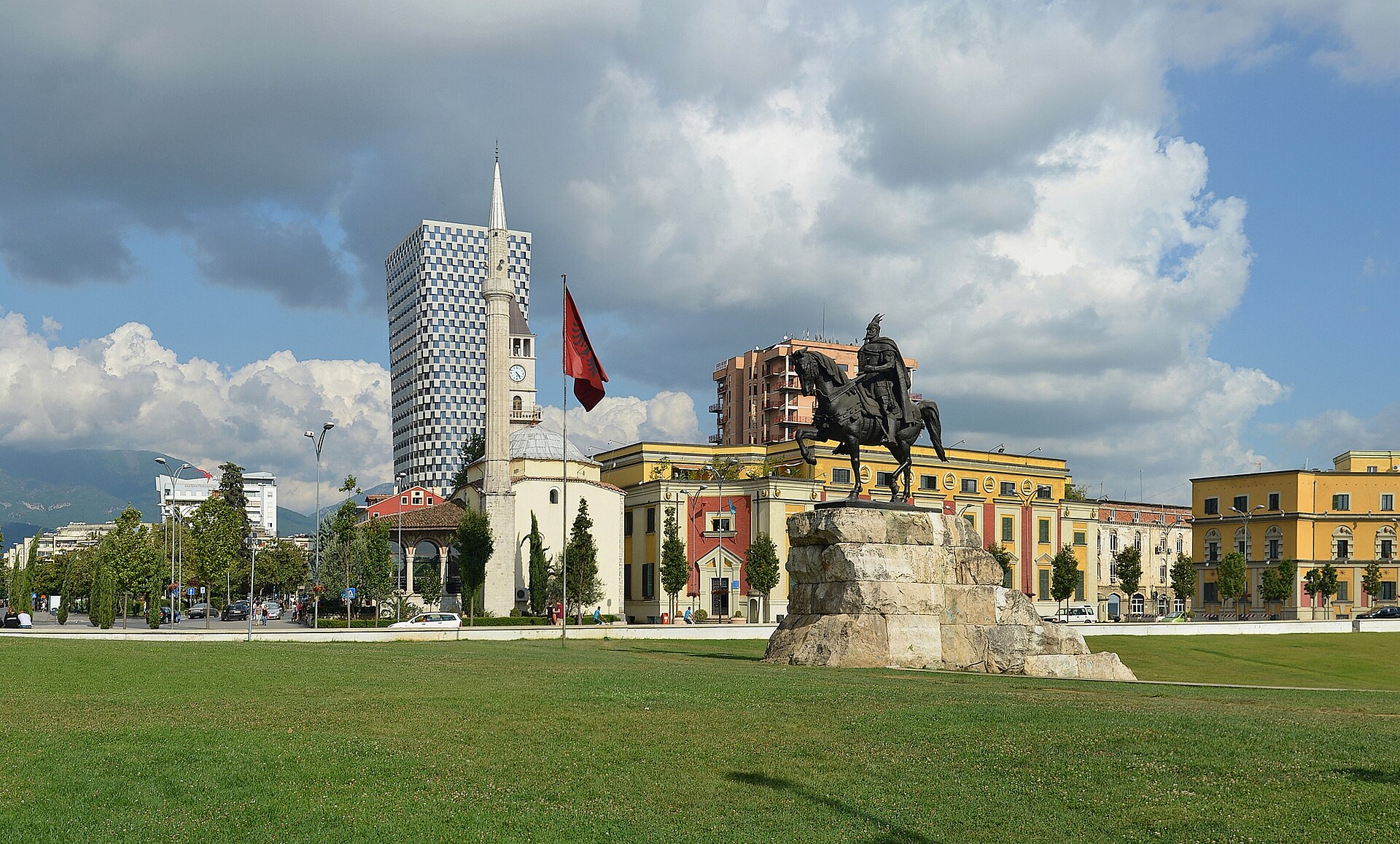
The center of everything, and recently rebuilt as a huge pedestrian plaza paved in stone quarried from every region of the country. The equestrian statue is of Gjergj Kastrioti Skanderbeg, the fifteenth century commander who held off the Ottoman Empire for twenty five years and is the closest thing Albania has to a national saint. Come back at night when the fountains and the surrounding buildings are lit.
Bunk’Art 1 and Bunk’Art 2
If you do one thing in Tirana, make it this. The dictator Enver Hoxha had roughly 170,000 concrete bunkers built across a country of fewer than three million people, convinced an invasion was imminent. Two of the largest have been converted into museums.
Bunk’Art 1 sits at the base of Dajti Mountain in a five story nuclear bunker built for the political leadership. It covers the whole communist period, room by room, and takes at least two hours.
Bunk’Art 2 is smaller, more central, and focuses specifically on the secret police. It is the more emotionally difficult of the two.
Do Bunk’Art 2 first if you only have time for one, because it is right in the center. Do Bunk’Art 1 if you have a half day, because the scale of it is the point.
The House of Leaves
A small museum in a former surveillance headquarters, documenting how the state listened to its own citizens. Wiretaps, hidden cameras, informant files. It is quiet, well curated and genuinely unsettling, and it takes about an hour.
The Pyramid of Tirana
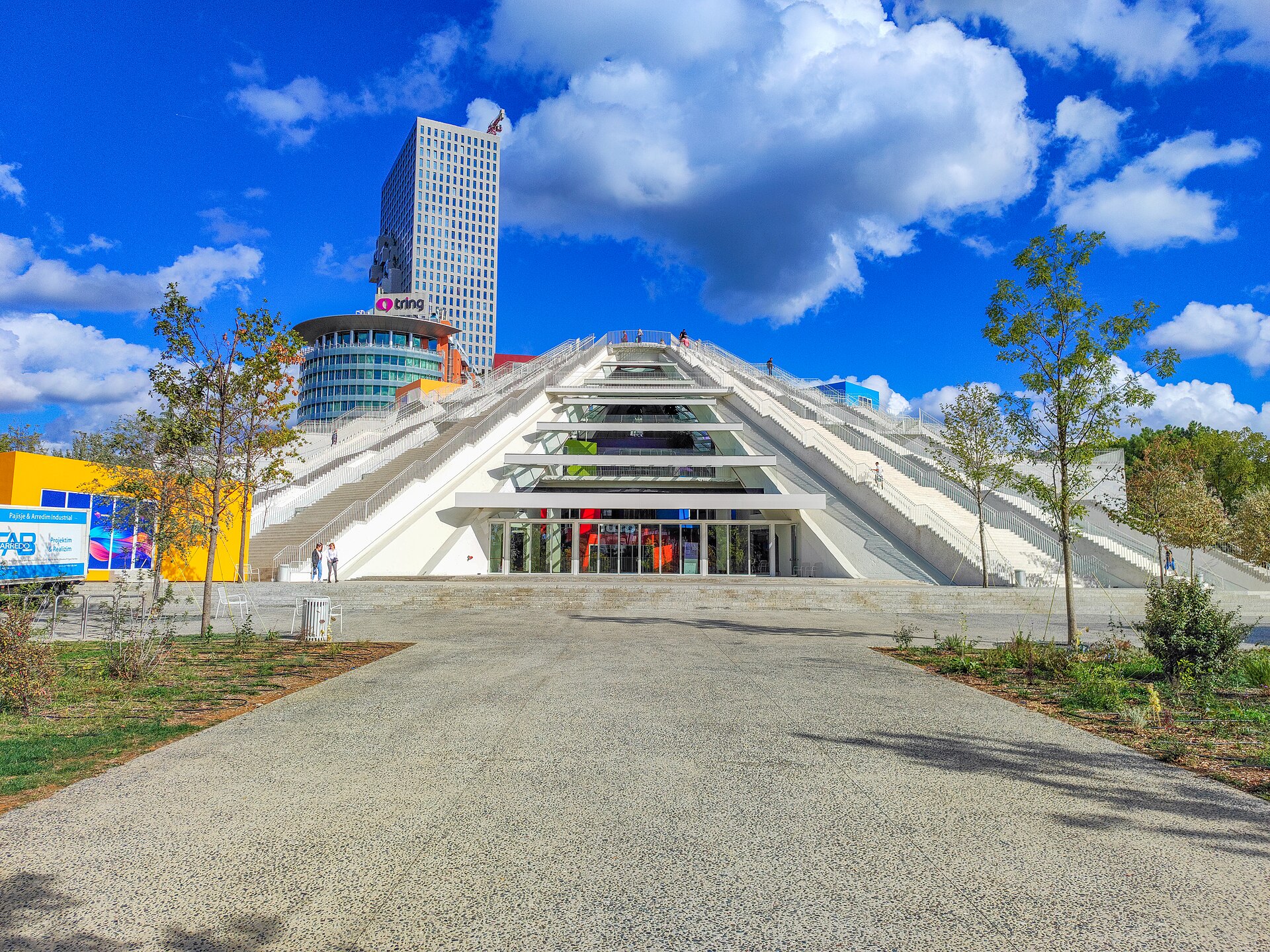
Built in 1988 as a museum to Hoxha, later a nightclub, then a NATO base, then a ruin that teenagers climbed for years. It reopened in 2023 as a tech and culture center with the climbing steps formalized into a staircase. Go up at sunset. The view over the city is the best free thing in Tirana.
Blloku
Once the sealed compound where the party elite lived, closed to ordinary Albanians until 1991. It is now the bar and restaurant district, and the contrast is not lost on anyone who lived through both. This is where you eat and drink at night.
Dajti Mountain and the Cable Car
The Dajti Ekspres gondola runs from the eastern edge of the city up to about 1,050 meters in fifteen minutes. At the top there are restaurants, a viewing terrace over the whole Tirana plain, and walking trails into the national park. It is the easiest half day escape in the city and it costs less than a lunch.
The Grand Park and Artificial Lake
South of the center, a big wooded park around a reservoir where the whole city walks in the evening. Good for a morning run or an hour of doing nothing.
Where to Eat in Tirana
Albanian food is Mediterranean with Ottoman and Italian layers, and Tirana is where it is done best.
- Byrek is the national breakfast: flaky layered pastry with cheese, spinach or meat, sold from hole in the wall bakeries for well under a euro.
- Tave kosi is baked lamb with a yogurt and egg custard, the dish most worth ordering once.
- Fergese is peppers, tomato and cottage cheese baked in a clay dish, usually served as a starter and easily a meal.
- Qofte are grilled meatballs, ubiquitous and reliable.
- Raki is the homemade fruit brandy your guesthouse host will pour you whether you asked or not.
The restaurant scene in Blloku and around Rruga Pjeter Bogdani has gotten genuinely good in the last five years, with a wave of chefs who trained in Italy coming home. A serious dinner with wine still lands around 20 to 25 euros a head.
Getting Around
Tirana’s center is walkable end to end in about thirty minutes. Beyond that:
- Taxis and ride hailing are cheap and easy. Use a local app rather than flagging a car, which gets you a fairer price.
- City buses are very cheap and slightly chaotic. Pay the conductor on board in cash.
- Walking is the default, with the caveat that traffic is assertive and crosswalks are advisory.
Do not rent a car for the city itself. Tirana traffic is genuinely difficult and parking is worse. Pick the car up on the day you leave. We cover the wider driving picture in our Albania planning guide.
Where to Stay
Blloku is the best base for a short stay: central, walkable to nearly everything, and where the restaurants and bars are. It is also the loudest, so ask for a room off the street.
Around Skanderbeg Square puts you next to the museums and the main boulevard, with a slightly more business hotel feel and better prices.
Near the Grand Park is quieter and greener, about a twenty minute walk from the center, and good if you are staying longer than two nights.
Tirana has a strong mid range hotel scene and a growing crop of boutique places in restored buildings. We book ours through Booking.com, which has by far the best coverage of the small independent properties that make up most of the city’s stock.
Day Trips from Tirana
Kruje
Forty five minutes north. A hillside town with a castle, the Skanderbeg museum, and an Ottoman bazaar street selling carpets, copper and antiques. The most popular half day trip in the country and worth the traffic.
Durres
Forty minutes west on the coast, with a Roman amphitheater sitting in the middle of the modern city and a long sandy beach that is popular with Albanians and largely ignored by foreign visitors. Not the country’s best beach by a wide margin, but easy.
Berat
Two and a half hours south. Doable as a very long day trip, much better as an overnight on the way to the coast.
Dajti Mountain
Covered above, and the easiest of the four.
When to Visit Tirana
Tirana works year round, which is not true of the Albanian coast. Spring and autumn are the best of it: April, May, September and October give you mild days, open terraces and hotel rates well below the summer peak.
July and August are hot, often above 35C, and the city empties out as Albanians head for the sea, which means quieter streets and shorter museum lines if you can handle the heat. Winter is cool and wet rather than cold, and it is the cheapest time to come. If you are combining Tirana with the beaches, our Albanian Riviera guide explains why the coastal season is much shorter.
Where to Book
For accommodation, Booking.com is what we use throughout Albania. Tirana rarely sells out the way the coast does, but the best boutique properties are small and do go.
For tours, Viator covers the Tirana communist history walking tours, the Kruje and Durres day trips, and food tours through the central market. We would specifically recommend a guided communist history walk on your first morning, because context makes everything else in the city land harder.
How Long to Stay
One night is enough to see Skanderbeg Square, climb the Pyramid and eat well in Blloku.
Two nights is the right answer. It gets you both Bunk’Art museums or one plus the House of Leaves, the cable car, and an unhurried evening.
Three nights makes sense if you want Kruje as a day trip or you are using Tirana as a base while you sort out a rental car.
Tirana in Two Days
Day one. Start with byrek and a macchiato near your hotel, then walk to Skanderbeg Square and go through the National History Museum for the long view. Cross to Bunk’Art 2 in the afternoon, which sits in a bunker entrance right beside the square, then walk twenty minutes to the House of Leaves while the subject is still fresh. Climb the Pyramid at sunset and eat dinner in Blloku.
Day two. Take the Dajti Ekspres cable car up the mountain first thing, before the haze settles over the plain, and have coffee on the terrace looking back at the city. Come down and do Bunk’Art 1, which is at the base of the same mountain, so the two combine into one efficient half day. Spend the late afternoon in the Grand Park or browsing the central market, Pazari i Ri, where the produce stalls are ringed by some of the better casual restaurants in the city.
That sequence works because it puts the two heaviest museums on different days and pairs the cable car with Bunk’Art 1 geographically, which saves you a second trip east.
A Few Practical Notes
Cash. Tirana takes cards more readily than anywhere else in Albania, but market stalls, byrek windows and most taxis are cash only. Withdraw from bank ATMs rather than standalone machines.
Museum hours. Several museums close on Mondays and the Bunk’Art sites keep shorter winter hours. Check before you build a day around one.
Tipping. Rounding up is normal and appreciated. Ten percent at a sit down restaurant is generous rather than expected.
Our Honest Take
Tirana is not a beautiful city, and anyone who tells you it is has an agenda. It is a fascinating one. The interest is in how visibly the layers sit on top of each other: a bunker under a mountain, a pyramid tomb turned into a startup hub, a party compound turned into a cocktail district. Nowhere else in Europe shows you the twentieth century this bluntly.
Give it two days at the start of your trip rather than one night at the end, and the rest of Albania makes a great deal more sense.
Continue the trip: our Albanian Riviera guide covers the coast most people head to next, how to plan a trip to Albania lays out the full route and budget, and our Montenegro road trip itinerary picks up where an Albania loop naturally ends if you are heading north.