Disclosure: This post contains affiliate links. If you book through our links, we may earn a small commission at no extra cost to you. Thanks for supporting Faceted Travel!
Table of Contents
Nobody told us that the largest lake in southern Europe sits forty minutes inland from the Montenegrin coast, that it is half covered in water lilies by June, and that you can rent a boat on it for less than the cost of two beach loungers in Budva. We found out by accident, driving the old road from Podgorica toward the coast, and pulling over at a viewpoint above a river bend that turned out to be one of the most photographed spots in the country.
Lake Skadar is the part of Montenegro that most itineraries skip entirely, which is exactly why we want to write about it. It is the country’s biggest national park, a major bird sanctuary, a wine region, and a place where you can spend a whole day on the water and see maybe three other boats. After a week on the coast, it was a relief.
What Lake Skadar Actually Is
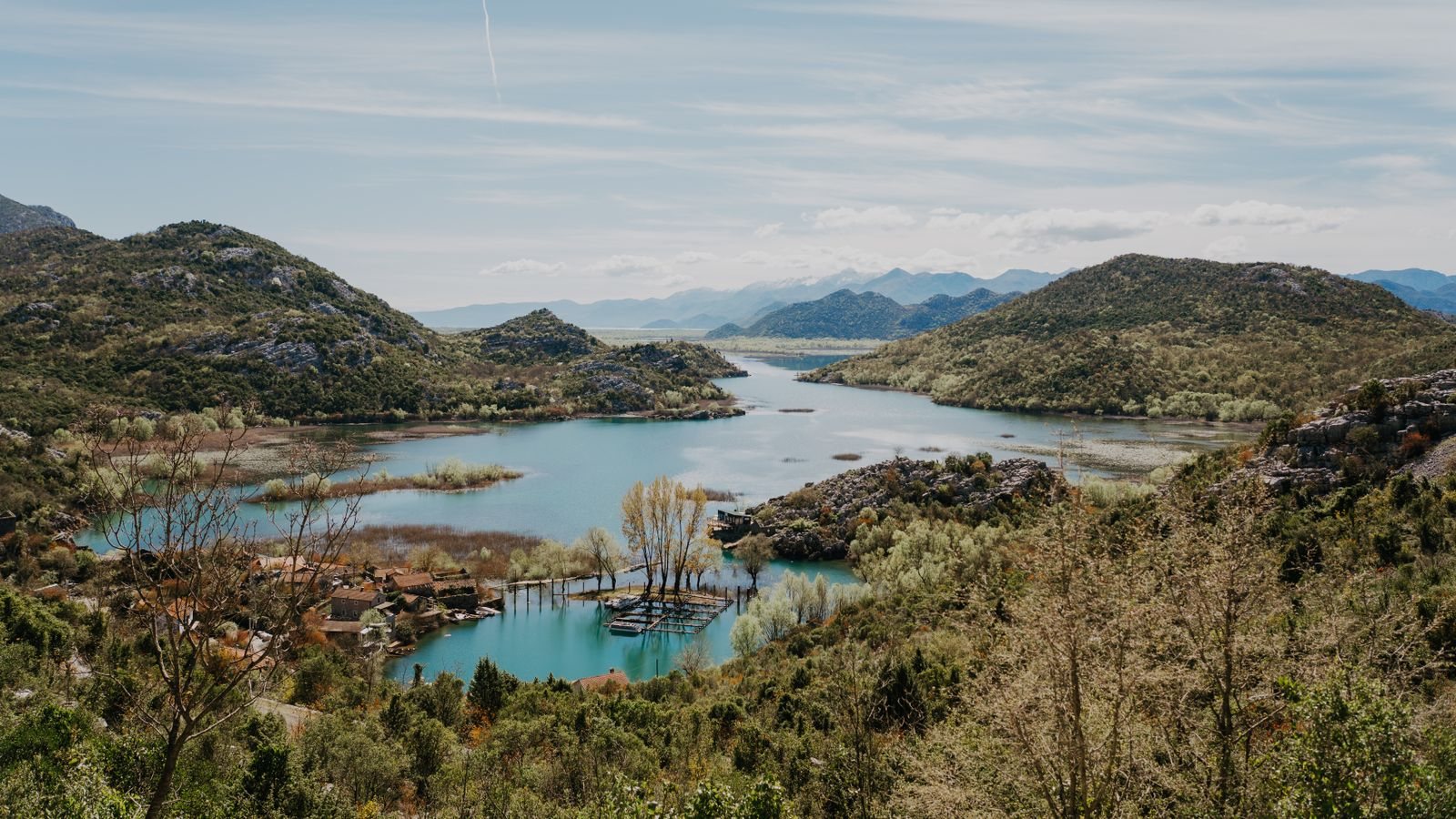
Lake Skadar covers roughly 370 to 530 square kilometers depending on the season, because the water level swings dramatically between summer and the winter rains. About two thirds of it is Montenegrin and one third belongs to Albania, and the border runs straight through the middle of the water.
The Montenegrin side was declared a national park in 1983. It holds around 280 bird species including one of Europe’s last colonies of Dalmatian pelicans, plus pygmy cormorants, herons and an enormous amount of migratory traffic in spring and autumn. It is also, and this surprised us, a working landscape: there are fishing villages, monasteries on islands, vineyards on the slopes and a couple of hundred people who still make their living directly from the lake.
The park entrance fee was around 4 euros per person when we visited, usually collected at the Vranjina or Virpazar entry points or bundled into a boat tour.
The Pavlova Strana Viewpoint
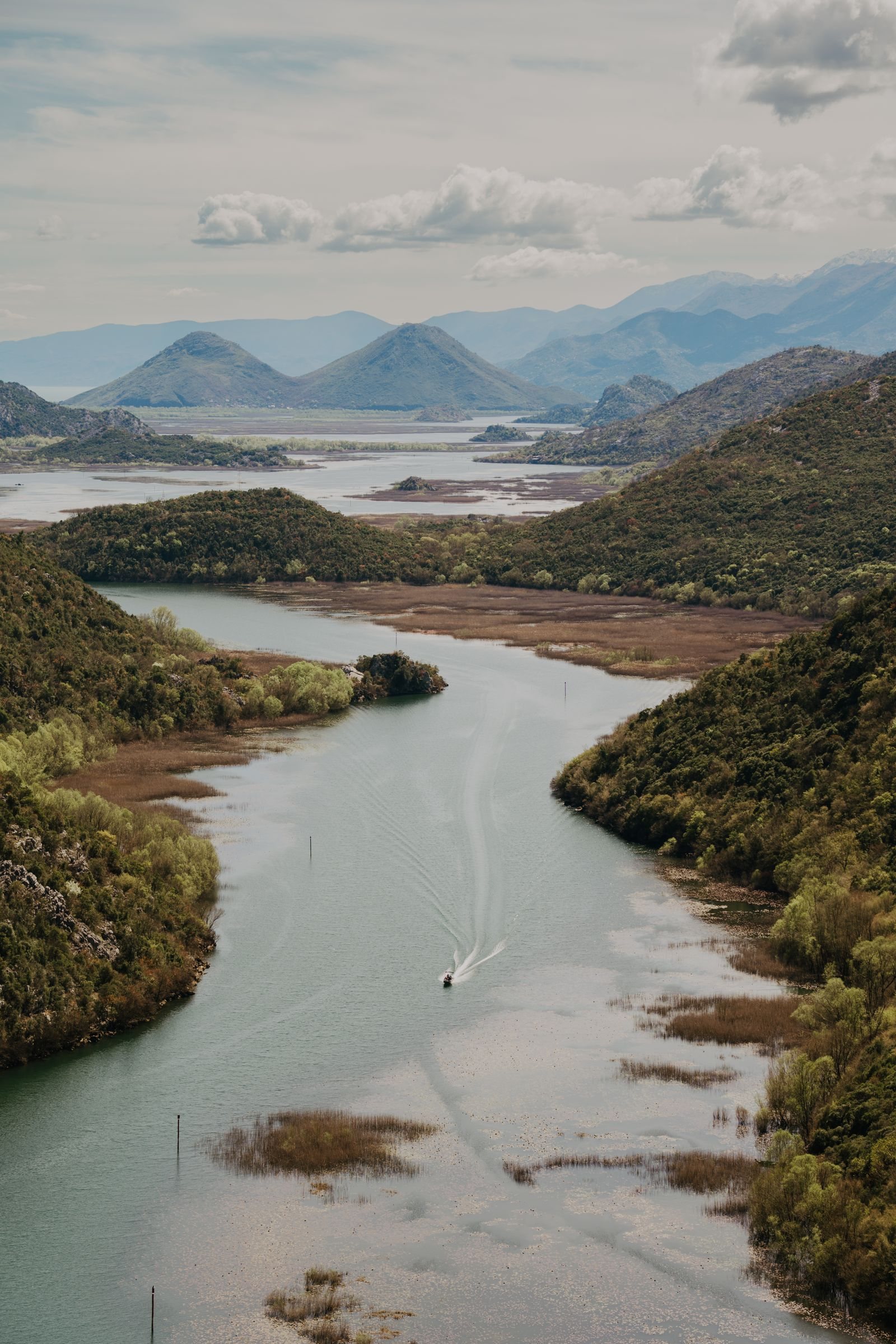
If you only do one thing here, do this. The Pavlova Strana viewpoint sits above a spot where the Crnojevic River makes a near-perfect horseshoe bend before emptying into the lake, and it is the single most striking landscape we saw in Montenegro outside of Durmitor.
It is on the old Cetinje to Rijeka Crnojevica road, and the road itself is a narrow, switchbacking, guardrail-optional affair that we would not want to drive at night or in rain. There is a small pull-off with room for maybe six cars and a couple of stalls selling honey and rakija. No entry fee, no facilities.
Timing: morning light is better because the sun comes over the ridge behind you and lights the bend directly. By mid-afternoon you are shooting into haze. Early morning mist sitting in the river valley is the version everyone hopes for and it happens most often in September and October.
Rijeka Crnojevica
The village at the bottom of that river bend is worth an hour on its own. Rijeka Crnojevica was once Montenegro’s main river port and it still has a beautiful arched stone bridge from 1854, a stretch of old stone waterfront and two or three restaurants serving lake fish on terraces over the water.
It is drowsy in the best way. We had grilled carp and a glass of Vranac at a table maybe two meters from the river, watched a heron work the shallows for twenty minutes, and were the only customers.
Boats also leave from here for trips down the river into the open lake, which is a prettier approach than starting at Virpazar because you get the narrow, lily-covered river section first.
Virpazar and Getting on the Water
Virpazar is the main hub for the lake and where most visitors start. It is a small village at the head of a bay, reachable directly off the Podgorica to Bar highway, with a cluster of tour operators, a few guesthouses and a Saturday market.
Boat trips are the whole point, and there are basically three formats.
Group tours run around 20 to 30 euros per person for two to three hours, usually including a swim stop and sometimes lunch. They are fine, and they are the easy option.
Private boat hire is where the value is. A small boat with a skipper for a half day ran us about 80 to 100 euros for the boat, which split between two couples is very reasonable and lets you set the route.
Kayaks and small motorboats can be rented without a skipper for roughly 15 to 40 euros depending on the craft. The lake is shallow and calm most of the time, but afternoon wind can pick up quickly, so ask locally before heading far out.
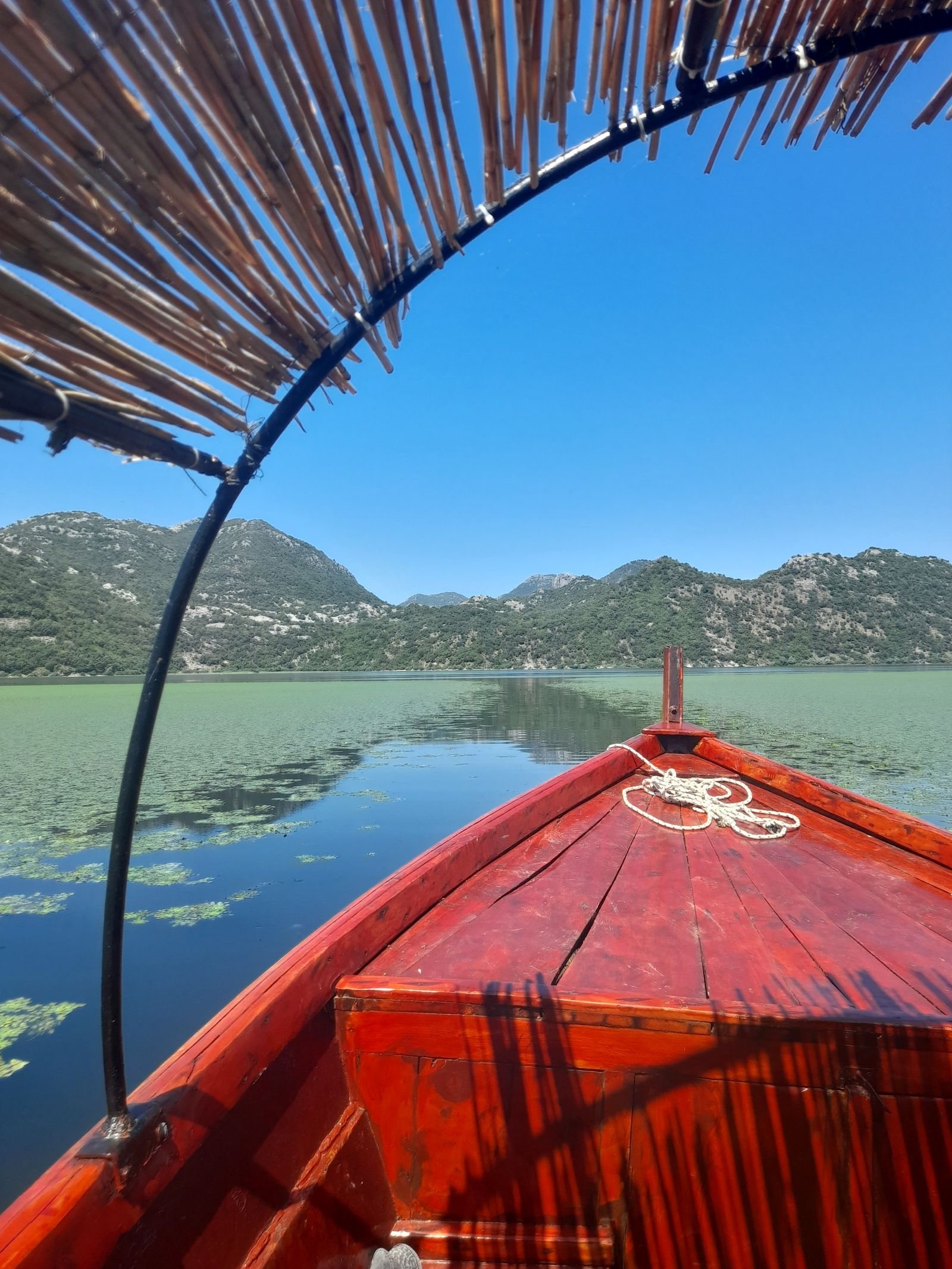
What to ask your skipper to include: the lily fields (best mid-May through July), one of the island monasteries, the sunken village at Kom, and a swim stop. Also ask about the pelicans, because their location shifts by season and a local skipper knows where they are that week.
The Island Monasteries
Lake Skadar has a scatter of small monasteries on islands, several dating to the 14th and 15th centuries, from the period when this area was the heart of the Zeta state and later a refuge from Ottoman advance.
Kom Monastery is the most visited and sits on a peninsula on the northern shore. 15th century, frescoed, and reachable by boat or a rough track.
Beska and Moracnik are smaller island monasteries, both still occupied by a handful of monks or nuns, and both accessible only by boat. Visits are respectful and low-key rather than touristic. Cover shoulders and knees.
Starcevo is the oldest, founded in the 14th century, and the one we liked most for its setting alone.
Not every skipper stops at all of them, so agree on which ones before you leave the dock.
Birdwatching
This is a genuinely significant birding site, not a marketing line. The lake holds the largest breeding colony of Dalmatian pelicans in Europe, a bird with a three-meter wingspan that looks prehistoric in flight.
Best seasons: spring migration runs roughly March to May and autumn migration September to November. Winter brings enormous numbers of ducks and waders. Midsummer is the quietest for birds even though it is busiest for people.
Best time of day: the first two hours after sunrise, comfortably. Specialist birding boat trips leave early and cost a bit more than the standard tours, and they carry scopes.
Where: the marshy northwestern shore around Pancevo Oko and the reedbeds near Virpazar are the productive areas.
The Wine
The slopes around the lake are part of Montenegro’s main wine region, and the grape you will meet everywhere is Vranac, a dark, tannic red that pairs well with the grilled meat that dominates local menus. Krstac is the white counterpart, lighter and slightly floral.
There are small family wineries around Virpazar, Godinje and the villages on the southern shore that do tastings for a few euros, often with a plate of prosciutto, cheese and olives. Godinje village in particular has old stone houses with vaulted wine cellars underneath and several families who welcome visitors.
Most of these are informal operations. Call ahead through your guesthouse rather than expecting a visitor center.
Swimming and Beaches
The lake is warm, shallow and swimmable from roughly June through September, and considerably warmer than the Adriatic, which after the karst-fed cold of the Bay of Kotor felt like a bath.
Murici on the southern shore is the best-known swimming spot, a pebble beach backed by olive groves with a small campsite and a restaurant. The drive there along the southern lake road is spectacular and slow.
Plavnica on the northern shore is more developed, with a resort complex, a pool and boat hire.
Most boat tours include a swim stop mid-lake, which is the version we preferred: jumping off a boat into open water with mountains on all sides and nothing else around.
Where to Eat
Lake fish is the local specialty and it is genuinely good if you order the right thing.
Carp is the signature, usually grilled whole or done as a stew. Bleak, a small fish, is dried, smoked or fried whole and eaten as a snack with rakija. Eel appears on most menus, often smoked, and is more of an acquired taste.
Restaurants worth seeking out sit in Virpazar, Rijeka Crnojevica and the villages on the southern shore. Expect a main course around 10 to 15 euros and a bottle of local Vranac for 12 to 20. This is noticeably cheaper than the coast, which we cover in more detail in how much does a trip to Montenegro cost.
Getting to Lake Skadar
From Podgorica: 25 to 30 minutes by car to Virpazar. Trains on the Podgorica to Bar line also stop at Virpazar, take about 30 minutes and cost a couple of euros, which is one of the better-value train rides in Europe.
From Budva: roughly 45 minutes by car over the mountain road.
From Kotor: about an hour and fifteen minutes.
From the coast generally: the lake makes an easy day trip from anywhere on the southern Montenegrin coast, but staying a night in Virpazar or on the southern shore is a different and better experience.
Driving notes: the southern lake road from Virpazar toward Murici is narrow, unguarded and slow, with roughly 90 minutes of concentration required for maybe 30 km. It is one of the great drives in the country and not one to attempt in the dark. The old Cetinje road to Pavlova Strana is similar.
Public transport around the lake itself is close to nonexistent. If you do not have a car, base yourself in Virpazar and use boat tours and taxis.
Where to Stay
Virpazar is the practical base: small guesthouses, easy access to boats, a few restaurants, and the train station.
The southern shore around Murici and Godinje has small family-run stays and is far quieter, but you need a car and you should be comfortable with the road.
Podgorica works if you want a city base with more choice and are treating the lake as a day trip.
We would stay one or two nights. The lake rewards an unhurried morning and an evening, and one night gets you both.
Best Time to Visit
Late May through June is our pick. The water lilies are in full bloom and cover huge sections of the northern lake in white and yellow, the weather is warm without being brutal, and the crowds are light.
September and October bring bird migration, wine harvest, mist on the river bends and comfortable hiking temperatures.
July and August are hot, often over 35°C inland, and the lake level drops. Still very doable, and much less crowded than the coast at the same time.
Winter is high water, serious bird numbers and very limited tourist infrastructure.
Where to Book
- Guesthouses around Virpazar and the lake: search Booking.com for Virpazar. Properties are small and family-run, so read recent reviews carefully.
- Boat trips, birding tours and wine tastings: Viator’s Montenegro listings cover Lake Skadar cruises, combined lake and Cetinje day tours, and kayaking trips.
- Travel insurance: the lake roads alone are a good argument for it. See the best travel insurance for Europe.
Is It Worth a Day of Your Trip?
Yes, and we would argue for more than a day. Montenegro’s coast is beautiful and increasingly crowded, and the lake is the easiest available antidote: forty minutes inland, dramatically cheaper, almost empty by comparison, and different enough from the Adriatic that it stops the trip from blurring together.
If you have a week in Montenegro, we would give the lake one full day and one night. If you have ten days, give it two nights and drive the southern shore properly.
Building the rest of the trip? See how to plan a trip to Montenegro for routes and timing, pair the lake with the coast using our Budva guide, and check the best time to visit Montenegro before you lock in dates.