Disclosure: This post contains affiliate links. If you book through our links, we may earn a small commission at no extra cost to you. Thanks for supporting Faceted Travel!
Table of Contents
We almost skipped Perast. It sits about twenty minutes up the bay from Kotor, most people see it through a tour bus window on the way to somewhere else, and on paper it is one street with sixteen palaces and no beach to speak of. We gave it an afternoon and ended up staying two nights, which is the single best decision we made in Montenegro.
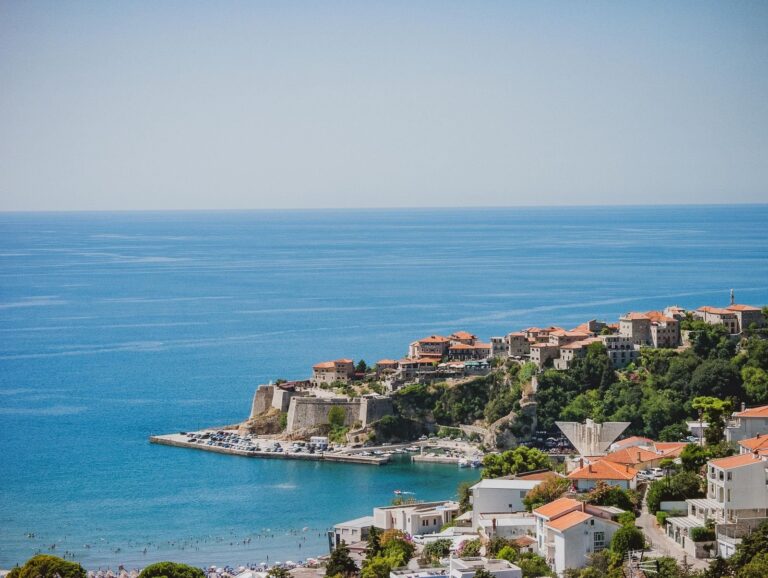
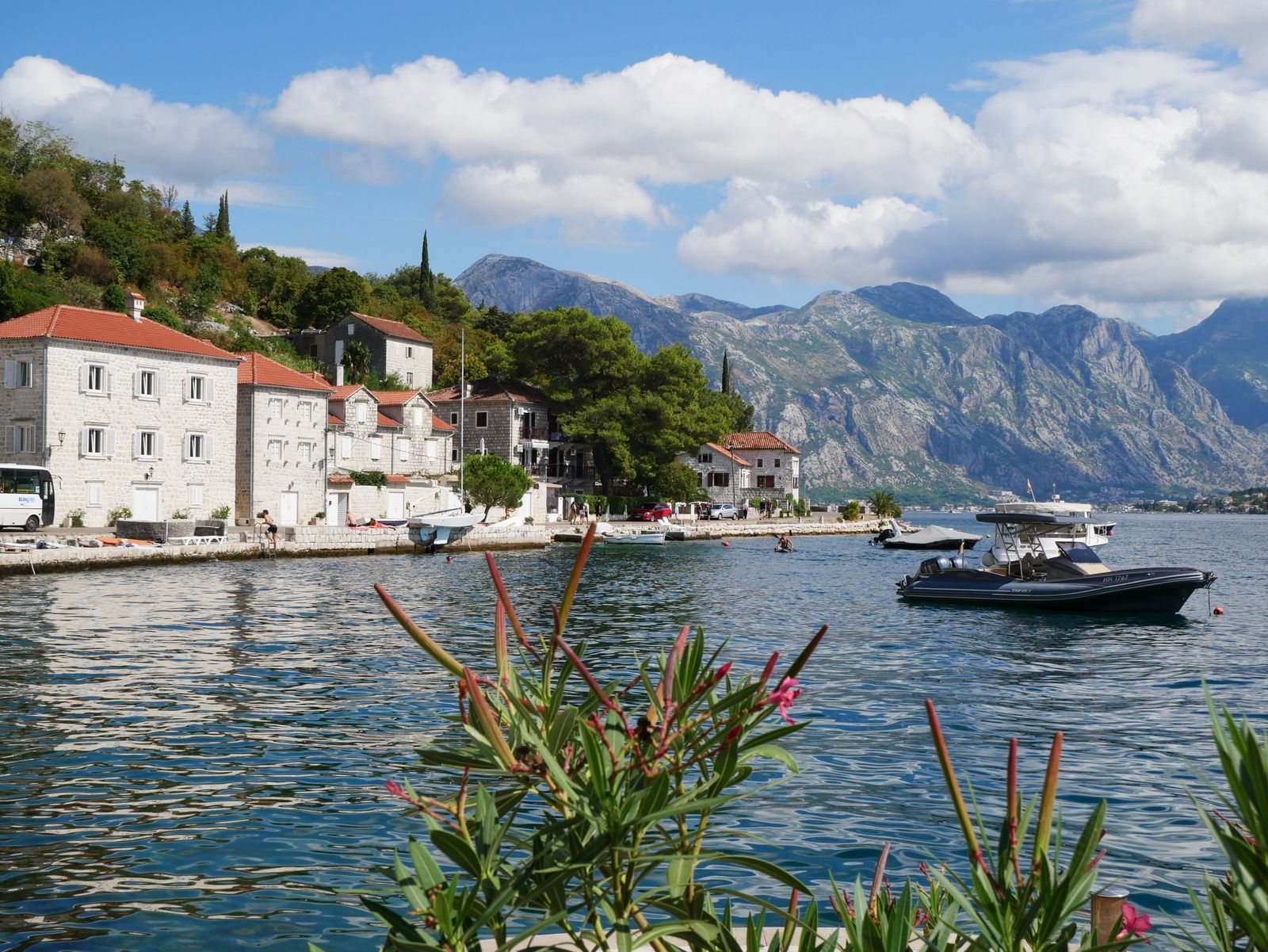
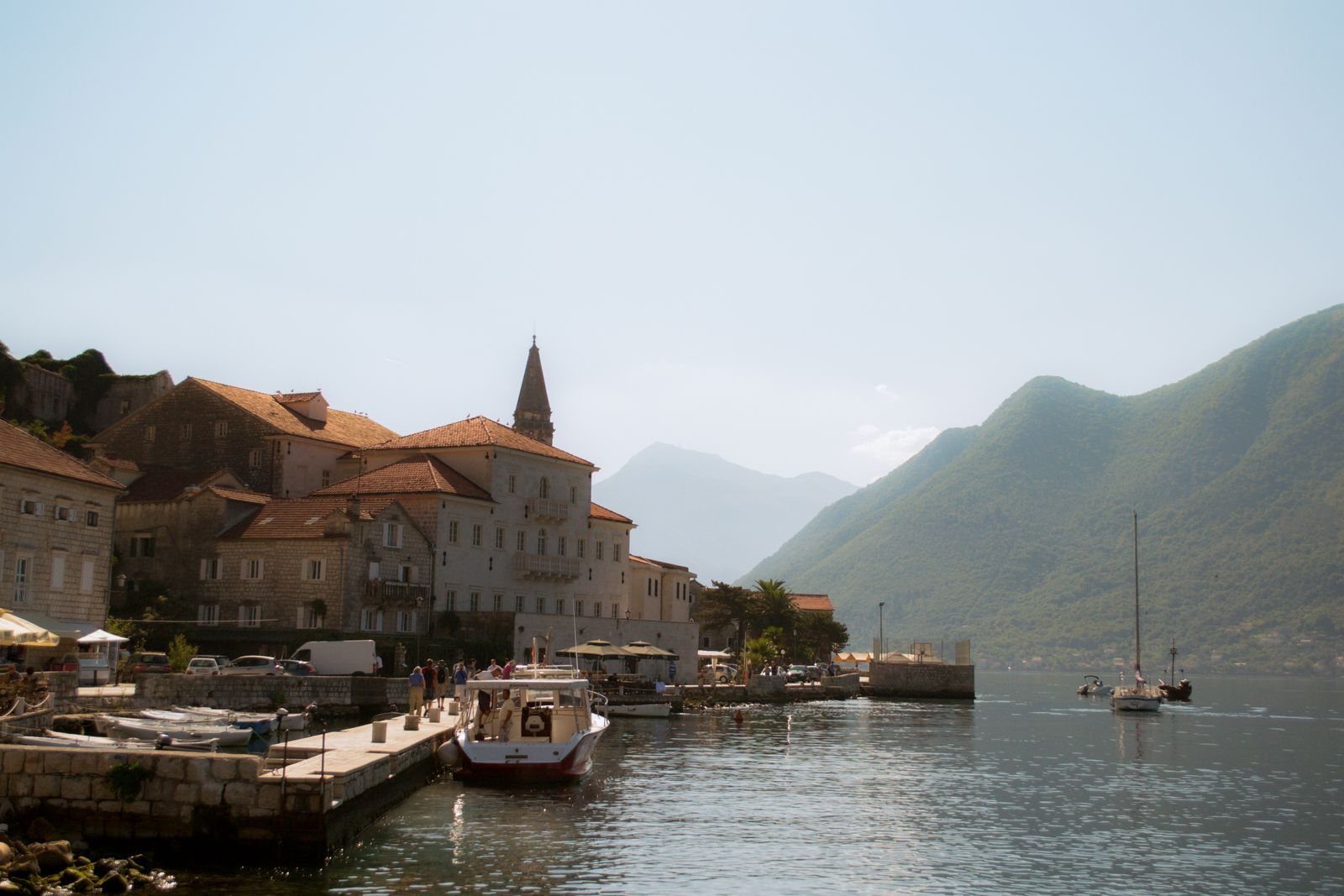
Perast is what the Bay of Kotor looked like before anybody built a cruise terminal. There are no cars on the waterfront, no chain anything, and no real nightlife. What there is instead: baroque stone palaces going gold at six in the evening, a bell tower you can climb for about three euros, and two small islands sitting in the middle of the water like someone placed them there for the photograph. If Kotor is the headline, Perast is the reason you remember the trip.
Where Perast Actually Is
Perast is on the northwestern shore of the Bay of Kotor, roughly 12 km from Kotor town and about 30 km from Tivat airport. The bay road runs right past it, and the village itself is a single pedestrian waterfront about 500 meters long with a handful of stone lanes climbing the hillside behind.
That geography matters for planning. Perast is close enough to Kotor that plenty of people day trip in, which means the waterfront gets genuinely busy between about 10am and 4pm in July and August. It is also small enough that when the last bus leaves, the village empties out almost completely. Staying overnight is the whole trick. We had the waterfront practically to ourselves at 7pm, with two restaurants serving and the light doing something ridiculous to the water.
If you are building a broader route, Perast pairs naturally with our Kotor travel guide and works as a quieter counterweight to the beach energy in our Budva guide.
Our Lady of the Rocks and St. George
The two islands are the reason most people come, and they deserve the attention.
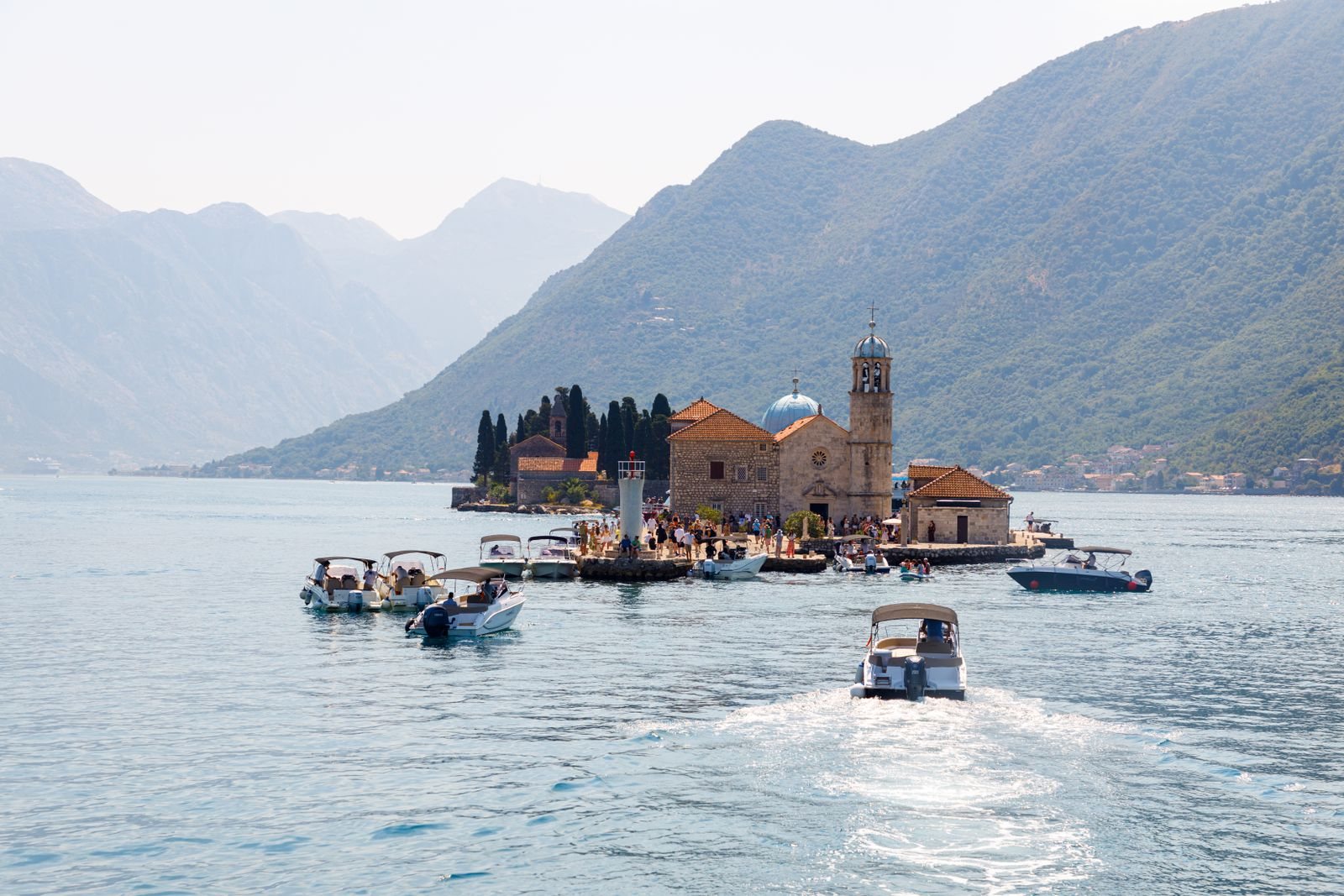
Our Lady of the Rocks is the artificial one, and the origin story is better than most. Local sailors found an icon of the Madonna on a rock in 1452, and every time a ship returned safely to Perast the crew dropped a stone on the spot. Centuries of stones became an island, and the island got a church. They still do it every July 22nd, an evening called Fasinada, when boats full of locals row out at sunset and throw rocks into the water. If your dates line up, go.
The church interior is worth the entry fee. There are 68 paintings by Tripo Kokolja, a 17th-century local artist, and a small museum upstairs holding an embroidered tapestry a woman named Jacinta Kunic worked on for 25 years while waiting for her sailor to come home. She used her own hair in the later sections, which is why the color changes from brown to grey as you follow it across. He never came back. We stood in front of that thing for a long time.
St. George is the natural island next door, with a Benedictine monastery and a cypress-lined cemetery. You cannot land on it. It is privately held by the church and closed to visitors, so it exists purely as scenery, which honestly suits it.
Getting out there: small boats leave from the Perast waterfront more or less continuously in season. The going rate is around 5 to 10 euros per person round trip, and you agree on a pickup time with your skipper. There is no schedule and no ticket office. You walk up, someone waves you over, you go. Church entry is a separate small fee, usually a couple of euros.
Our timing advice: go at 9am or after 5pm. The island is tiny, the church holds maybe forty people comfortably, and midday in August it is genuinely uncomfortable.
Climbing the St. Nicholas Bell Tower
The church of St. Nicholas dominates the waterfront and its bell tower is the best three euros in the Bay of Kotor. The staircase is narrow, wooden in places and steep enough that we would not send anyone with serious mobility issues up it, but it is short. Five minutes of climbing gets you a view straight down the length of the village with both islands framed in the middle of the bay.
This is the shot everyone associates with Perast, and it is much better in person than in photos because you get the sound with it: bells, boat engines, somebody’s radio two streets over.
The church itself was never finished. The plan was for a cathedral to rival anything in Venice, funding ran out in the 18th century when Perast’s shipping fortunes collapsed, and what stands today is a fraction of the design. There is a small treasury museum inside with silver, vestments and some genuinely strange relics.
The Palaces and the Museum
Perast has sixteen palaces and seventeen churches for a village that has never held more than a few hundred permanent residents. That ratio tells you everything about what this place used to be.
For roughly two hundred years Perast was a Venetian naval town with a maritime school good enough that Peter the Great sent Russian nobles here to learn navigation. The captains built palaces along the water with the money, and when steam replaced sail the whole economy evaporated inside a generation. Several palaces are still half ruined, which we found more affecting than the restored ones.
The Perast Museum occupies the Bujovic Palace at the eastern end of the waterfront. It is a small, well-curated collection of maritime portraits, weapons, flags and captains’ possessions, and the balcony over the water is worth the entry on its own. Budget 45 minutes. Entry was around 5 euros when we visited.
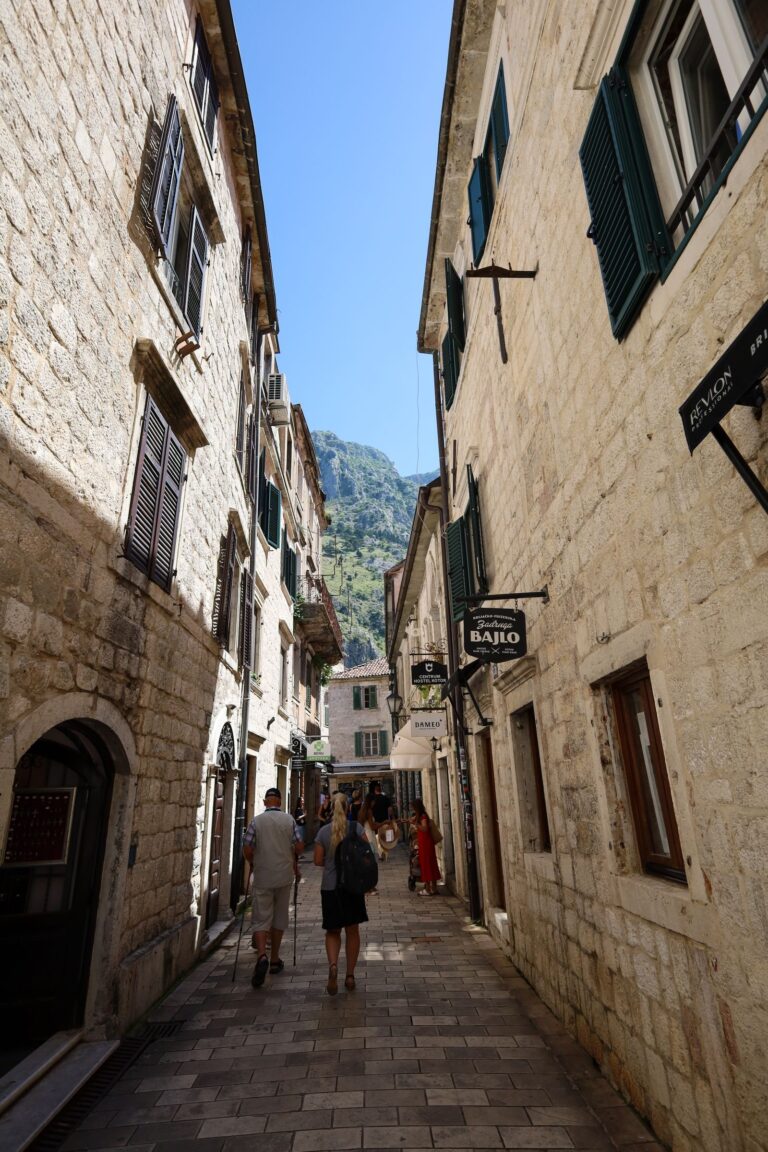
Walk the full waterfront slowly and read the plaques. The Zmajevic, Smekja and Balovic palaces are the standouts, and there is a good stretch of stone lane behind the main street that almost nobody walks.
Swimming in Perast
There is no proper beach. What there is instead: concrete and stone swimming platforms built off the waterfront, ladders straight into deep water, and a couple of small pebble patches near the eastern end.
The water is startlingly clear and startlingly cold, because the bay is fed by karst springs coming off the mountains. Even in August it takes a minute to commit. Most hotels along the water have their own platforms with loungers, and there are free public spots if you walk toward either end of the village.
We swam most mornings before breakfast. Eight in the morning, flat water, the islands sitting there, nobody else in. It is one of our favorite memories from the whole Balkans trip.
Where to Eat
Perast punches well above its size on food, largely because the restaurants are family-run and the competition on a single street is fierce.
Conte is the well-known one, right on the water with a hotel attached. Fresh fish sold by weight, and the black risotto is very good. It is the priciest option in town and worth it once.
Otok Bronza sits at the quieter end with a big waterside terrace. Excellent grilled squid, friendlier prices than Conte, and the service was warm both times we went.
Restaurant Perast does solid Montenegrin standards, including a proper njeguski steak stuffed with prosciutto and cheese from the village of Njegusi up in the mountains.
A few practical notes. Fish is priced per kilogram and a whole fish for two typically lands between 40 and 60 euros, so ask the weight before you agree. Nearly every menu includes a mixed grill that will feed two people for about 20 euros. And reserve for dinner in July and August, because the waterfront has maybe 200 seats total.
Getting to Perast
From Kotor: the Kotor to Herceg Novi bus runs along the bay road and stops at the Perast turnoff on the main road, a five-minute walk downhill into the village. It costs a couple of euros and takes about 25 minutes. Taxis run 15 to 20 euros. Boat taxis also cross the bay in season and are more fun.
From Tivat airport: about 40 minutes by car. Tivat is the closest airport and usually the cheapest way into the bay.
From Dubrovnik: roughly two hours plus border time, and the border queue at Debeli Brijeg can add anywhere from twenty minutes to two hours in high season. Perast is a common stop on organized day trips from Croatia, which we cover in our day trips from Dubrovnik guide.
Driving and parking: the village is pedestrian-only. There are paid lots at both entrances charging roughly 1 to 2 euros an hour, and they fill by mid-morning in summer. If you are staying overnight, ask your hotel about parking before you book, because several of the waterfront properties have no allocation at all.
Where to Stay
Staying the night is the entire argument for Perast, so we would push hard on this one. The village has a handful of small hotels and apartments, most of them converted palaces, and almost all of them are on the water.
Look for something on the waterfront itself rather than up the hill, unless you specifically want the view down. Rooms with a direct bay view carry a premium of maybe 30 to 40 percent and, in this particular village, we think it is justified.
Two nights is the sweet spot. One night feels rushed once you factor in the islands and the tower, and there is not quite enough here for three unless you are using Perast as a base for day trips around the bay.
Best Time to Visit Perast
May, June, September and early October are the good months. Warm enough to swim, light enough on crowds that the waterfront still feels like a village.
July and August are hot and busy. Perast is small enough that a few tour buses change the whole feel of the place, and midday temperatures regularly sit around 32°C with very little shade on the waterfront.
November through March is quiet to the point of closure. Several restaurants shut, boat service to the islands becomes weather-dependent, and the bay gets genuinely rainy. Beautiful, but not a holiday.
We have a full month-by-month breakdown in our best time to visit Montenegro guide.
How Long to Spend
Perast is a two-night stop, not a base for a week. Here is roughly how we would spend it.
Afternoon one: arrive, walk the waterfront end to end, museum, dinner on the water.
Morning two: swim early, boat to Our Lady of the Rocks around 9am, climb the bell tower before the buses arrive, long lunch.
Afternoon two: drive or bus up to Kotor for the afternoon, or take the bay road around to Risan for the Roman mosaics, then come back for sunset.
Morning three: one more swim, then on to Kotor, Budva or Durmitor.
Where to Book
- Hotels in Perast: search Booking.com for Perast. Inventory is genuinely limited, maybe fifteen properties total, so book earlier than you would for Kotor or Budva.
- Boat trips and Bay of Kotor tours: Viator’s Kotor listings cover bay cruises, Our Lady of the Rocks trips and combined Perast and Kotor day tours from Dubrovnik and Budva.
- Travel insurance: we never travel Europe without it. See our breakdown in the best travel insurance for Europe.
What We Would Do Differently
We would have booked a waterfront room instead of one up the hill. The hill view is lovely for ten minutes and then you are walking up a lot of steps with groceries.
We would have gone to Our Lady of the Rocks at 8:30am on the first morning rather than 11am on the second. The difference between an empty church and a full one here is significant.
And we would have made time for Risan, ten minutes further up the bay, which has 3rd-century Roman floor mosaics in an unassuming shed and almost no visitors at all.
Planning the wider Montenegro trip? Start with how to plan a trip to Montenegro for routes and logistics, pair Perast with Kotor for the bay’s headline town, and add Durmitor National Park and the Tara Canyon if you want mountains alongside the coast.