Disclosure: This post contains affiliate links. If you book through our links, we may earn a small commission at no extra cost to you. Thanks for supporting Faceted Travel!
In This Guide
We weren’t expecting Split to blow us away. We’d planned it as a logistics hub, a stop between the islands and Dubrovnik, a city to pass through rather than linger in. Then we spent three days there and completely changed our plans. Split is one of the most remarkable cities in the Mediterranean, a place where people have been living inside a Roman emperor’s palace for 1,700 years.
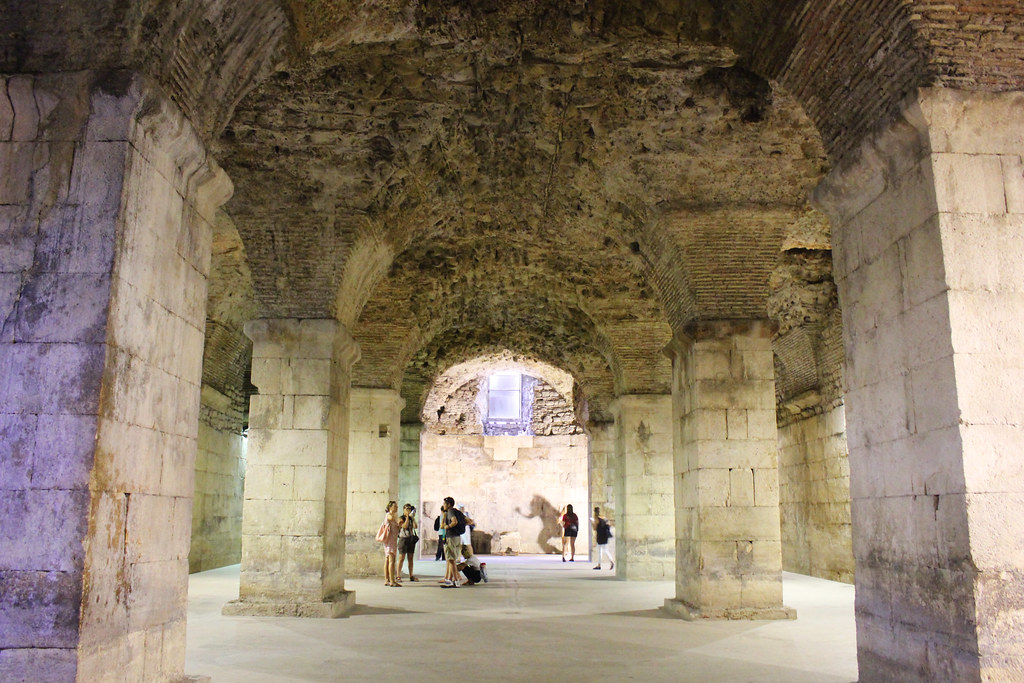
The palace isn’t a museum. It’s a living, breathing neighborhood where residents hang their laundry between ancient columns, kids play football in courtyards that Roman guards once patrolled, and restaurants and bars operate out of spaces that were once baths, dungeons, and emperor’s apartments. There’s nowhere else in the world quite like it.
If you’re heading to Croatia, Split deserves more than a quick stop. Here’s everything you need to know.
Why Split Is Worth Your Time
Split is Croatia’s second-largest city, sitting on a peninsula that juts into the Adriatic Sea. The Old Town is built inside and around Diocletian’s Palace, a UNESCO World Heritage Site constructed for the Roman Emperor Diocletian beginning in the late 3rd century AD. Diocletian retired here in 305 AD, and the palace became a city within a city after the fall of the Western Roman Empire, as refugees from the nearby town of Salona moved inside its walls for protection.
Beyond the palace, Split has a beautiful waterfront promenade (the Riva), excellent beaches in the surrounding area, a vibrant food scene, and easy ferry connections to Croatia’s most beautiful islands. It’s also far less over-run than Dubrovnik, which makes it easier to find a genuinely local experience alongside the tourist highlights.
Where to Stay in Split
Inside the palace walls is the most atmospheric option. Several boutique hotels and apartments operate inside the ancient walls, meaning you can walk out your door and immediately be surrounded by history. It can be noisy at night (the bars and restaurants stay busy late), and streets are narrow, so luggage logistics require a little planning.
Bacvice and Manuš are residential neighborhoods just south of the Old Town, about a 10-minute walk to the palace. They’re quieter and more affordable, with good local restaurants and easy access to Bacvice Beach.
Meje and Znjan are further out along the coast, with better beaches and a more local feel. They’re a short bus or taxi ride from the Old Town.
We recommend searching Booking.com for Split to compare options across all neighborhoods. Prices are reasonable compared to Dubrovnik, and you have more choices at every budget level.
For tours and activities, Viator’s Split listings include guided palace tours, island day trips, sea kayaking, wine tours, and transfer packages to Dubrovnik and the islands.
Top Things to Do in Split
Explore Diocletian’s Palace
The palace covers roughly 30,000 square meters in the heart of the Old Town and is best explored by simply wandering. There’s no formal ticket for the palace itself (individual attractions inside have their own tickets), so you can roam freely through the narrow streets, ducking into courtyards and peering through ancient archways.
A few highlights not to miss inside the palace:
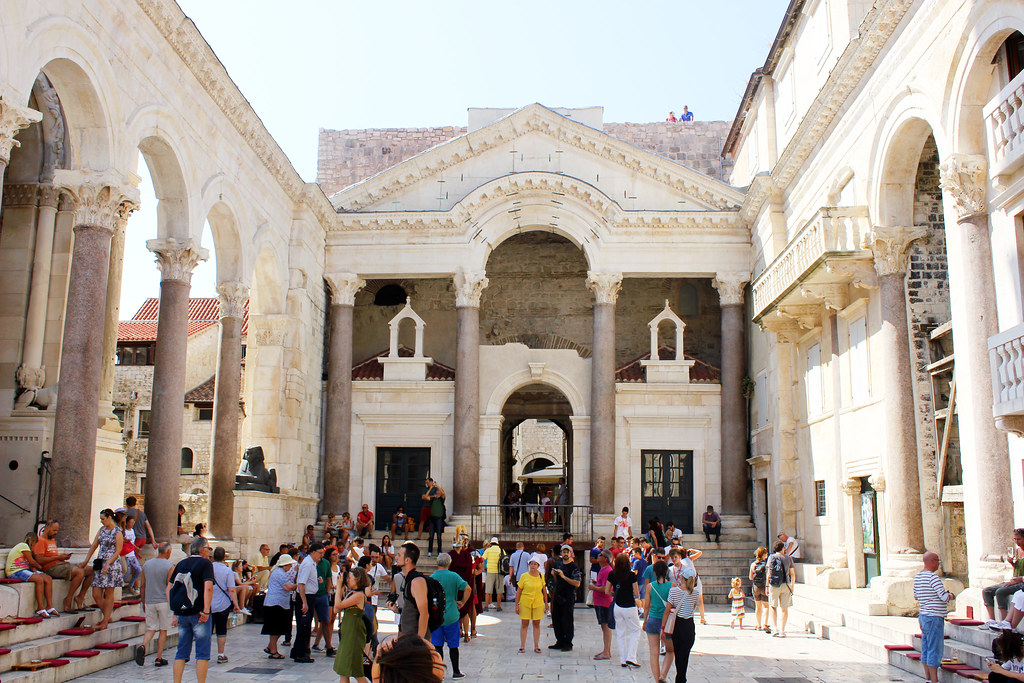
The Peristyle is the central gathering place, a large open courtyard that once served as the emperor’s entrance hall. It’s surrounded by columns and arcades, and locals still gather here in the evenings. The steps leading to the cathedral are a perfect spot to sit and take in the atmosphere.
Vestibule is the domed circular hall that connected the peristyle to the emperor’s private apartments. The acoustics are extraordinary, and local musicians often gather here to perform.
The Golden Gate is the most impressive of the palace’s four main entrances, on the northern wall. Walk through it and you’re immediately transported from the medieval city to the outside world, where you’ll find the famous statue of Grgur Ninski.
See the Cathedral of Saint Domnius
The cathedral is built inside what was originally Diocletian’s mausoleum, which is simultaneously strange and fascinating. The 13-sided structure dates back to the 4th century, making it one of the oldest Catholic cathedrals in the world still in use. The bell tower next to it was added in medieval times, and climbing it gives panoramic views over the Old Town and the Adriatic.
Entrance to the cathedral and the treasury is ticketed; combined tickets that include the bell tower and the baptistery are available at the entrance.
Visit the Grgur Ninski Statue
Just outside the Golden Gate stands the bronze statue of Grgur Ninski (Gregory of Nin), a Croatian bishop who championed the use of the Croatian language in church services in the 10th century, defying the Vatican’s insistence on Latin. The statue was created by Ivan Mestrovic, Croatia’s most celebrated sculptor. The big toe is rubbed shiny by decades of visitors who believe touching it brings good luck. Go ahead and give it a rub.
Walk the Riva
The Riva is Split’s waterfront promenade, a wide marble walkway that runs along the southern edge of the Old Town. It’s lined with cafes, restaurants, and palm trees, and the view across to the island of Brac is lovely. The Riva is where Split comes alive in the evenings, when the locals do their korzo, the traditional evening stroll. Pull up a chair at one of the outdoor cafes and watch the world go by.
Day Trip to the Islands
Split is the ferry hub for the central Dalmatian islands, and taking a day trip or overnight to Hvar or Brac is easy and highly recommended.
Hvar is Croatia’s glitziest island, known for its lavender fields, crystal-clear coves, the beautiful Hvar Town, and an active nightlife scene. The ferry from Split takes about 1 hour to Stari Grad, or you can take the faster catamaran to Hvar Town.
Brac is quieter and less developed than Hvar, and home to Zlatni Rat, Croatia’s most famous beach. The beach is a triangular spit of white pebble that extends into turquoise water, and the water on either side shifts direction with the current, creating a unique effect.
Vis is a smaller, more remote island that only opened to tourism in the late 1980s (it was a Yugoslav military base until then). It’s less touristy, stunningly beautiful, and has excellent wine and seafood.
Check Jadrolinija for ferry schedules and book ahead in July and August when boats can fill up.
Hike Marjan Hill
Marjan Hill is a forested peninsula that juts into the sea west of the Old Town. It’s Split’s lung, and locals use it for morning runs, afternoon walks, and weekend picnics. Trails wind through pine forests, past small chapels, and to viewpoints overlooking the city and islands. The hike to the top takes about 30-40 minutes at a leisurely pace, and the views are worth every step.
The western tip of Marjan has some good spots for swimming off the rocks, away from the main beaches.
Where to Eat in Split
Konoba Matejuska is one of the best seafood restaurants in Split, tucked into the fishing harbor of Matejuska, just west of the Old Town. Fresh fish is grilled simply and perfectly, and the setting, surrounded by fishing boats, is authentic and lovely.
Nostromo is right on the fish market in the Old Town, serving beautifully prepared seafood in a relaxed setting. The tasting menus are excellent value.
Zinfandel Food and Wine Bar is a good option for wine-focused meals, with an extensive selection of Croatian wines and well-executed food.
Zrno Soli in Matejuska neighborhood is widely considered one of Croatia’s best restaurants, serving creative contemporary cuisine using local Dalmatian ingredients. It’s a splurge but worth it.
For coffee and pastries, find any local bakery (pekara) for burek, a savory pastry filled with cheese or meat that’s the perfect morning fuel. Coffee culture in Croatia is strong, and a simple espresso at a Riva cafe is one of the pleasures of the day.
Best Time to Visit Split
May, June, and September are ideal. The weather is warm, the Adriatic is swimmable, and the city is lively without being overwhelmed. Prices are also meaningfully lower than peak summer.
July and August are the busiest months. It’s hot, the Old Town gets crowded, and prices rise. The beaches are packed but there’s an undeniable energy to the city at peak summer. Book everything well in advance.
April and October offer good shoulder-season deals. Some attractions and restaurants run reduced hours in April, but the city is walkable and enjoyable. October can bring rain but is often still warm enough for coffee on the Riva.
November through March sees significantly reduced tourism. The city is quiet and authentic, prices drop sharply, and you’ll have the palace streets almost to yourself. Pack for variable weather.
Getting to and Around Split
By air: Split Airport (SPU) is about 25 kilometers north of the city, near the town of Kaštela. Buses, taxis, and rental cars are available. Flight connections from major European hubs are plentiful in summer; connections from North America typically go through Frankfurt, London, or Amsterdam.
By ferry: Split is the main ferry hub for the Dalmatian islands and connections to Ancona, Italy. Jadrolinija and other operators run regular services. The ferry terminal is a short walk from the Old Town.
By car: Driving the Dalmatian Coast is one of Europe’s great road trips. The coastal road (Magistrala) hugs the cliffs above the sea, with turnoffs to small coves and villages. Note that the stretch between Split and Dubrovnik requires crossing through Bosnia and Herzegovina briefly (the Neum corridor), so ensure your rental car insurance covers Bosnia.
Getting around the city: The Old Town is entirely walkable. Buses connect the wider city and nearby beaches. Taxis and Uber are available for longer trips.
Practical Tips for Split
Protect your belongings. The narrow alleys of the Old Town are busy, and pickpocketing is not unheard of in peak season. Keep bags closed and close to your body.
Wear shoes with grip. The marble streets of the Old Town are beautiful and very slippery, especially when wet. This is true of all Dalmatian coastal cities.
Try local wine. Croatia has excellent wine that doesn’t travel well and isn’t widely exported, so try it while you’re there. Plavac Mali from the southern coast and Posip from Korcula island are both worth seeking out.
The beach scene is casual. Croatian beaches are mostly pebble or rock rather than sand. Bring water shoes if you’re sensitive to that, and know that topless sunbathing is normal and accepted.
Eat from the market. The open-air fish and produce market just outside the eastern edge of the palace walls is open every morning and is a great place to pick up cheap, fresh food. Local vendors sell vegetables, olives, oil, and other regional products.
Where to Book
For accommodation, Booking.com’s Split listings are the best starting point, with everything from palace apartments to seaside hotels.
For day trips, island excursions, and guided experiences, check Viator’s Split page. The guided palace tours are excellent even if you think you’d rather explore on your own.
Final Thoughts on Split
Split surprised us. We planned two nights and stayed four. The combination of 1,700-year-old history, a living city built around it, extraordinary food, and easy access to some of Croatia’s best islands makes it one of the most complete travel destinations in the Mediterranean.
It’s not as immediately beautiful as Dubrovnik at first glance. It doesn’t have that postcard-perfect enclosed quality. But it’s more real, more lived-in, and in some ways more remarkable. There’s nowhere else in the world where you can eat pizza in a Roman emperor’s retirement home.
Heading south? Read our Dubrovnik, Croatia Travel Guide for everything you need to know about the walled city. And if you’re planning the full Croatia experience, our How to Plan a Trip to Croatia covers the full itinerary from north to south. Looking for more Mediterranean adventures? Check out our Greece Travel Guides.