Disclosure: This post contains affiliate links. If you book through our links, we may earn a small commission at no extra cost to you. Thanks for supporting Faceted Travel!
Table of Contents
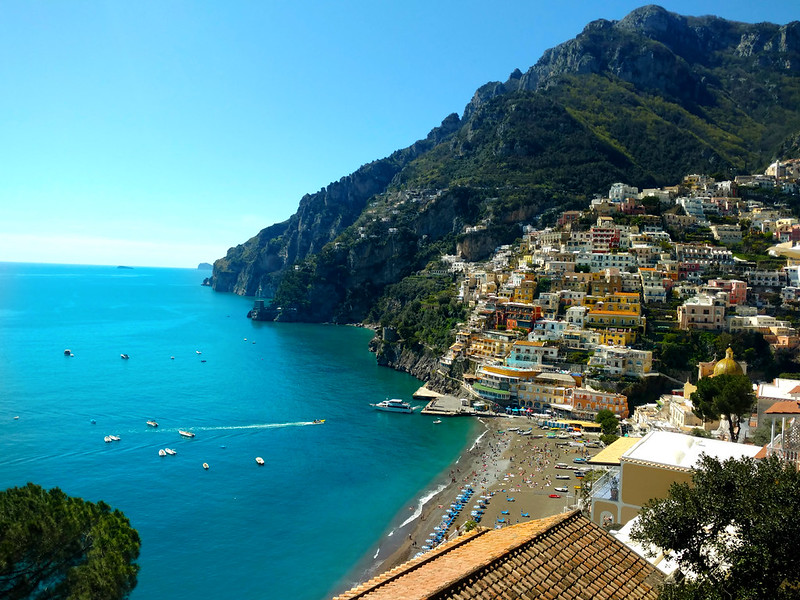
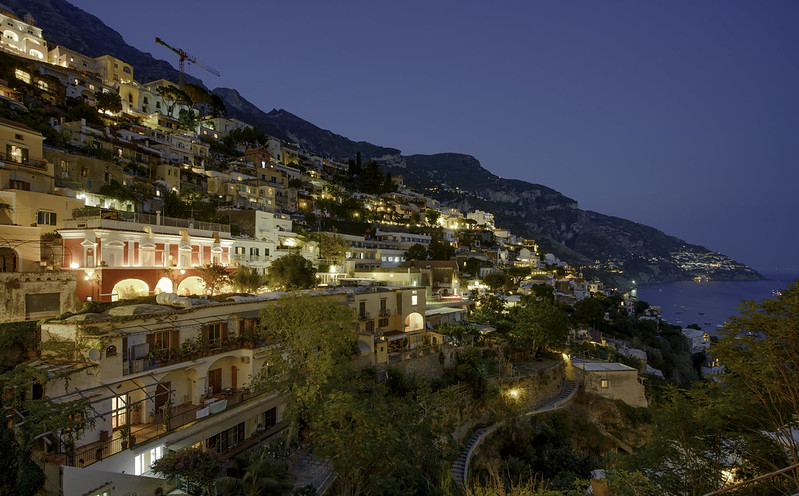
The first time we saw Positano, we were on a boat coming around a rocky point, and the whole town seemed to spill down the cliff toward us in a cascade of pink, peach, and cream houses. Todd actually laughed out loud, because no photo we had ever seen quite prepared us for how vertical and impossibly pretty it is in person.
Positano is the jewel of Italy’s Amalfi Coast, a vertical village of pastel houses stacked above a pebble beach, wrapped in bougainvillea and lemon groves. It is romantic, dramatic, and yes, a little touristy in peak season, but it earns every bit of its fame. This guide covers when to go, how to get here, the best things to do, where to stay, and how we would spend a few unforgettable days in the most photographed town on the coast.
Why Visit Positano?
Positano is the kind of place that looks unreal until you are standing in it. The town clings to a near-vertical slope, so there are almost no flat streets, just staircases and switchbacks that tumble down toward the sea. Every turn frames another postcard: a domed church, a laundry line strung between shutters, a sliver of turquoise water at the bottom of the hill.
But it is not only about the views. Positano has a slow, sun-drenched rhythm that is hard to resist. Mornings are for espresso and a swim, afternoons for a boat or a long lunch, evenings for a spritz as the lights flicker on across the valley. It is also the perfect base for exploring the wider Amalfi Coast, so pair this guide with our full Amalfi Coast travel guide to plan the whole stretch of coastline.
When to Visit Positano
Timing matters more here than almost anywhere in Italy, because Positano is tiny and its season is intense. The sweet spots are the shoulder months: May, early June, and September into early October. The weather is warm, the sea is swimmable, and the crowds and prices, while never truly low, are far more manageable than at the peak.
July and August are gorgeous but genuinely crowded and expensive, with narrow lanes packed and hotels booked months out. If summer is your only option, reserve everything early and start your days at dawn. Spring brings blooming bougainvillea and lemon blossom, while fall keeps the warm water and adds golden light.
Winter is a different Positano altogether. Many hotels and restaurants close from November through March, and the town goes quiet and local. It can be a moody, peaceful time to visit if you do not mind limited options. For help lining up the seasons across the country, our guide to the best time to visit Italy breaks it down region by region.
Getting to Positano
Half the adventure of Positano is simply getting there, because it sits on one of the most spectacular and hair-raising coastal roads in the world. There is no train station and no airport, so you arrive by road or by sea.
Most travelers fly into Naples, then continue by car, bus, or ferry. From Naples you can drive or take a train to Sorrento, then connect via the SITA bus or a ferry along the coast. We are big fans of arriving by ferry when the season allows, because approaching Positano from the water is unforgettable and you skip the winding, traffic-clogged road entirely. If you are flying into the region, our Naples travel guide covers the gateway city and its own worthwhile sights.
A quick word of advice: do not plan to drive and park in Positano itself unless you love stress. Parking is scarce and pricey, the road is tight, and you will not need a car once you are in town. Ferries, buses, and your own two feet (plus the occasional local taxi) will get you everywhere. If a bigger Italian trip is taking shape, our post on how to plan a trip to Europe walks through the logistics.
The Best Things to Do in Positano
For such a small town, Positano offers a surprising amount to do, most of it wonderfully unhurried.
Relax on Spiaggia Grande
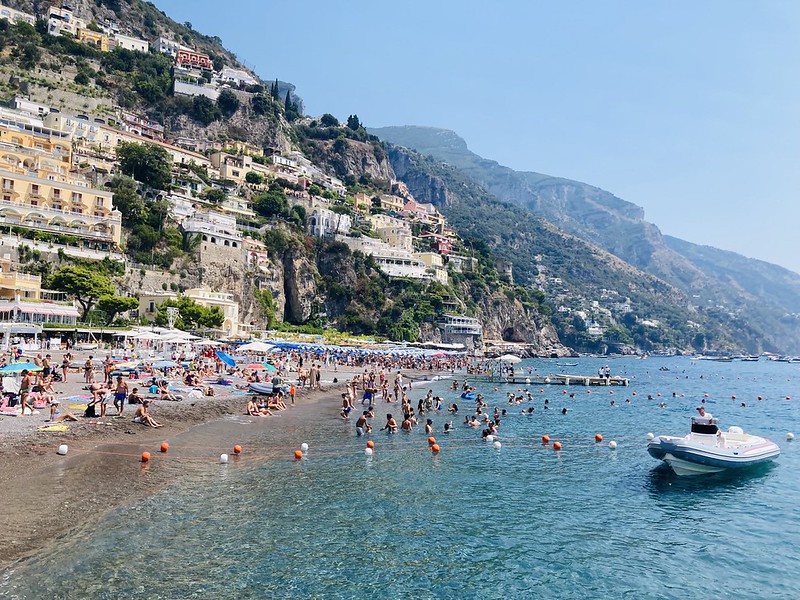
The main beach, Spiaggia Grande, is the heart of town, a curve of dark pebbles backed by that famous wall of pastel houses. You can rent a sunbed and umbrella from one of the beach clubs or stake out a spot in the free public section. Swimming here with the whole town rising above you is the quintessential Positano experience.
Wander the staircases and boutiques
Positano has no real center to stroll, just a network of stairs and lanes threading down the hillside. Give yourself time to get happily lost among them. The town is famous for “Moda Positano,” breezy linen and resortwear, and for handmade leather sandals cobbled while you wait. Even if you buy nothing, window-shopping your way down to the sea is a delight.
Step into Santa Maria Assunta
The church with the majolica-tiled dome that anchors so many Positano photos is Santa Maria Assunta. Inside you will find a Byzantine icon of the Black Madonna, tied to the legend of how the town got its name. It is a cool, quiet pause in the middle of a hot climb, and the dome is even prettier up close.
Take a boat trip
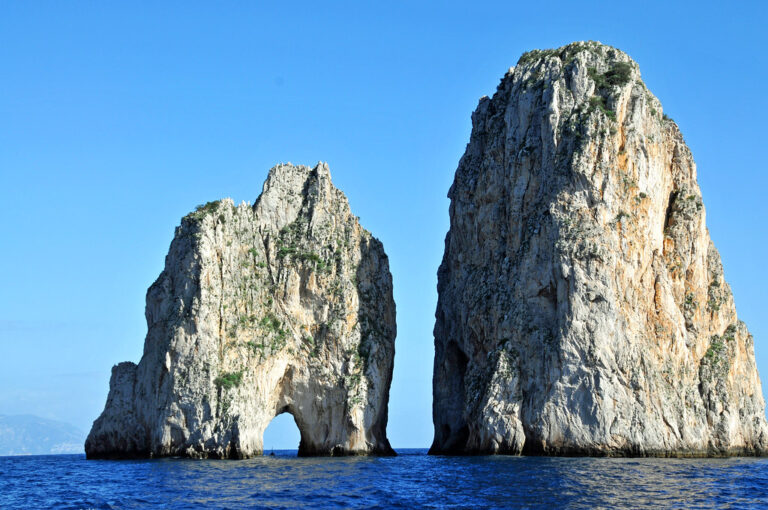
Positano is made for the water, and a boat trip is the best splurge here. Charter a small boat or join a group tour to explore hidden coves, swim in clear water, and see the coastline as it was meant to be seen. Popular routes head to the island of Capri, the emerald grottoes, or the tiny Li Galli islands just offshore. Viator lists private and shared boat excursions if you want it all arranged.
Hike the Path of the Gods
If you have decent shoes and a taste for views, the Sentiero degli Dei, or Path of the Gods, is one of the great walks in Italy. The trail runs high along the cliffs between Bomerano and Nocelle, with jaw-dropping views down over Positano and the sea. From Nocelle, a long staircase (around 1,700 steps) brings you back down to town, or you can catch a local bus.
Day trip along the coast
Positano makes an ideal base for exploring its neighbors. The town of Amalfi, with its striking cathedral, and hilltop Ravello, famous for its garden villas and music festival, are both easy day trips by bus or ferry. Our Amalfi Coast travel guide has the full rundown on each village.
Where to Stay in Positano
Positano is small but steep, and where you stay shapes your days (and your calves).
Near the beach and center
Staying in the lower town near Spiaggia Grande puts you steps from the beach, the ferries, and the best restaurants, with that iconic view right outside. It is the most convenient and atmospheric choice, though also the priciest and the busiest. If you want to be in the thick of it and minimize the uphill climbs, this is your zone.
Higher up the hillside
Hotels and guesthouses higher up the slope often deliver even more sweeping views and a bit more value, along with a quieter feel. The trade-off is stairs, and lots of them, though many properties offer shuttle service or are near the main road and bus stops. We think the elevated panoramas are worth a few extra steps. Because the Amalfi Coast is not a budget destination, our guide to how much a trip to Europe costs can help you set realistic expectations.
Where to Book
- Hotels: We use Booking.com to compare hotels and guesthouses in Positano, from cliffside splurges to smaller family-run spots, most with free cancellation.
- Tours and experiences: Viator has boat trips to Capri, Path of the Gods hikes, cooking classes, and guided day trips along the coast.
Sample 3-Day Positano Itinerary
Three days is enough to settle into the rhythm of Positano and see a bit of the wider coast. Here is our ideal.
Day 1: Settle in and go slow. Arrive, drop your bags, and spend the day acclimating to the vertical town. Wander down through the boutiques to Spiaggia Grande, take a swim, and claim a sunbed for the afternoon. As the light goes golden, find a terrace for an aperitivo and watch the town glow.
Day 2: Out on the water. Dedicate today to the sea with a boat trip, whether a shared tour or a private charter. Swim in hidden coves, cruise past Capri or the Li Galli islands, and see Positano from the angle that made you fall for it. Finish with a long seafood dinner near the beach.
Day 3: Hike or explore the coast. Lace up for the Path of the Gods for unforgettable cliff-top views, or hop a ferry to Amalfi and Ravello for cathedrals and garden villas. Come back for one last spritz and a final look at the pastel houses lighting up at dusk.
How Many Days Do You Need in Positano?
You can capture the essence of Positano in two nights, enough for a beach day and a boat trip. But the town rewards slowing down, and rushing it feels like a small crime given how far you traveled to get here.
Three nights is our sweet spot: one day to soak up the town, one on the water, and one for a hike or a coastal day trip. If Positano is your base for the whole Amalfi Coast, four or five nights lets you fold in Amalfi, Ravello, Capri, and lazy beach afternoons without ever feeling rushed. If you are torn between here and Italy’s other cliffside darling, our Cinque Terre travel guide can help you choose (or convince you to do both).
Practical Tips for Visiting Positano
Pack for stairs. There is no way around it: Positano is a workout. Bring comfortable shoes and skip the roller bag if you can, because you may be hauling luggage up and down staircases.
Book restaurants and hotels ahead in high season. The best tables and rooms fill up fast from June through September. Reserve popular dinners in advance, especially anything with a sunset view.
Arrive by ferry if you can. The coastal road is beautiful but slow and winding, and it makes some people carsick. Ferries are faster, calmer, and far more scenic. Note that ferry service is seasonal and weather-dependent.
Carry some cash. Smaller shops, beach clubs, and the local bus may prefer cash, and ATMs can be tucked away on the staircases.
Start early and linger late. Day-trippers pour in mid-morning and thin out by evening. Enjoy the quiet mornings and the calm after the last ferry leaves, which is when staying overnight really pays off.
Respect the sun. The beach and boats offer little shade, and the Mediterranean sun is strong. Bring a hat, reef-safe sunscreen, and water.
Is Positano Worth Visiting?
Without hesitation, yes. Positano is expensive and, in high summer, undeniably crowded, and we still think everyone should see it at least once. There is simply nowhere else quite like this tumble of pastel houses pouring down a cliff into a sapphire sea, scented with lemon and salt and framed by that famous tiled dome.
Come in the shoulder season, stay at least two nights, and give yourself permission to do very little. Swim, wander, eat well, and watch the light change on the houses across the valley. Positano is not a place you rush through or check off a list. It is a place you feel, and it stays with you long after you have climbed the last staircase back to the road. We fell hard for it, and we suspect you will too.
Dreaming of more of Italy? Pair Positano with our guides to the wider Amalfi Coast and the eternal city of Rome, and time your trip perfectly with our post on the best time to visit Italy.