Disclosure: This post contains affiliate links. If you book through our links, we may earn a small commission at no extra cost to you. Thanks for supporting Faceted Travel!
Table of Contents
We got happily lost in Mykonos Town within about ten minutes of arriving, and it turned out that was exactly the point. The whitewashed lanes twist and double back on purpose, a centuries-old design meant to confuse pirates, and now they simply reward anyone willing to wander with a new photo around every corner: a blue door, a spill of pink bougainvillea, a cat asleep on a warm stone step.
Mykonos has a reputation as the glamorous party island of Greece, and that side is real if you want it. But after several days there we came away with a fuller picture: quiet mornings, gorgeous beaches for every mood, one of the best sunsets in the Aegean, and an ancient island next door that stopped us in our tracks. This guide covers when to go, where to stay, the beaches, and how to build a trip that fits your pace, whether that is champagne at a beach club or a peaceful cove with a book.
Why Visit Mykonos?
Mykonos is one of the Cyclades, the cluster of Greek islands famous for whitewashed villages and impossibly blue water. What sets Mykonos apart is the combination: a genuinely beautiful old town, a huge range of beaches, a legendary nightlife scene, and easy connections to the rest of the islands.
The island is small enough to feel manageable and lively enough to never feel dull. You can spend a morning photographing the iconic windmills, an afternoon swimming in turquoise water, and an evening watching the sun sink behind Little Venice with a drink in hand. It is also one of the most cosmopolitan islands in Greece, so the food and hotels punch well above what the size might suggest.
If you are already dreaming of Greek islands, Mykonos pairs perfectly with its more famous neighbor. We think of Santorini as the dramatic, romantic caldera island and Mykonos as the playful, beachy one, and doing both on a single trip gives you the best of two very different moods.
When to Visit Mykonos
Mykonos is a summer island at heart, but the shoulder seasons are the sweet spot.
Peak Summer (July and August)
This is when Mykonos is at full volume: hot, sunny, and buzzing, with the beach clubs and nightlife in full swing. If the party scene is your priority, this is your window. Just know it is also the most crowded and most expensive stretch, and the famous meltemi wind can really pick up in August.
Shoulder Season (May, June, September, and early October)
We strongly prefer the shoulder months. The weather is still warm and swimmable, the crowds are thinner, and prices ease off. June and September in particular hit a lovely balance of good energy and breathing room. Our guide to the best time to visit Europe digs deeper into why these shoulder weeks so often beat the peak.
Off-Season (November to April)
Winter is very quiet. Many hotels, restaurants, and beach clubs close entirely, and ferry schedules thin out. You can visit for a peaceful, local experience, but you will miss most of what draws people to the island in the first place.
How to Get to Mykonos and Get Around
Mykonos has its own airport with direct flights from Athens and, in summer, from many European cities. The other classic route is the ferry: fast ferries connect Mykonos with Athens (the port of Piraeus or Rafina) in a few hours, and with Santorini, Naxos, Paros, and other islands. We love arriving by ferry because the approach across the Aegean sets the tone.
On the island, there is a decent local bus network connecting the town with the major beaches, which is affordable and reliable in summer. Taxis exist but are limited in number, so they can be hard to snag at peak times. Many visitors rent an ATV or a small car for a day or two to reach the more remote beaches on their own schedule. One important note: private cars are not allowed in Mykonos Town itself, which is entirely pedestrian, so you park on the edge and walk in.
Where to Stay in Mykonos
Where you base yourself really changes the trip, so match it to your priorities.
Mykonos Town (Chora)
Staying in or near the old town puts you in the heart of the action, with shops, restaurants, and nightlife at your doorstep and no need for transport to dinner. It is the most atmospheric and convenient base, though also the liveliest, so light sleepers should ask about noise.
Ornos and Platis Gialos
These south-coast beach areas are great for families and anyone who wants to walk to the sand. They are well connected by bus, have good hotels and tavernas, and strike a nice balance between convenience and relaxation.
Elia, Kalo Livadi, and the Quieter South
For a more secluded, resort-style stay, the beaches farther east are calmer and more spread out. You trade walkable nightlife for peace and space. We use Booking.com to compare town hotels against quieter beach resorts, and in high season we book well ahead because the best-value rooms go fast.
Best Things to Do in Mykonos
Beyond simply soaking up the island, here is what earned a spot on our must-do list.
Get Lost in Mykonos Town
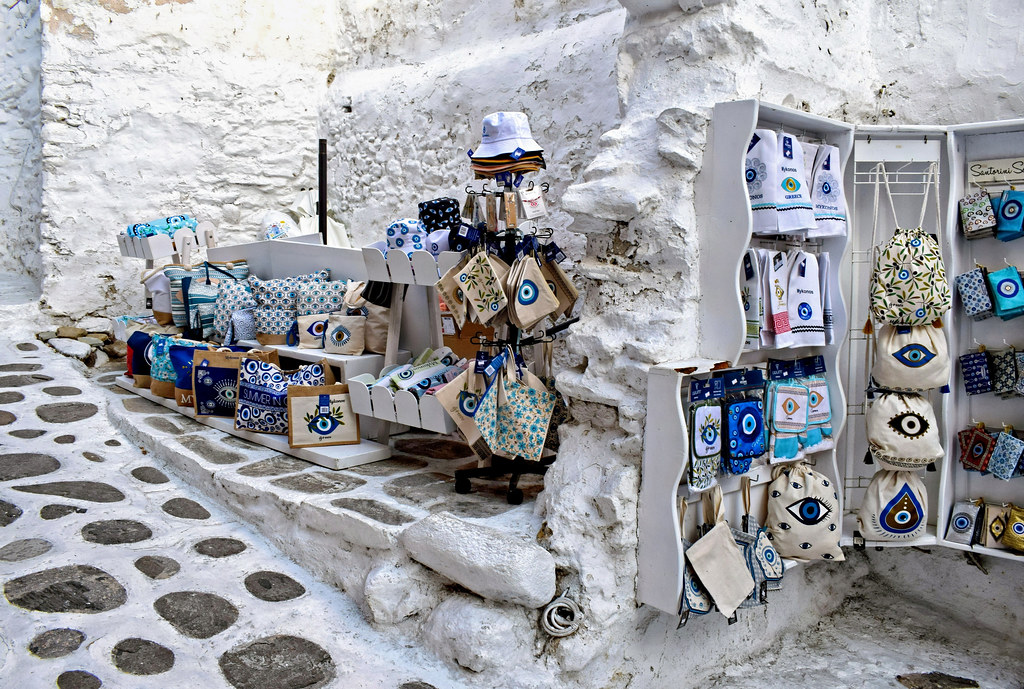
The maze of Chora is the single best thing to do, and it costs nothing. Wander the marble lanes, browse the boutiques and galleries, and duck into tiny churches. Come back after dark when the whitewash glows under the lights and the whole town feels cinematic.
The Windmills and Little Venice
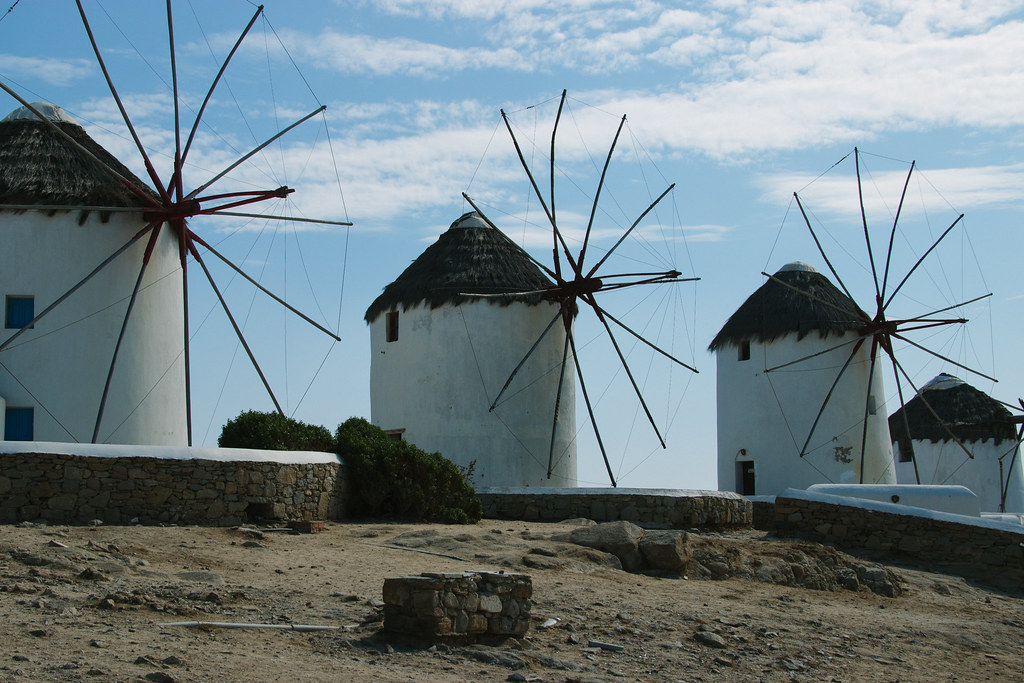
The row of 16th-century windmills on the hill is the island’s signature image, best at sunset. Just below, the neighborhood of Little Venice has old fishing houses built right at the water’s edge, their balconies hanging over the sea. Grab a drink at a waterfront bar and watch the sun go down, because this is one of the most beautiful sunsets in Greece.
Hit the Beaches
Mykonos is a beach island above all, and it has one for every mood, which we break down below. Even a single day of sampling two or three different beaches gives you a feel for the range.
Take the Boat to Delos
The tiny island of Delos, a short boat ride away, is one of the most important archaeological sites in Greece and a highlight we did not expect to love as much as we did. More on that below.
Explore Ano Mera
For a quieter, more traditional side of the island, the inland village of Ano Mera has a lovely monastery and a village square with tavernas where locals actually eat. It is a nice antidote to the glamour of the coast.
The Beaches of Mykonos
The beaches fall roughly into two camps, and knowing the difference saves you from a surprise.
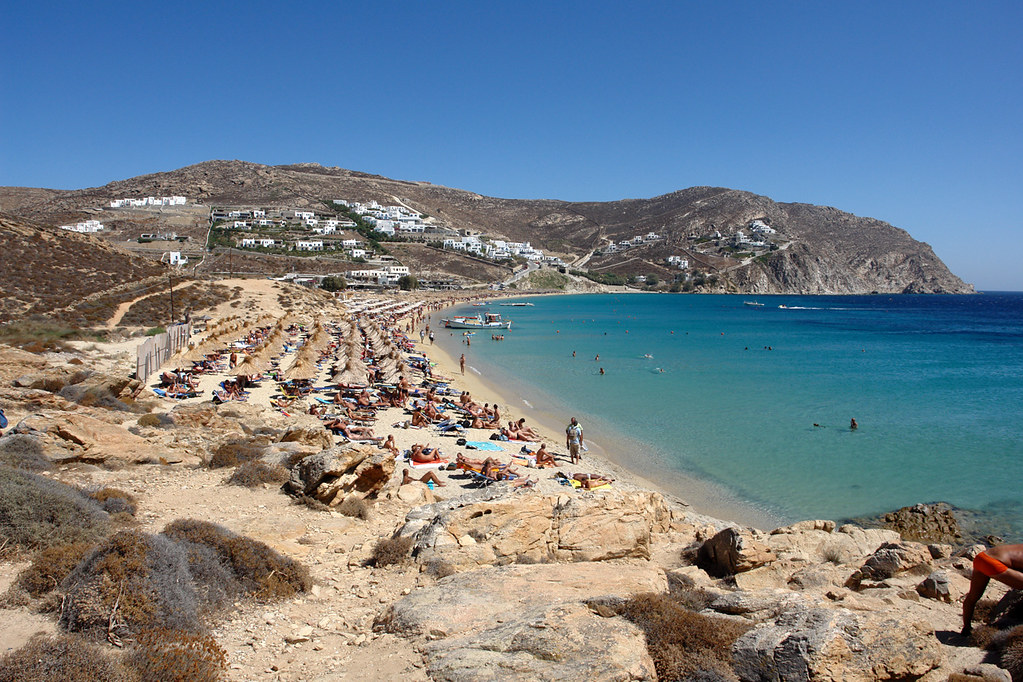
For lively, see-and-be-seen days, Paradise and Super Paradise are the famous party beaches, with music, beach clubs, and a young crowd. Psarou and Platis Gialos are more upscale and organized, lined with loungers and good restaurants. For calmer, more family-friendly swimming, Ornos and Agios Ioannis are gentler and easy to reach. And if you want to escape the scene entirely, the northern beaches like Agios Sostis are more natural and undeveloped, with fewer facilities but a lot more quiet. The meltemi wind tends to hit the north beaches harder, so on windy days the south coast is the smarter pick.
Where to Eat and Drink
Greek food is one of our favorite reasons to travel, and Mykonos delivers. Expect fresh seafood, Greek salads heaped with local tomatoes and feta, grilled octopus, and the island’s own soft kopanisti cheese. Waterfront tavernas in Little Venice are magical at sunset, though you pay for the view, while the tavernas in Ano Mera and the back lanes of town tend to be better value.
Do not miss a long, lazy lunch at a beach taverna with your feet nearly in the sand. And yes, the nightlife is world-famous: from sunset lounges to beach clubs that run until dawn, you can find as much or as little of it as you like. We are happy with a great dinner and a sunset cocktail, and Mykonos made that easy too.
Take a Day Trip to Delos
The uninhabited island of Delos, just off the coast, was one of the most sacred places in the ancient Greek world, believed to be the birthplace of Apollo and Artemis. Today it is an enormous open-air archaeological site, and walking among the ruins of temples, houses, and the famous Terrace of the Lions is genuinely moving.
Boats run from Mykonos Town in the morning, and we recommend a guided tour so the stones come to life with context. Give yourself a few hours, wear a hat, and bring water, because there is very little shade. If you enjoy this kind of history, it pairs beautifully with the ancient sites in our Athens travel guide on the mainland.
Practical Tips and Budgeting
Mykonos is one of the pricier Greek islands, so a little planning protects your wallet. Beach clubs can charge a lot for premium loungers and bottle service, so decide in advance where you want to splurge. Eating at local tavernas away from the prime waterfront spots, and using the bus instead of taxis, both make a real difference.
A few more things we learned: bring cash for smaller tavernas and the bus, wear sturdy sandals for the marble lanes that get slippery and hot, and pack layers because the meltemi wind can make evenings cooler than you expect. For a fuller sense of what a Greek island trip runs, our guide on how much a trip to Europe costs breaks down where the money tends to go.
Where to Book
Here is how we put a Mykonos trip together:
- Hotels: We use Booking.com to compare lively town stays against quieter beach resorts, most with free cancellation.
- Tours and experiences: Viator has Delos guided tours, sunset cruises, beach-hopping boat trips, and food and wine experiences.
In peak summer, book your hotel and the Delos tour ahead of time, because the best options sell out and prices climb the longer you wait.
Final Thoughts
Mykonos surprised us. We arrived braced for a nonstop party and instead found an island that let us set our own tempo: bright mornings in the lanes, long afternoons on the sand, ancient ruins across the water, and sunsets we still talk about. Whether you come for the beach clubs or the quiet coves, the whitewashed charm and that famous Aegean light are waiting.
Ready to build the rest of the trip? Pair this with our Santorini travel guide for the ultimate island-hopping combo, our Athens travel guide for the historic mainland start, and our guide on how to plan a trip to Europe to tie it all together.