Disclosure: This post contains affiliate links. If you book through our links, we may earn a small commission at no extra cost to you. Thanks for supporting Faceted Travel!
Table of Contents
- Why Visit Yellowstone?
- When to Go to Yellowstone
- Getting to Yellowstone
- Where to Stay in Yellowstone
- Top Things to Do in Yellowstone
- A Perfect Three-Day Yellowstone Itinerary
- Where to Eat in Yellowstone
- Where to Book Your Yellowstone Trip
- Yellowstone Travel Tips
- Yellowstone FAQ
- How Many Days in Yellowstone?
Nothing prepares you for the moment a bison herd crosses the road in front of your car while a geyser steams on the horizon. Yellowstone is America’s first national park, and after all these years it is still the wildest place you can drive to in the lower 48.
We’ve chased big landscapes from Banff to Moab, and Yellowstone remains in a category of its own: half serene alpine wilderness, half boiling alien planet. Here’s everything you need to plan your trip.
Why Visit Yellowstone?
Yellowstone sits on top of a supervolcano, and the park contains more geysers and hot springs than the rest of the world combined. Old Faithful erupting on schedule, the rainbow rings of Grand Prismatic Spring, mud pots that gurgle like cartoon cauldrons: nowhere else looks like this.
Then there’s the wildlife. Yellowstone is the best place in America to see animals in the wild: bison by the thousands, elk, grizzly and black bears, wolves, moose, bighorn sheep, and bald eagles. Add the Grand Canyon of the Yellowstone with its twin waterfalls, alpine lakes, and 2.2 million acres of backcountry, and you have a park that needs a lifetime but rewards even a weekend.
When to Go to Yellowstone
Summer (mid-June through August): Everything is open, wildlife is everywhere, and days are warm (70s F). It’s also peak crowds; expect traffic jams at Old Faithful and full parking lots by 10am.
Shoulder gold (May and September through early October): Our favorite windows. May brings baby bison and bears fresh out of hibernation; September brings the elk rut, golden aspens, and thinner crowds. Some services are limited at the edges of the season.
Winter (mid-December through February): A different planet. Most roads close to cars, and access is by snowcoach or snowmobile from West Yellowstone or Mammoth. Steaming geysers against snow, wolves hunting in the Lamar Valley, and nearly empty boardwalks. Magical, but it requires planning.
Heads up: Most park roads close entirely from mid-October to mid-December and from mid-March to mid-April. Check the park site before booking shoulder-season trips.
Getting to Yellowstone
Yellowstone has five entrances across three states (Wyoming, Montana, Idaho). The closest airports:
Bozeman (BZN): The most flights and usually the best fares; 90 minutes to the North Entrance at Gardiner.
Jackson Hole (JAC): Best if you’re combining with Grand Teton National Park to the south.
West Yellowstone (WYS) and Cody (COD): Tiny seasonal airports right at the gates.
Salt Lake City (SLC): About 5 hours away, but often hundreds of dollars cheaper; a classic road-trip approach.
You need a car. There is no park shuttle, and the Grand Loop Road (a 142-mile figure eight) is how you see everything. The park entrance fee is $35 per vehicle for 7 days, or use the $80 America the Beautiful annual pass.
Where to Stay in Yellowstone
Inside the park: The nine park lodges (Old Faithful Inn, Lake Yellowstone Hotel, Canyon Lodge, and more) put you steps from the sights and ahead of the day crowds. They book out 12 to 13 months ahead, so reserve the moment your dates firm up. The Old Faithful Inn, a 1904 log masterpiece, is worth a walk-through even if you don’t stay.
West Yellowstone, MT: The most convenient gateway town, 14 miles from Old Faithful’s basin. Plenty of hotels and restaurants.
Gardiner, MT (North Entrance): Year-round access and the gateway to the wildlife-rich Lamar Valley. Great for shoulder season and winter.
Cody, WY and Jackson, WY: Farther out, but Cody adds rodeo-town charm and Jackson pairs the trip with Grand Teton.
What to budget: Park lodges run $200 to $450 per night; gateway-town hotels $150 to $350 in summer, much less off-peak. Camping ($20 to $35) books 6 months out on recreation.gov.
👉 Search Yellowstone area hotels on Booking.com
Top Things to Do in Yellowstone
Old Faithful and the Upper Geyser Basin
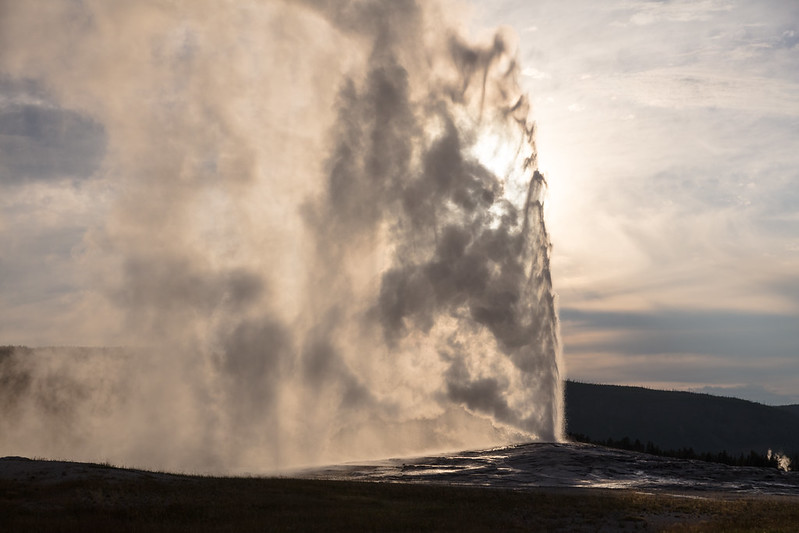
The icon erupts roughly every 90 minutes (predictions posted in the visitor center and app). Watch it once from the benches, then walk the basin boardwalks past Castle, Grand, and Riverside geysers to Morning Glory Pool. If you time it right, Grand Geyser’s eruption beats Old Faithful’s.
Grand Prismatic Spring
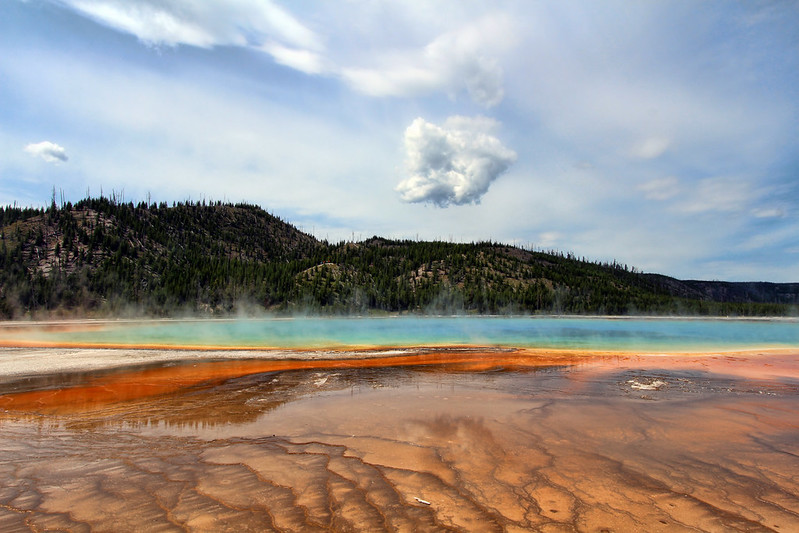
The largest hot spring in the US and the most surreal sight in the park: a steaming rainbow of orange, gold, and impossible blue. See it twice: from the boardwalk up close, and from the Fairy Falls overlook trail (1.2 miles round trip) for the postcard aerial view.
Grand Canyon of the Yellowstone
A 1,000-foot-deep golden canyon with two massive waterfalls. Artist Point at sunrise is the classic view of Lower Falls; the Brink of the Lower Falls trail puts you on top of 308 feet of thundering water. Allow a half day for both rims.
Lamar and Hayden Valleys: The Wildlife Safaris
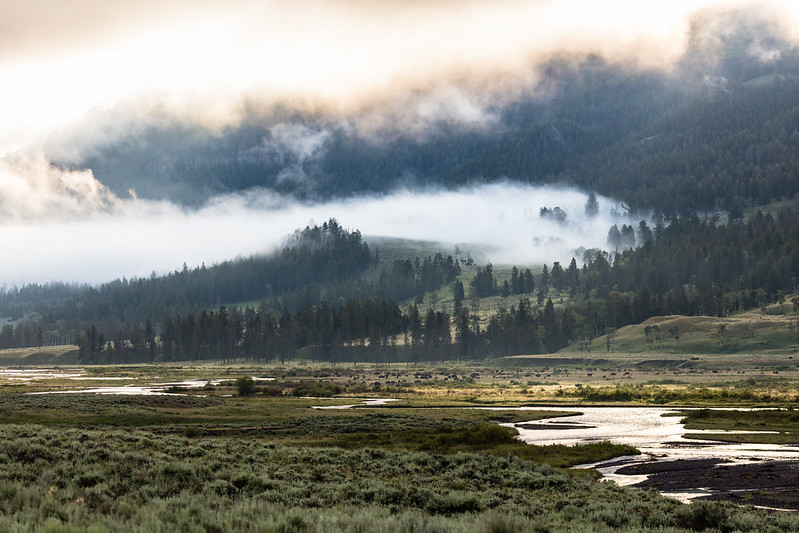
Lamar Valley (northeast) is called America’s Serengeti: bison herds, pronghorn, grizzlies, and the best wolf-watching on Earth at dawn. Hayden Valley (central) delivers bison jams and grizzly sightings along the river. Go at first light or dusk, bring binoculars, and pull fully off the road when you stop.
Mammoth Hot Springs
Terraces of white and orange travertine that look like a frozen waterfall, plus a resident elk herd that lounges on the lawns. Combine with a soak in the Boiling River area or a drive through the Golden Gate.
Yellowstone Lake
North America’s largest high-elevation lake, ringed by mountains and steaming lakeshore geysers at West Thumb. Rent a boat, take the scenic cruise, or just have lunch at the grand old Lake Yellowstone Hotel.
Norris Geyser Basin
The hottest, most active basin in the park and home to Steamboat Geyser, the world’s tallest. Its eruptions are unpredictable, but the steaming, hissing basin is worth the walk any day.
Add Grand Teton
The Tetons rise 45 minutes south of Yellowstone’s South Entrance, and the two parks share one road system. If you have 5+ days, split them: geysers and wildlife in Yellowstone, jagged peaks and alpine lakes in Grand Teton.
A Perfect Three-Day Yellowstone Itinerary
Day 1, Geyser Country: Old Faithful at opening, Upper Geyser Basin boardwalks, Grand Prismatic (boardwalk plus overlook trail), and Firehole Lake Drive. Sunset at Fountain Paint Pot.
Day 2, Canyon and Hayden: Sunrise at Artist Point, Brink of the Lower Falls, picnic at Yellowstone Lake, West Thumb Geyser Basin, then an evening wildlife drive through Hayden Valley.
Day 3, The Wild North: Pre-dawn start for Lamar Valley wolf and bear watching, late morning at Mammoth Hot Springs terraces, then out through the dramatic North Entrance arch (or back for one more geyser).
Where to Eat in Yellowstone
Park dining is functional, not fancy; lower your culinary expectations and raise your scenery expectations.
Old Faithful Inn Dining Room: Lodge classics under massive log beams. Book ahead; have a drink on the second-floor balcony either way.
Lake Yellowstone Hotel Dining Room: The park’s best meal with a lake view; reservations essential.
Canyon Lodge Eatery and grab-and-go spots: Quick fuel between sights.
Gateway towns: West Yellowstone’s Wild West Pizzeria and Taqueria Las Palmitas (a beloved taco bus); Gardiner’s Wonderland Cafe.
Pro move: Stock a cooler in a gateway town and picnic at the scenic pullouts. The bison do not care that your sandwich is from a gas station, and your wallet will thank you.
Where to Book Your Yellowstone Trip
Hotels: Search West Yellowstone and gateway hotels on Booking.com
Tours & Activities: Browse Yellowstone tours on Viator including wildlife safaris with spotting scopes, guided Lower Loop day tours, and winter snowcoach trips
Getting Here Cheaply: Compare Bozeman against Salt Lake City plus a drive. Our guide to finding cheap flights covers the tools we use.
Travel Insurance: Park trips book a year out and weather can scramble plans; see our travel insurance guide.
Yellowstone Travel Tips
Book lodging first, a year out if possible. Park lodges and summer gateway towns sell out before anything else.
Start at dawn. Wildlife is active, parking is empty, and the light is unbeatable. The 9am-to-4pm window is when the park feels crowded.
Respect the wildlife distances. 25 yards from bison and elk, 100 yards from bears and wolves. Bison injure more visitors than any other animal; they are faster than you.
Stay on the boardwalks. The ground in thermal areas is a thin crust over boiling water. This rule has no exceptions.
Carry bear spray on any trail. Sold and rented at every gateway; know how to use it.
Fill up when you can. Distances are huge and gas stations are sparse; half a tank is your refill cue.
Download offline maps. Cell service barely exists inside the park, and that’s part of the charm.
Yellowstone FAQ
How many days do I need? Three days covers the Grand Loop highlights. Five days lets you add Lamar Valley properly and Grand Teton. One day is possible (Lower Loop only) but rushed.
When can I see bears? May, June, and September are best, at dawn and dusk, in Lamar and Hayden valleys and along the roadsides. Always from a respectful distance.
Will Old Faithful really erupt on time? Within about 10 minutes either side of the prediction, roughly every 90 minutes. Check times in the NPS app and build the basin walk around it.
Is Yellowstone good for kids? Fantastic. Boardwalk geysers, guaranteed bison sightings, and Junior Ranger badges make it one of the best family parks. Keep kids close in thermal areas.
Yellowstone or Banff? Yellowstone for geysers and wildlife density; Banff for turquoise lakes and alpine drama. Both belong on the list.
Do I need reservations to enter? No timed entry as of our last visit, just the $35 vehicle fee. Lodging and camping are the bottlenecks; book those early.
How Many Days in Yellowstone?
Three full days hits the geyser basins, the canyon, and a proper wildlife safari. Five days adds Lamar Valley at dawn and a Grand Teton day. However long you go, start early, pack layers, and keep the camera ready: the park decides the schedule here, and that’s exactly the point.
For more big-nature trips, see our guides to Banff National Park, the Moab road trip, and Lake Tahoe. America’s wild places make a pretty great bucket list.