Disclosure: This post contains affiliate links. If you book through our links, we may earn a small commission at no extra cost to you. Thanks for supporting Faceted Travel!
Table of Contents
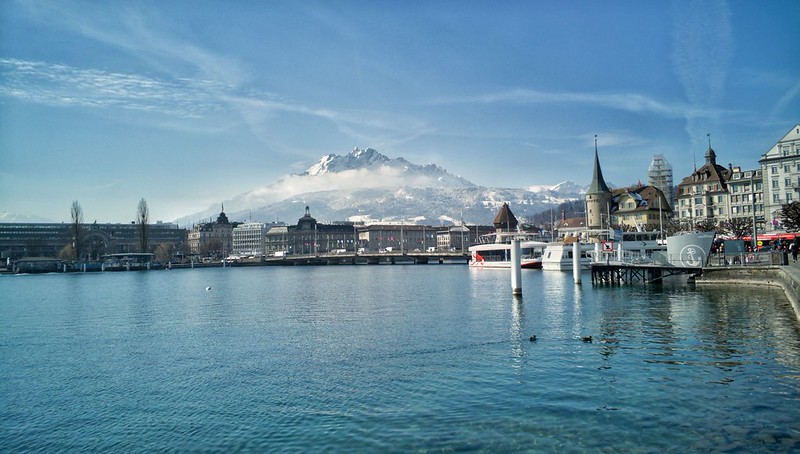
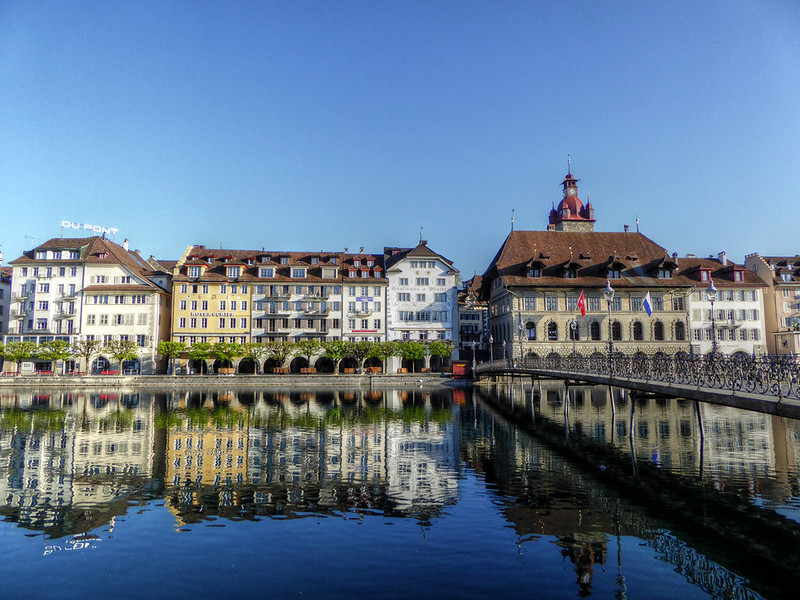
We arrived in Lucerne on a bright afternoon, walked out of the station, and stopped in our tracks: there was the wooden Chapel Bridge arcing across a glassy river, a painted old town behind it, and snow-dusted peaks rising over the lake beyond. It felt less like a real city and more like the cover of a chocolate box, and we mean that as the highest compliment.
Lucerne is central Switzerland’s storybook city, a compact medieval old town wrapped around a shimmering lake with a ring of famous mountains at the doorstep. It is walkable, welcoming, and endlessly photogenic, and it makes one of the best bases in the country for combining city charm with alpine day trips. This guide covers when to go, how to get here, the best things to do, where to stay, and how we would spend a few perfect days on Lake Lucerne.
Why Visit Lucerne?
Lucerne pulls off a rare trick: it is a genuinely beautiful small city that also opens the door to some of Switzerland’s most iconic mountains. In a single day you can stroll a car-free medieval center, cruise a fjord-like lake, and ride a cogwheel train up a snowcapped peak. Few places pack so much variety into such a small, easy-to-navigate area.
The city itself is a joy on foot. Painted facades, cobbled squares, riverside cafes, and covered wooden bridges give the old town a fairy-tale feel, while the lake and mountains provide a backdrop that never gets old. It is also superbly connected, sitting on Switzerland’s excellent rail network. If you are traveling the country on a tighter budget, read it alongside our Switzerland on a budget guide, because this is not a cheap country and smart planning pays off.
When to Visit Lucerne
Lucerne is a year-round destination, and the best time depends on your priorities. Summer (June through September) is peak season: warm weather, long days, lake swims, boat cruises in full swing, and every mountain railway running. It is the busiest and most expensive stretch, so book ahead, but the energy and the accessibility of the high peaks are hard to beat.
We have a soft spot for the shoulder seasons, May and early June or September into October. The crowds ease, the light turns golden, and the mountains are still very much in play. Fall in particular brings crisp air and beautiful color around the lake. Spring can be lovely too, though some higher trails may still hold snow.
Winter transforms Lucerne into a cozy, festive place, with a lovely Christmas market and easy access to nearby ski areas like Engelberg. The old town under a dusting of snow is magical. If your trip spans several countries, our guide to the best time to visit Europe can help you line up the seasons across the continent.
Getting to Lucerne
Getting to Lucerne is refreshingly simple, because Switzerland’s trains are punctual, scenic, and go almost everywhere. You really do not need a car here, and we would skip one given the cost of city parking.
Most travelers arrive by train. Zurich Airport to Lucerne takes roughly an hour with an easy connection, and direct trains run frequently from Zurich, Bern, and beyond. The station sits right on the lake at the edge of the old town, so you can often walk to your hotel in minutes. If you are coming from elsewhere in the Alps, Lucerne links smoothly toward Interlaken and the Jungfrau region, making the two an easy and spectacular pairing.
Lucerne is also a natural stop on a bigger European itinerary. It connects north toward Munich and Vienna, and south through the Alps toward Italy. If you plan to ride a lot of trains, boats, and mountain railways, look into a Swiss Travel Pass, which can save real money and includes many boats and discounts on the peaks. Our post on how to plan a trip to Europe walks through stitching a multi-city route together.
The Best Things to Do in Lucerne
Lucerne rewards both the wander-the-streets traveler and the summit-chaser. Here are the highlights we would not miss.
Cross the Chapel Bridge
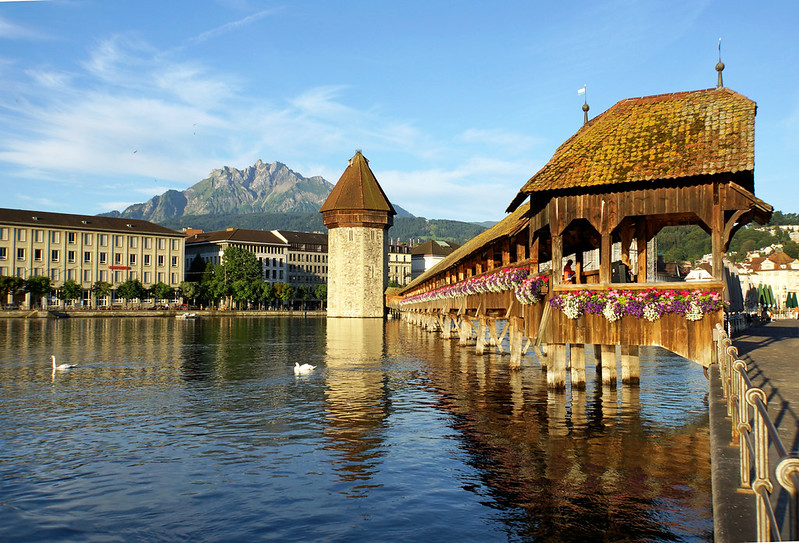
The Kapellbrücke, or Chapel Bridge, is Lucerne’s signature sight and the oldest wooden covered bridge in Europe. Dating to the 14th century, it angles across the Reuss River with its stout octagonal Water Tower alongside, and its rafters are hung with painted panels. Crossing it, especially with flower boxes spilling color over the sides, is a quintessential Lucerne moment.
Wander the Old Town
The car-free Altstadt is made for aimless strolling. Its squares are lined with buildings covered in elaborate frescoes, and cafes and shops fill the cobbled lanes. Look for the two main squares, Weinmarkt and Hirschenplatz, and take time to simply sit with a coffee and watch the city go by.
Walk the Musegg Wall
For a great view and a bit of history, climb the Musegg Wall, a surviving stretch of the medieval city ramparts with nine towers. Several are open to walk, and one holds the city’s oldest clock. From up here you get a lovely panorama over the red rooftops, the river, and the lake.
See the Lion Monument
The Lion Monument, a dying lion carved into a rock face to honor Swiss Guards who died in the French Revolution, is one of the most moving sculptures in Europe. Mark Twain called it the saddest and most poignant piece of stone in the world, and it is well worth the short walk from the old town.
Cruise Lake Lucerne
The lake, with its many arms reaching between steep green mountains, is stunning and best seen from the water. Hop aboard one of the classic paddle steamers or a modern boat for a cruise, whether a short loop or a longer trip to lakeside villages. Many cruises are included with a Swiss Travel Pass, and they pair perfectly with a mountain excursion.
The Mountains Around Lucerne
Half the magic of Lucerne is how easily you can get up into the Alps. Two peaks stand out.
Mount Pilatus
Rising dramatically over the city, Mount Pilatus is the classic Lucerne excursion. The famous “Golden Round Trip” combines a boat across the lake, the world’s steepest cogwheel railway up the mountain, and cable cars and a gondola back down, all in one loop. The summit views over the lake and a sea of surrounding peaks are spectacular.
Mount Rigi
Known as the “Queen of the Mountains,” Rigi is a gentler, sunnier summit reached by Europe’s first mountain cogwheel railway. The broad top offers easy walking trails, wide views over the lake and the Alps, and even mineral baths nearby. It is a wonderful, less strenuous alternative to Pilatus, and a favorite for a relaxed mountain day.
Where to Stay in Lucerne
Lucerne is compact, so most places put you within easy reach of the sights, but a couple of zones stand out.
Old Town and the lakefront
Staying in or beside the Altstadt puts the bridges, squares, restaurants, and the boat piers right outside your door. It is the most atmospheric and convenient choice, ideal for first-timers who want to wander out into the heart of the city each morning. Lakefront hotels near the station add gorgeous water and mountain views.
A little outside the center
If you want more space or value, look just beyond the old town or across the river. You trade a few minutes of walking for quieter streets and often better prices, while still staying within an easy stroll of everything. Because Switzerland runs expensive, our guide to how much a trip to Europe costs can help you budget realistically.
Where to Book
- Hotels: We use Booking.com to compare hotels in the old town and along the lakefront, most with free cancellation.
- Tours and experiences: Viator has Mount Pilatus and Rigi excursions, lake cruises, city walking tours, and day trips to Titlis and beyond.
Sample 3-Day Lucerne Itinerary
Three days lets you enjoy the city and get up into the mountains without rushing. Here is our ideal.
Day 1: Explore the city. Cross the Chapel Bridge, wander the frescoed old town, climb the Musegg Wall for the view, and visit the Lion Monument. In the afternoon, take a relaxed lake cruise and toast your arrival from the deck.
Day 2: Go up a mountain. Dedicate today to a peak. Ride the Golden Round Trip up Mount Pilatus, or take the cogwheel up sunny Mount Rigi for gentler walks and wide views. Either way, allow most of the day and hope for clear skies.
Day 3: Lake villages or a second summit. Cruise to a lakeside village like Weggis or Vitznau for lunch and a stroll, or, if the mountains have you hooked, add another peak such as Titlis with its glacier and revolving cable car. Return for a final evening riverside dinner.
How Many Days Do You Need in Lucerne?
You can see the old town and one mountain in a busy two days, which is enough for a satisfying taste. But central Switzerland has so much within reach that it is easy to fill more time happily.
Three days is our sweet spot: one for the city and lake, one for a headline peak, and one for a second summit or a leisurely cruise. With four or five days you could add day trips, more hiking, and an overnight up in the mountains. Lucerne also pairs beautifully with Interlaken, so consider splitting a Swiss week between the two.
Practical Tips for Visiting Lucerne
Check the weather before a mountain day. The peaks are only worth the money and effort on clear days. Stay flexible and save Pilatus or Rigi for the best forecast, using the city days as your buffer.
Consider a Swiss Travel Pass. If you will ride trains, boats, and some mountain railways, the pass can save money and includes lake cruises and museum entry. Do the math for your route.
Pack layers. It can be warm by the lake and cold on the summits on the same day. Bring a warm layer and a rain shell even in summer.
Eat smart to save. Switzerland is pricey. Picnics from the Migros or Coop, tap water, and lunch specials help stretch the budget without missing out. Our Switzerland on a budget guide has more tips.
Start mountain trips early. The first departures are quieter and often clearer, before afternoon clouds build. Early risers get the best of the peaks.
Enjoy the free sights. The bridges, old town, Musegg Wall, and Lion Monument cost nothing, so you can have a wonderful day in Lucerne on a modest budget if you skip a summit.
Is Lucerne Worth Visiting?
Absolutely. Lucerne delivers a near-perfect Swiss experience in one tidy package: a medieval old town you can wander for hours, a lake that looks painted, and world-famous mountains just a boat and a cogwheel away. It is easy to reach, easy to love, and easy to use as a base for the wider region.
Yes, Switzerland is expensive, and we will not pretend otherwise. But with a rail pass, a few picnics, and the many free sights of the old town, you can experience the magic without draining your savings. Stand on the Chapel Bridge at golden hour, or look down on the lake from the top of Pilatus, and you will understand why Lucerne charms nearly everyone who visits. It certainly charmed us, and we cannot wait to return.
Building a Swiss or European trip? Pair Lucerne with our guide to nearby Interlaken, stretch your francs with Switzerland on a budget, and time it right with our post on the best time to visit Europe.