Disclosure: This post contains affiliate links. If you book through our links, we may earn a small commission at no extra cost to you. Thanks for supporting Faceted Travel!
Table of Contents
- Why Athens Is Worth Your Time
- When to Visit Athens
- Getting There and Getting Around
- The Best Things to Do in Athens
- Easy Day Trips from Athens
- Where to Eat in Athens
- Where to Stay in Athens
- What to Know Before You Go
- How Many Days Do You Need in Athens
- Frequently Asked Questions About Athens
- Where to Book
- Final Thoughts
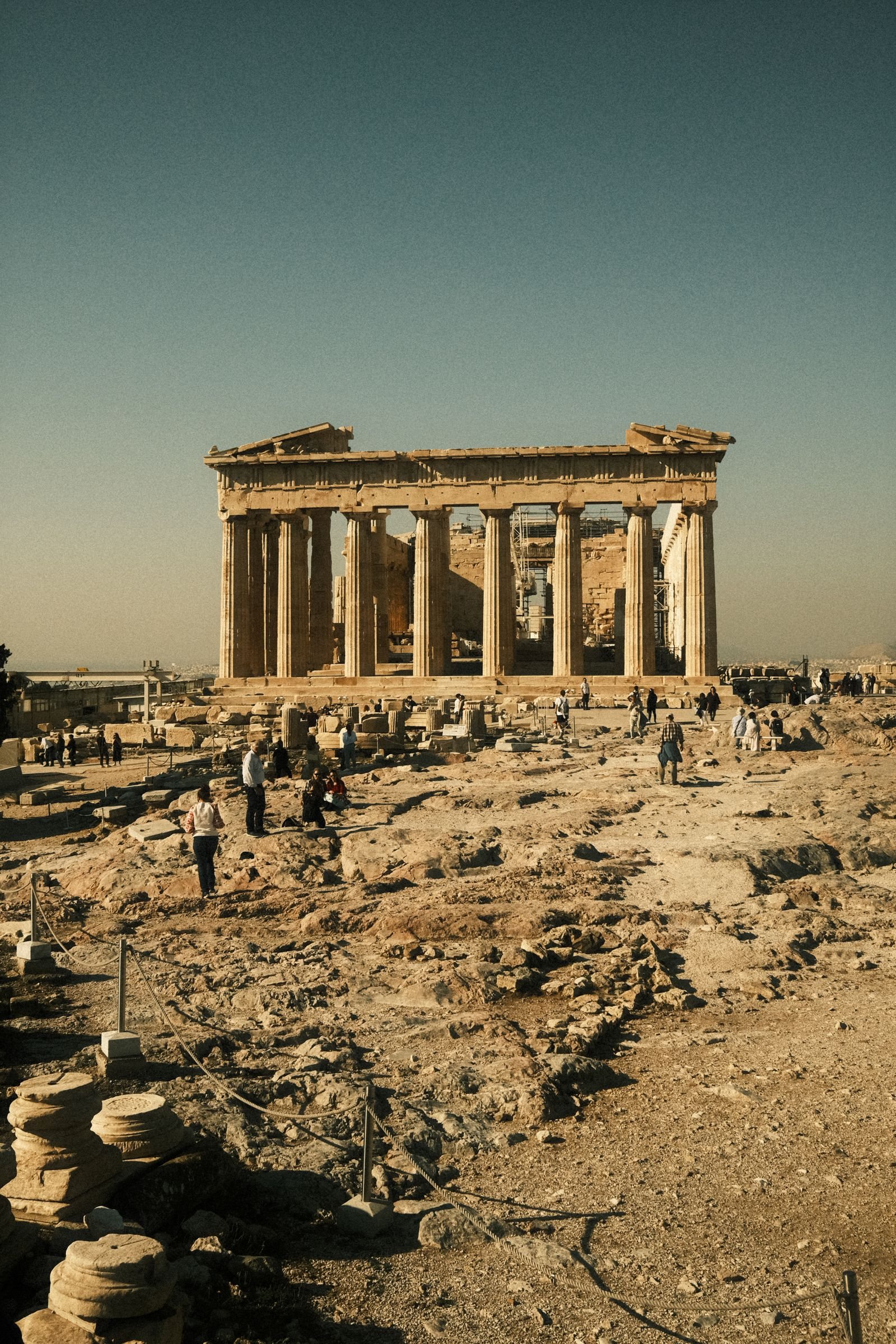
Standing in the shadow of the Parthenon for the first time, we kept reminding ourselves that people have been climbing this same hill for nearly 2,500 years. Athens has a way of collapsing time like that, where ancient marble columns sit above buzzing cafes and graffiti-covered streets, and somehow it all works together.
We are Todd and Kimberly, and Athens surprised both of us. We expected a quick stopover before the Greek islands and ended up wishing we had given the city more days. It is gritty and grand, layered with history, packed with incredible food, and far more affordable than most European capitals. Here is everything we have learned about planning a great first trip to Athens.
Why Athens Is Worth Your Time
A lot of travelers treat Athens as a one-day box to tick before racing off to Santorini or Mykonos. We think that is a mistake. Yes, the Acropolis is the headline, but the city around it rewards anyone willing to linger.
Athens is the birthplace of democracy, philosophy, and Western theater, and the physical evidence is everywhere, often tucked between apartment blocks and metro stops. Beyond the ruins, you get lively neighborhoods, a world-class museum scene, rooftop bars with floodlit Acropolis views, and some of the best casual food in Europe. It is also a brilliant value, with meals, taxis, and attractions costing noticeably less than in Rome or Paris.
Add in the year-round sunshine and the easy ferry and flight connections to the islands, and Athens earns at least two or three full days of your trip.
When to Visit Athens
Greece has a true Mediterranean climate, so the season matters.
Spring (April to early June)
Spring is our top pick. The weather is warm but not scorching, wildflowers bloom around the ruins, and the heavy summer crowds have not arrived yet. It is ideal for all the walking and climbing Athens involves.
Fall (September to October)
Fall is nearly as good. The brutal summer heat fades, the light turns golden, and prices ease as the island crowds head home. This is a wonderful time to combine Athens with a few islands while the sea is still warm.
Summer (July and August)
Summer is hot, often above 95 degrees, and the city can feel heavy and crowded. If you come now, sightsee early in the morning, retreat indoors midday, and explore again in the cooler evening. Many Athenians escape to the islands, so the city itself can feel quieter than you expect.
Winter (November to March)
Winter is mild, cheap, and uncrowded, with occasional rain and cool evenings. You can see the major sights in peace, though some rooftop bars and seasonal spots slow down. It is a great time for museum lovers and budget travelers.
Getting There and Getting Around
Athens International Airport connects to cities across Europe and beyond, and it is an easy ride into the center by metro, express bus, or taxi. The metro line from the airport drops you right in the heart of the city in about 40 minutes, which is what we usually do.
Once you are in town, central Athens is wonderfully walkable. The main historic neighborhoods of Plaka, Monastiraki, and the area around the Acropolis flow into each other on foot. For longer hops, the metro is clean, cheap, fast, and a sight in itself, since several stations display ancient artifacts uncovered during construction.
We rarely needed a taxi inside the center, but ride-hailing apps work well and are affordable when your feet give out after a day on the marble.
The Best Things to Do in Athens
The Acropolis and Parthenon
This is the reason most people come, and it lives up to the hype. The Acropolis is a rocky citadel crowned by the Parthenon, the Erechtheion, and other temples dating to the 5th century BC. Go right at opening or in the last hours before closing to dodge the worst heat and crowds, wear good shoes for the slick marble, and buy a timed ticket online in advance.
The Acropolis Museum
At the foot of the hill, this stunning modern museum displays the sculptures and artifacts from the Acropolis with glass floors over ongoing excavations. The top floor frames the actual Parthenon through its windows. It gives context that makes the ruins far more meaningful, so we recommend pairing the two.
Plaka and Anafiotika
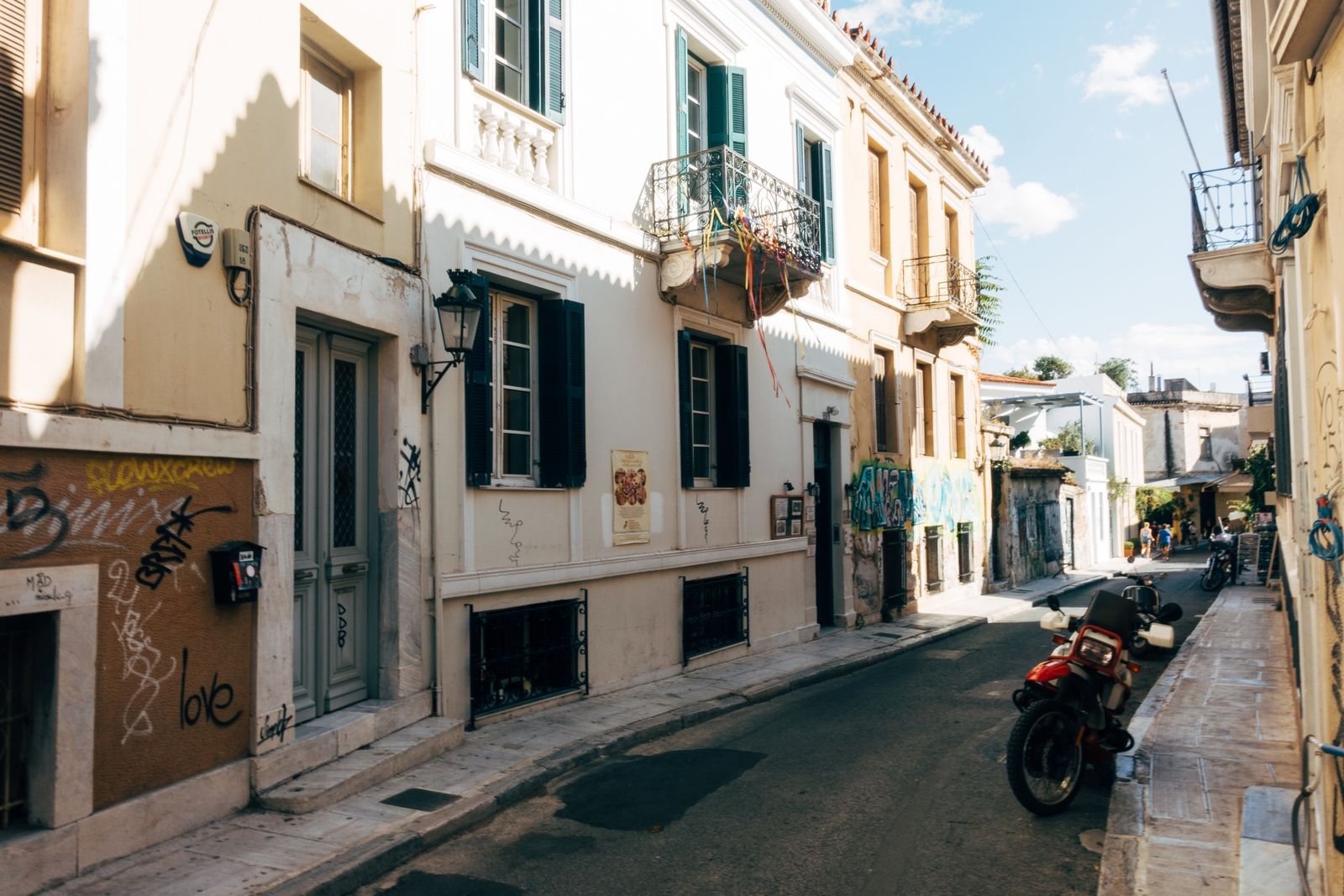
Plaka is the oldest neighborhood in Athens, a maze of narrow lanes, neoclassical houses, tavernas, and shops curling around the base of the Acropolis. Tucked within it, the tiny Anafiotika quarter feels like a Cycladic island village dropped into the city, with whitewashed houses and bougainvillea. It is the most charming place in Athens to simply wander.
Ancient Agora and Roman Sites
The Ancient Agora was the civic heart of classical Athens, where Socrates once taught. The remarkably preserved Temple of Hephaestus and the reconstructed Stoa of Attalos are highlights. Nearby you will also find Hadrian’s Library, the Roman Agora, and the towering columns of the Temple of Olympian Zeus.
If you love this kind of deep history, you will probably enjoy our Rome travel guide and our Florence, Italy travel guide too.
National Archaeological Museum
A short metro ride from the center, this is one of the greatest museums of ancient art in the world. The gold of Mycenae, bronze statues pulled from shipwrecks, and room after room of treasures make it a must for anyone who wants to understand Greek history. It is less crowded than the Acropolis sites and worth a couple of hours.
Sunset from Mount Lycabettus or a Rooftop
For the best view in the city, ride the funicular or hike up Mount Lycabettus, the highest hill in Athens, for a panorama that stretches to the sea. Alternatively, claim a table at one of the many rooftop bars in Monastiraki or Plaka and watch the Parthenon light up as the sky turns pink. It is the perfect way to end a day.
Easy Day Trips from Athens
Athens makes a great base for exploring further afield. The most popular half-day trip is Cape Sounion, where the cliff-top Temple of Poseidon delivers a legendary sunset over the Aegean about 90 minutes from the city.
For a full day, history lovers head to Delphi, the mountain sanctuary the ancient Greeks considered the center of the world, while the seaside town of Nafplio and the theater of Epidaurus make a beautiful Peloponnese loop. And of course, Athens is the gateway to the islands. Ferries from the port of Piraeus can have you in the Saronic Gulf in an hour, or on to the Cyclades, including our beloved Santorini, in a few hours.
Where to Eat in Athens
Greek food is one of the great joys of visiting, and Athens does it casually and brilliantly. Souvlaki and gyros wrapped in warm pita are the classic cheap, delicious street meal, often costing just a few euros. Sit-down tavernas serve grilled meats, fresh fish, horiatiki salad heavy with feta, and small plates called mezedes meant for sharing.
Seek out the central market and the food stalls of Monastiraki, and do not skip a frappe or freddo espresso at a sidewalk cafe, which is practically a national pastime. For dessert, fresh loukoumades (honey-soaked doughnuts) and good Greek yogurt with honey are easy to love. Tipping is appreciated but modest, and a leisurely meal is part of the culture, so do not rush.
Where to Stay in Athens
For first-timers, we recommend basing yourself in or near Plaka, Monastiraki, or Koukaki. These central neighborhoods put you within walking distance of the Acropolis, the metro, and the best restaurants, and many hotels here have rooftop terraces with Acropolis views.
Koukaki, just south of the Acropolis, has become a favorite for its local feel, good cafes, and slightly better value. Monastiraki is the most lively and central, ideal if you want nightlife and shopping at your doorstep. Whatever you choose, book a place with air conditioning if you visit in the warmer months, and compare options early for spring and fall.
What to Know Before You Go
A few practical tips smooth out a first visit. Wear comfortable shoes with grip, because the ancient marble and stone paths are genuinely slippery and uneven. Carry water and a hat in warm months, since shade is scarce at the archaeological sites. A combined ticket covers the Acropolis plus several other ancient sites and can save money if you plan to see a few.
Athens is generally safe, but like any big city it has pickpockets in crowded tourist areas and on the metro, so keep an eye on your belongings. Greeks are warm and helpful, English is widely spoken in tourist areas, and a simple “kalimera” (good morning) goes a long way.

How Many Days Do You Need in Athens
We think two to three full days is the sweet spot for a first visit. Two days lets you cover the Acropolis, the Acropolis Museum, Plaka, the Ancient Agora, and a rooftop sunset without rushing. A third day opens up the National Archaeological Museum and a day trip to Cape Sounion or Delphi.
If you only have one day, start early at the Acropolis, visit the museum below it, wander Plaka, and watch sunset from a rooftop. If you build in extra time, Athens pairs perfectly with a island-hopping leg, making it the ideal start or finish to a longer Greece trip.
Frequently Asked Questions About Athens
How many days should I spend in Athens?
Two to three full days is ideal for first-timers. That gives you time for the Acropolis and its museum, the historic neighborhoods, the Ancient Agora, and at least one day trip or extra museum, all at a comfortable pace.
Is Athens expensive?
Athens is one of the more affordable European capitals. Meals, public transport, taxis, and many attractions cost noticeably less than in Western Europe, which makes it a great value, especially if you eat at tavernas and use the excellent metro.
Is Athens safe for tourists?
Athens is generally safe for visitors. The main concern is pickpocketing in crowded tourist spots and on the metro, so stay aware of your belongings. Standard city common sense at night is enough for most travelers.
Where to Book
Here is how we plan an Athens trip:
Hotels: We compare central hotels in Plaka, Monastiraki, and Koukaki, including ones with Acropolis-view rooftops, on Booking.com. Book early for spring and fall, the best months to visit.
Tours and Experiences: Skip-the-line Acropolis tickets, guided walking tours, food tours, and day trips to Cape Sounion and Delphi are easy to compare and reserve on Viator. A guided tour of the Acropolis brings the ruins to life.
Getting Around: Use the metro from the airport and around the city. It is cheap, fast, and reliable, and central Athens is best explored on foot.
Final Thoughts
Athens rewards travelers who slow down. Climb to the Parthenon early, lose an afternoon in the lanes of Plaka, eat far too much souvlaki, and toast the floodlit Acropolis from a rooftop at dusk. The city is ancient and alive at the same time, and it deserves more than a layover.
If you are planning a bigger European adventure, pair this with our guides to Santorini, Rome, and our breakdown of how much a trip to Europe costs. Safe travels.