Disclosure: This post contains affiliate links. If you book through our links, we may earn a small commission at no extra cost to you. Thanks for supporting Faceted Travel!
Table of Contents
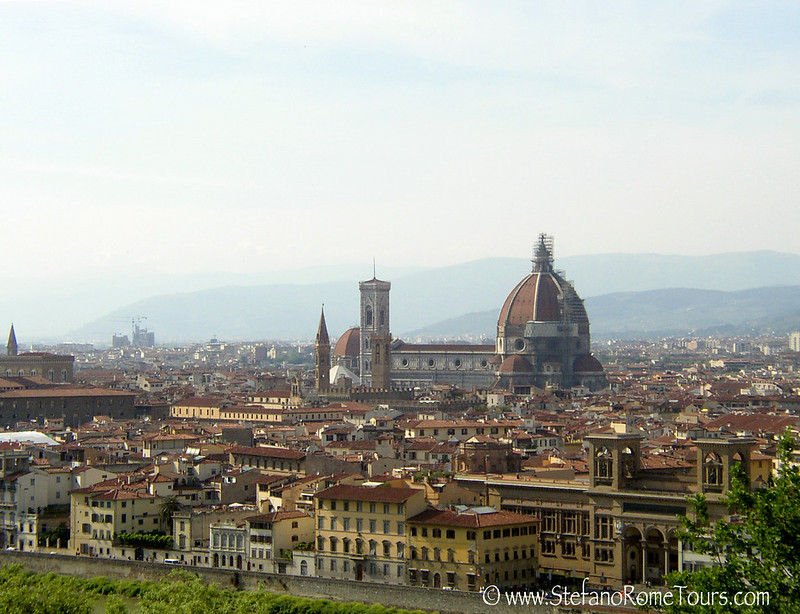
We will never forget rounding a corner in Florence at dusk and seeing the Duomo glow against a pink sky, its massive red dome rising over the rooftops like something out of a painting. Florence is the kind of city that makes you stop mid sentence and just stare.
This is the birthplace of the Renaissance, a city where Michelangelo, Leonardo, and Botticelli walked the same narrow streets you will. But Florence is not a museum frozen in time. It is alive with leather markets, wine bars tucked into ancient cellars, and some of the best food in Italy. We have visited twice now, and it remains one of our favorite cities in Europe. Here is how to make the most of your trip.
Why Florence Belongs on Your Italy Itinerary
Florence packs an astonishing amount of art, history, and beauty into a compact, walkable center. You can stroll from the Duomo to the Ponte Vecchio to the Uffizi in fifteen minutes, which means you spend your time soaking it in rather than commuting. After visiting Rome, we found Florence to be a calmer, more intimate experience, easier to navigate and gentler on the feet.
It is also the gateway to Tuscany, so you can easily pair city days with vineyard tours, hilltop towns, and rolling countryside. For a lot of travelers, Florence is the perfect middle stop on a longer Italy trip.
When to Visit Florence
Spring (April to June) and Fall (September to October)
These shoulder seasons are the sweet spot. The weather is warm but not oppressive, the gardens are lovely, and the crowds, while still present, are manageable. We visited in early October and the light was golden, the evenings were perfect for sitting out with a glass of Chianti.
Summer (July to August)
Summer in Florence is hot, often into the 90s, and the city fills with tour groups. Many locals leave town in August, and some smaller restaurants close. If summer is your only option, book timed entry tickets for everything and plan indoor activities for the midday heat.
Winter (November to March)
Winter is the quietest and cheapest time to visit. You will need a coat and you may catch some rain, but the museums are blissfully uncrowded and the city feels like it belongs to the people who live there. Christmastime is especially charming.
Getting to and Around Florence
Florence has a small airport, but many travelers fly into Rome, Milan, or Pisa and take the train. Italy’s high speed trains are fantastic. The trip from Rome takes about 1.5 hours and drops you right in the center at Santa Maria Novella station. We love arriving by train in Italy; it is fast, scenic, and you skip the airport hassle entirely.
Once you are in Florence, you walk. The historic center is small and most of it is pedestrian friendly. Wear comfortable shoes, because those beautiful old streets are paved in stone and you will log a lot of steps. You really do not need taxis or buses for the main sights.
Where to Stay in Florence
Because the center is so walkable, the best advice is simple: stay inside or right beside the historic core so you can walk to everything. Here are the neighborhoods we recommend.
The Historic Center (Centro Storico)
This is where most first timers stay, and for good reason. You are steps from the Duomo, the Uffizi, and the main piazzas, and you can roll out of bed and be at a museum in minutes. It is the most convenient and the most expensive area, but the convenience is real, especially if your trip is short. Streets near the Duomo can be noisy at night, so ask for a quieter room if you are a light sleeper.
Santa Croce
Just east of the center around the beautiful Basilica of Santa Croce, this area feels a touch more local while still being walkable to everything. There are excellent restaurants and wine bars here, and prices tend to be a little gentler than right at the Duomo.
The Oltrarno
Across the river on the south bank, the Oltrarno is our personal favorite for a return visit. It is the artisan side of Florence, full of workshops, neighborhood trattorias, and a more relaxed pace, yet still only a ten minute walk from the Ponte Vecchio. If you want to feel like a temporary local rather than a tourist, stay here.
Near Santa Maria Novella Station
If you are arriving by train or doing a quick stopover, the area around the main station is practical and often cheaper. It is a bit less charming, but it is still walkable to the sights and handy for onward travel to Rome, Venice, or the Tuscan countryside.
The Best Things to Do in Florence
Climb the Duomo
The Cathedral of Santa Maria del Fiore, with Brunelleschi’s famous dome, is the heart of Florence. Climbing the 463 steps to the top of the dome is a rite of passage, and the view over the terracotta rooftops is worth every breathless step. Book your timed ticket well in advance, as slots sell out. If stairs are not your thing, the climb up Giotto’s Bell Tower next door offers an arguably better view (because it includes the dome itself).
See Michelangelo’s David at the Accademia
Photos do not prepare you for the David. Standing 17 feet tall, carved from a single block of marble, it is genuinely breathtaking in person. The Accademia Gallery gets very busy, so reserve a timed entry ticket online ahead of time. Go first thing in the morning to beat the crowds.
Get Lost in the Uffizi Gallery
The Uffizi holds one of the greatest art collections on earth: Botticelli’s Birth of Venus, works by Leonardo, Raphael, Caravaggio, and Titian. It is a lot to take in, so do not try to see everything. Pick a few rooms you really care about and let yourself linger. Again, book ahead and skip the brutal standby line.
Walk Across the Ponte Vecchio
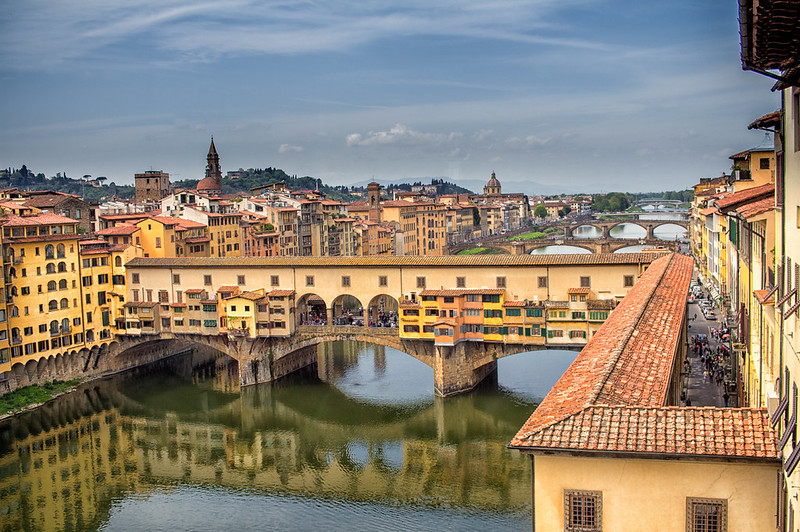
The Ponte Vecchio is the medieval bridge lined with jewelry shops that has spanned the Arno since 1345. It is touristy, yes, but undeniably romantic, especially at sunset when the river glows. Come back at night when the shops are shuttered and the crowds thin out for a quieter stroll.
Watch Sunset from Piazzale Michelangelo
This hilltop square across the river gives you the postcard view of Florence, the whole city laid out with the Duomo at its center and the hills beyond. It is a bit of a climb, but completely worth it. Bring a bottle of wine, grab a spot on the steps, and watch the city turn gold. This was our favorite hour of the whole trip.
Explore the Oltrarno Neighborhood
Cross to the south side of the river and you enter the Oltrarno, where artisan workshops, antique shops, and local trattorias make for a more authentic, lived in Florence. The Pitti Palace and the Boboli Gardens are here too if you want more art and a green escape.
What and Where to Eat in Florence
Tuscan food is rustic, hearty, and absolutely delicious. Do not leave without trying these.
Bistecca alla Fiorentina
This is the legendary Florentine steak, a thick cut of T bone grilled over coals and served rare. It is sold by weight and meant to be shared. If you eat meat, this is the splurge meal to plan around.
Lampredotto and Other Street Food
For something authentically local, try lampredotto, a sandwich made from slow cooked tripe sold at street carts around the city. It sounds intimidating, but it is a Florence institution. If that is not your thing, a simple panini with fresh prosciutto and pecorino never disappoints.
Gelato (the Real Kind)
Florence has incredible gelato, but skip the shops with the giant fluffy mountains of bright color near the tourist sights. Look for gelaterias that keep their gelato in covered metal tins, a sign of the real artisan stuff. We may or may not have had gelato twice a day.
Wine Bars and Aperitivo
Tuscany is wine country, so do as the locals do and settle into an enoteca for a glass of Chianti or a Brunello. Many bars offer aperitivo in the early evening, where a drink comes with snacks. It is a lovely, low key way to end a day of sightseeing.
How Many Days Do You Need in Florence
People often ask how long to spend here, and our answer is two to three full days for the city itself. Two days lets you hit the big three (the Duomo, the Accademia, and the Uffizi) plus wander the neighborhoods and eat well. A third day gives you room to slow down, revisit a favorite spot, and not feel rushed. If you want to add a Tuscan day trip to Siena or a wine region, build in a fourth. Florence is compact, so you accomplish a lot in a short time, but it is also the kind of place that rewards lingering, so we would not try to “do” it in a single day.
A Day Trip Into Tuscany
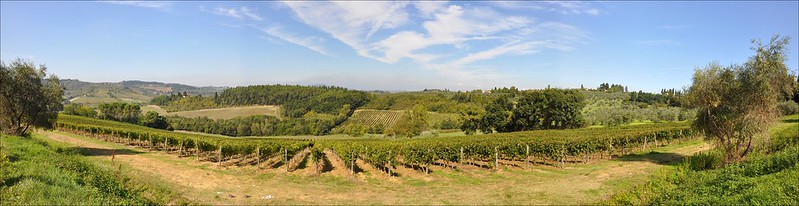
If you have an extra day, get out into the countryside. The hilltop towns of Siena and San Gimignano are an easy drive or guided tour away, and a Chianti wine tour through the vineyards is one of those quintessential Tuscan experiences. We did a half day wine tour and it was a highlight, sipping reds while looking out over the rolling hills.
Tips From Our Trips
Book your mus