Disclosure: This post contains affiliate links. If you book through our links, we may earn a small commission at no extra cost to you. Thanks for supporting Faceted Travel!
Table of Contents
Vienna had been on our list for years, and when we finally booked the trip, we felt a small twinge of nervousness — could any city really live up to that much anticipation? It absolutely could. Vienna is one of those rare destinations that doesn’t just meet expectations; it exceeds them at every turn. The coffee houses are as legendary as advertised, the art and music scene is genuinely staggering, and the architecture will make you stop mid-stride to look up, again and again.
If you’re building a European itinerary, Vienna belongs near the top — especially if you’re pairing it with Prague or rounding out a Western Europe trip after Paris. Here’s our complete guide to visiting Vienna.
Why Visit Vienna?
Vienna is the former capital of the Habsburg Empire, and that history is written into every building, museum, and concert hall in the city. This was the cultural capital of Europe for centuries — Mozart, Beethoven, Schubert, Brahms, and Strauss all lived and worked here. Klimt, Schiele, and the Vienna Secession defined modern art here. Freud invented psychoanalysis here. It’s genuinely one of the most consequential cities in Western civilization, and it wears that legacy gracefully.
But Vienna isn’t a museum piece. It’s a deeply livable, walkable city with a food scene that blends traditional Viennese cuisine with modern restaurants, a café culture recognized by UNESCO, and neighborhoods that feel authentically lived-in.
When to Go to Vienna
Best time: May through June and September through October. Weather is pleasant (15–25°C / 60–77°F), crowds are manageable, and the city is gorgeous in spring and fall light.
Summer (July–August): Warm, busy, and full of outdoor concerts and events. Peak tourist season — book ahead.
Winter (December–March): Vienna’s Christmas markets are among the best in Europe — genuinely magical. Temperatures are cold but hotel prices drop significantly.
Getting to Vienna
Vienna International Airport (VIE) is one of Central Europe’s major hubs. The City Airport Train (CAT) reaches the city center in 16 minutes; the S-Bahn is slower but cheaper.
By train: Vienna is spectacularly well connected by rail — Prague (4 hours), Budapest (2.5 hours), Salzburg (2.5 hours), Munich (4 hours). If you’re traveling around Central Europe, the train is the way to go.
Getting around Vienna: The U-Bahn (metro), trams, and buses are excellent. A 24- or 48-hour transit pass is great value. The historic center is very walkable.
Where to Stay in Vienna
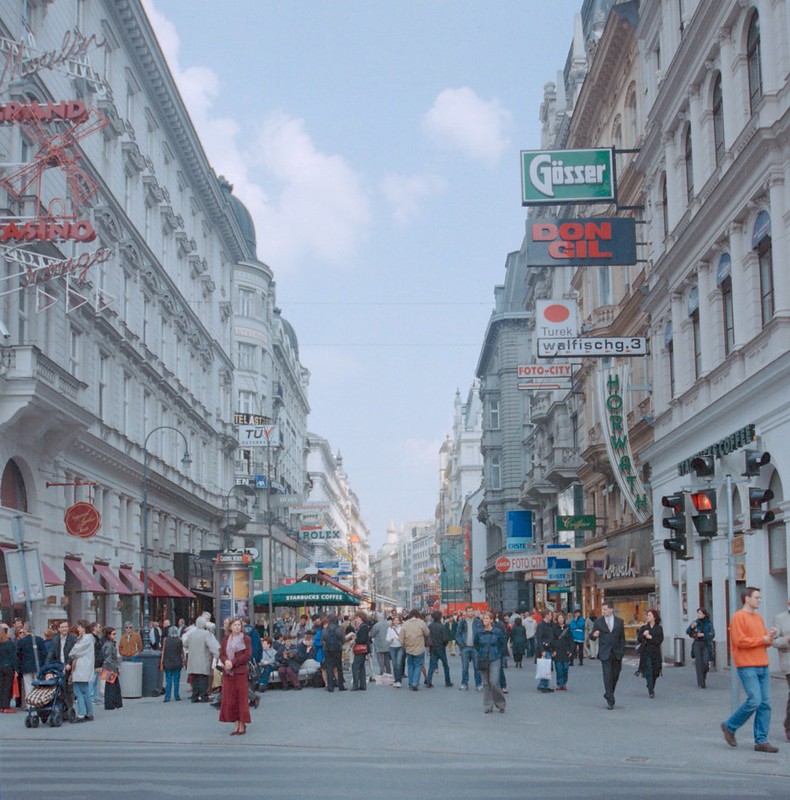
1st District (Innere Stadt): The historic center — most expensive but unbeatable location. Walk to the Staatsoper, KHM, and St. Stephen’s Cathedral. Best for first-timers.
7th District (Neubau): Trendy, artsy, full of independent boutiques and restaurants. More affordable and still walkable to the center. Our personal favorite.
3rd District (Landstraße): Quiet, residential, affordable, with easy metro access.
What to budget: Budget hotels €60–90/night. Midrange €100–180. Excellent boutique hotels €150–200.
👉 Search Vienna hotels on Booking.com
Top Things to Do in Vienna
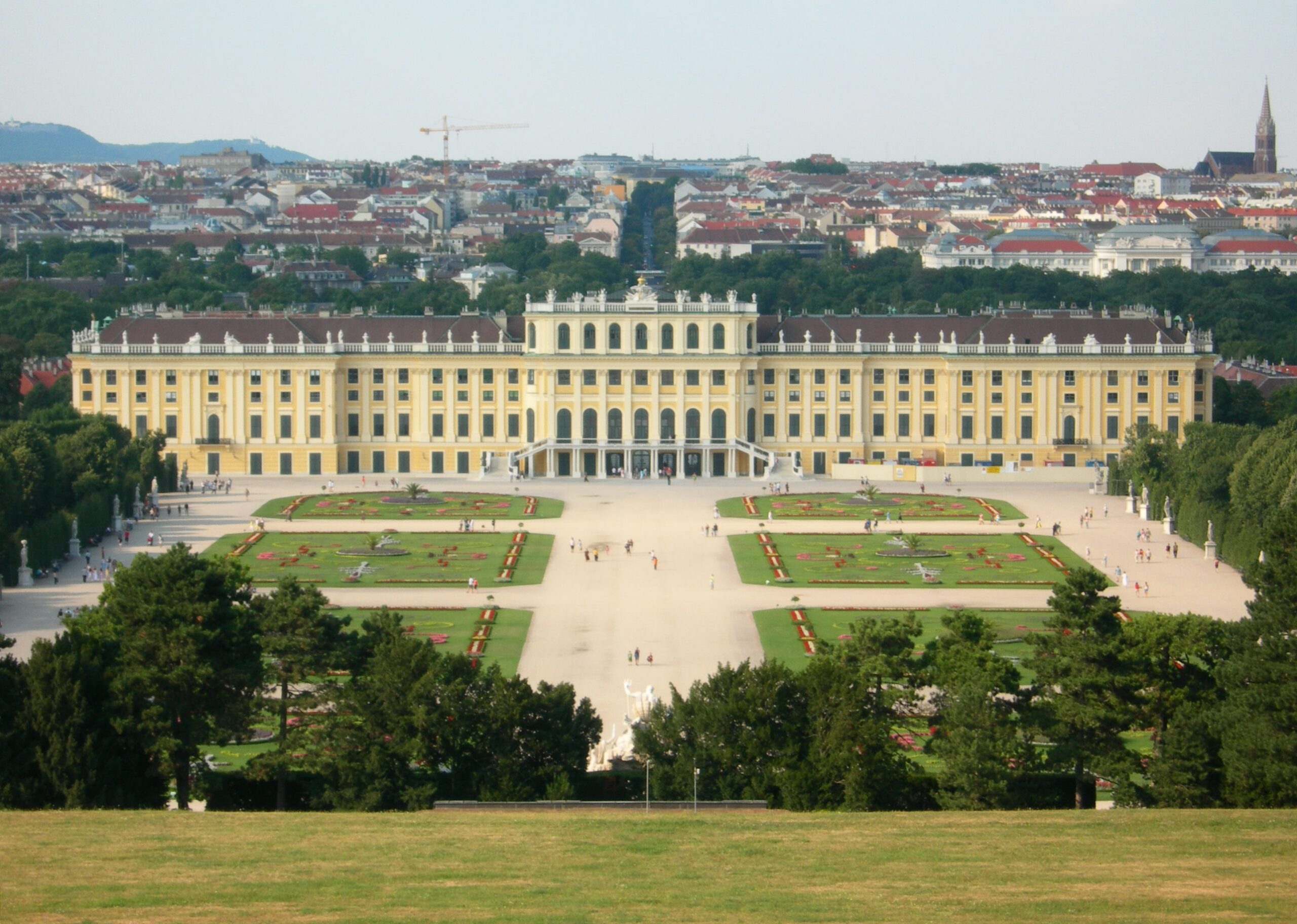
Visit Schönbrunn Palace
Vienna’s Versailles — an imperial summer palace with 1,441 rooms, baroque gardens, and a hilltop Gloriette with panoramic views. Maria Theresa essentially rebuilt it to its current grandeur in the 18th century. Allow half a day. Book tickets online — the queues can be brutal in summer.
The Kunsthistorisches Museum
One of the greatest art museums in the world. The Habsburg imperial collections include Raphael, Vermeer, Bruegel the Elder, Caravaggio, Rubens, and Velázquez. The building itself — domed hall, grand marble staircase — is as impressive as the art inside. Plan for 2–3 hours minimum.
Attend a Concert or Opera
The Vienna Philharmonic is one of the finest orchestras in the world. The Vienna State Opera (Wiener Staatsoper) performs nearly every night of the year. Standing room tickets sell for around €4–10 on the night — a remarkable bargain for world-class opera. For seated tickets, book well in advance at wiener-staatsoper.at.
St. Stephen’s Cathedral (Stephansdom)
The Gothic cathedral at the heart of the city is one of the most beautiful churches in all of Europe. Climb the 343-step south tower for views over the old city, or descend into the catacombs where Habsburg entrails were interred. Free to enter the main nave; fees apply for towers and catacombs.
The Belvedere
The Upper Belvedere palace houses Austria’s greatest art collection, including Gustav Klimt’s The Kiss. The baroque garden connecting Upper and Lower Belvedere is stunning. Seeing The Kiss in person is genuinely different from reproduction — it’s far larger and more luminous than you expect.
Stroll the Naschmarkt
Vienna’s famous open-air market runs along a long stretch near the 4th and 5th districts, open Monday through Saturday. A feast of produce, spices, cheeses, meats, and prepared foods. On Saturday, an antique flea market adds even more reason to linger.
Walk the Ringstrasse
The grand boulevard built under Emperor Franz Joseph in the 1860s is lined with monumental buildings — the State Opera, Parliament, Burgtheater, City Hall, and Natural History Museum. Take Tram 1 or 2 for the full spectacle of 19th-century imperial ambition.
Viennese Coffee House Culture
Vienna’s Kaffeehäuser (coffee houses) are a UNESCO Intangible Cultural Heritage. You can sit for hours with a single coffee, read the newspaper, and no one will rush you out.
Must-visit coffee houses: Café Central (stunning neo-Gothic interior; Trotsky and Freud were regulars), Café Landtmann (on the Ringstrasse, frequented by politicians), and Café Hawelka (a legendary, slightly shabby Bohemian institution open since 1939).
Order a Melange (coffee with steamed milk — Vienna’s signature drink) or a Kleiner Brauner (small espresso with cream).
What to Eat in Vienna
Wiener Schnitzel — Breaded, fried veal cutlet, pounded thin and served with lemon and lingonberries. Figlmüller is famous for enormous plate-overflowing versions.
Tafelspitz — Boiled beef with root vegetables and horseradish sauce. The quintessential Viennese Sunday roast.
Sachertorte — The iconic chocolate cake with apricot jam layer, created at Hotel Sacher in 1832. There’s a legal dispute with Demel pastry shop over the “original” — we suggest trying both.
Apfelstrudel — Flaky pastry with cinnamon apple filling. A Viennese staple.
Budget: €3–8 for a quick meal at a Würstelstand. €20–35 per person at a traditional Gasthaus with wine.
Where to Book Your Vienna Trip
Hotels: Search Vienna hotels on Booking.com
Tours & Activities: Browse Vienna tours on Viator — palace tours, concert tickets, city walks, day trips to Salzburg and Budapest
Packing for Europe: Check our packing list for Europe — a light layer for evenings is essential in Vienna, even in summer.
Travel Insurance: We never travel internationally without coverage. Our best travel insurance guide breaks down what to look for.
Vienna Travel Tips
Get a Vienna City Card. Covers unlimited public transit plus discounts at major museums. Available for 24, 48, or 72 hours.
Book popular attractions in advance. Schönbrunn, the Belvedere, and Staatsoper standing room all move fast.
Tip appropriately. Unlike most of Europe, tipping is expected in Vienna. Round up to the nearest €5, or tip 10% at restaurants.
The 1st district closes early. Many shops close by 6 PM. Museums typically close between 5–6 PM.
Walk or tram the Ringstrasse. Tram lines 1 and 2 circle the Ring — scenic and cheap.
How Many Days in Vienna?
Three to four days is the sweet spot for a first visit — major palaces, a museum or two, coffee house scene, and time to wander. A week lets you add day trips to the Vienna Woods or Klosterneuburg Monastery.
Pairing with Prague? The train between the two cities (4 hours) is one of Europe’s great rail journeys. And our tips for finding cheap flights can help stitch a bigger Europe trip together affordably.
Vienna is one of those cities you spend years meaning to visit, and then wonder why you waited so long. Don’t make that mistake.