Disclosure: This post contains affiliate links. If you book through our links, we may earn a small commission at no extra cost to you. We only recommend places and things we’ve personally used or vetted.
Table of Contents
New York City does something interesting to travelers: it meets you wherever you are. Come for Broadway and luxury hotels and it delivers. Come with $50/day and a MetroCard and it delivers that too. It’s the most visited city in the Western Hemisphere, and yet on any given street corner in Brooklyn or Queens or the Bronx, you can find a version of New York that feels nothing like a tourist city at all.
We’ve been to New York more times than we can count, across different seasons and different budgets. This guide is what we’d tell a friend who’s going for the first time: what’s actually worth doing, where to eat without feeling ripped off, which neighborhoods reward aimless wandering, and what to skip without missing anything.
When to Visit New York City
Best overall: April–June and September–October. The city is at its most pleasant — temperatures in the 60s–70s, outdoor dining season, Central Park in full bloom or fall color. These are also the most popular months, so book hotels in advance.
Summer (July–August): Hot and humid, but New York’s outdoor culture is in full swing — rooftop bars, free concerts in the park (the New York Philharmonic plays Central Park for free in summer), and long daylight hours. Crowds are heavy but manageable. Air conditioning is your friend.
Fall (September–October): Our favorite time. The light is extraordinary, the weather is perfect for walking, and you’ll encounter every kind of New Yorker at their most outdoorsy. The marathon runs in early November if that’s of interest.
Winter (December–February): New York at Christmas is genuinely magical — the Rockefeller Center tree, ice skating, holiday window displays at the department stores. January and February are the coldest and slowest months; hotel prices drop and museums are quiet. Pack serious layers.
Getting Around New York City
The Subway: Do not take taxis or rideshares for routine travel within the five boroughs. The subway is fast, runs 24/7, and costs $2.90 per ride (or get an unlimited MetroCard). It connects nearly everywhere you’d want to go. Download the NYC Subway map app or use Google Maps — it’s accurate and shows real-time delays.
Walking: New York is profoundly walkable. Manhattan is laid out on a grid above 14th Street — numbered streets go east-west, avenues go north-south. A crosstown block is about 250 feet; a block along an avenue is about 800. Most first-timers dramatically overestimate how far things are on a map and underestimate how much they’ll want to walk.
Rideshare: Uber and Lyft are useful for getting to JFK or Newark from Manhattan, or for reaching parts of Brooklyn and Queens that the subway doesn’t serve well.
Airport tips: JFK connects to Manhattan via the AirTrain + subway (cheapest option, about an hour). Newark EWR takes a NJ Transit train to Penn Station (45 min, very convenient). LaGuardia is the worst — the Q70 bus exists but a car/Lyft from LGA is often worth the cost.
Best Things to Do in New York City
The Neighborhoods (This Is the Real New York)
Every first-time visitor goes to Times Square. Most of them quickly realize Times Square is not New York — it’s a commercial district designed to sell merchandise to tourists. Give it 30 minutes, take your photo, buy nothing.
The New York that locals actually inhabit — and that rewards travelers — is in the neighborhoods:
Greenwich Village and the West Village: Tree-lined streets, incredible restaurants, great people-watching. The kind of neighborhood that makes you want to move to New York.
DUMBO (Brooklyn): The Manhattan Bridge view with cobblestones is one of the great New York photographs. Brooklyn Bridge Park along the waterfront is excellent. The adjacent neighborhoods of Brooklyn Heights and Carroll Gardens are beautiful for walking.
Williamsburg (Brooklyn): The epicenter of Brooklyn’s creative culture — coffee shops, vintage stores, excellent restaurants, and the music venue scene. Take the L train.
Harlem: World-class gospel brunch (try Sylvia’s on Sundays), a deep culinary and music history, and the kind of street life that reminds you why people love this city. Walk Malcolm X Boulevard (Lenox Ave) and Frederick Douglass Boulevard.
The Lower East Side: Historic Jewish deli culture (Katz’s Delicatessen is mandatory), excellent cocktail bars, and the Tenement Museum — one of the most interesting museums in the city.
Astoria, Queens: Underrated and undervisited. Extraordinary diversity of food — Greek, Egyptian, Colombian, Chinese, everything — at prices that would be a third of Manhattan. The Museum of the Moving Image is here, if you’re into film.
Central Park
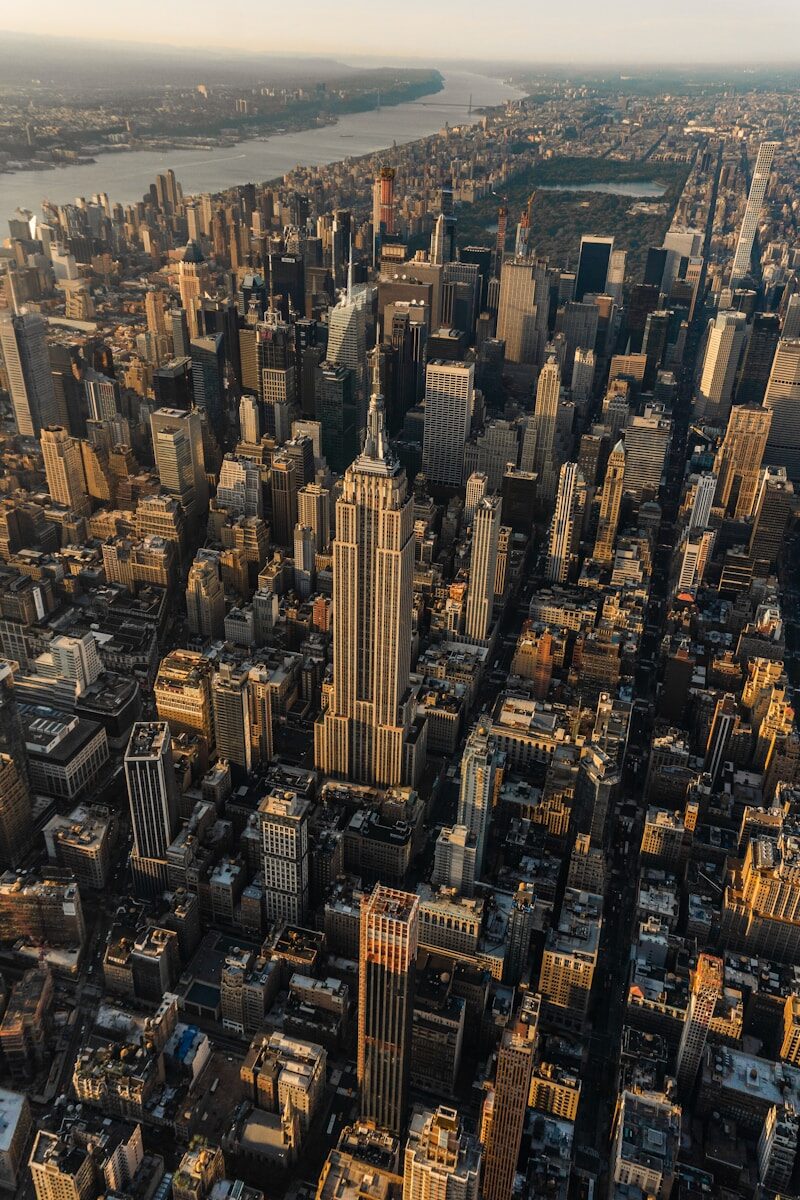
Central Park is 843 acres in the middle of Manhattan and is genuinely one of the great urban parks in the world. Enter from any point on the perimeter, wander, and follow what interests you. Key landmarks: Bethesda Fountain, the Ramble (a dense woodland that attracts extraordinary migratory birds in spring and fall), Belvedere Castle, and the Reservoir.
Rent a bike at any of the Citi Bike stations around the park’s perimeter — circling the park on a bike takes about an hour and gives you a different scale than walking.
The Metropolitan Museum of Art
The Met is one of the greatest museums on earth, full stop. It holds over 5,000 years of art across every civilization in human history. You cannot see it all in one visit or ten. Strategy: pick two or three departments that genuinely interest you and go deep rather than skimming everything.
Suggested departments: Egyptian Art (the Temple of Dendur alone is worth the trip), the American Wing (the architecture and period rooms are extraordinary), Greek and Roman Art.
Entry is pay-what-you-wish for New York state residents; suggested admission for others is $30. Book timed entry tickets in advance at metmuseum.org.
The High Line
An elevated park built on a former freight rail line running through Chelsea and the Meatpacking District on Manhattan’s west side. It’s beautifully designed, free to enter, and connects to Hudson Yards and Hudson River Park at its southern end. Best visited on weekday mornings — weekends in summer can feel like a shopping mall. The Whitney Museum of American Art sits at its southern entrance and is worth a visit.
One World Observatory or Edge
If you want a high-up view of New York — and you should — the choices are: One World Observatory at One World Trade Center, EDGE at Hudson Yards (the stepped outdoor viewing platform), or the classic Empire State Building. All three are legitimate; One World has the most history and the best southern views; EDGE is the most dramatic outdoor experience.
Book tickets in advance through Viator to skip lines — the savings in time are real.
Brooklyn Bridge Walk
Walk across the Brooklyn Bridge from the Manhattan side (access point near City Hall). It takes about 20 minutes and the views are excellent. On the Brooklyn side, you’re in DUMBO — from there, continue to Brooklyn Bridge Park for the Manhattan skyline view that appears in approximately every New York movie ever made.
Go early morning for the best light and the fewest people.
Museum of Natural History
A New York institution — the whale alone (94-foot blue whale suspended in the Hall of Ocean Life) is worth the trip. The planetarium (Hayden Planetarium) runs excellent astronomy shows. Good for all ages. Full day if you do it properly.
Where to Stay in New York City
New York hotel prices are reliably shocking. Budget in the $250–400/night range for a decent Manhattan hotel room — this is not luxury, it’s median. Options for managing costs:
Stay in Brooklyn: Williamsburg, DUMBO, and Park Slope are all well-connected to Manhattan and hotel prices are 20–40% lower. The travel time is real but manageable.
Stay in Long Island City, Queens: 5–7 minutes from Midtown Manhattan by subway. Some of the best value hotels in the metro area are here.
Midtown vs. Downtown: Midtown is convenient (central, close to major sites) but feels corporate. Lower Manhattan (Financial District, Tribeca) is less convenient to uptown sights but the neighborhoods are interesting and prices are sometimes lower on weekends when the business traveler clears out.
Browse Booking.com — filter by neighborhood, check-in date, and free cancellation. New York hotel pricing is extremely date-sensitive; midweek is often cheaper than weekends.
Where to Eat in New York City
You could eat a different excellent meal three times a day for years in New York and not run out of options. A few that are genuinely worth it:
Katz’s Delicatessen (Lower East Side): Open since 1888. The pastrami sandwich is a genuine New York experience — expensive (about $25) and completely worth it. Go on a weekday to avoid weekend crowds.
Levain Bakery (Upper West Side, multiple locations): The cookies are the size of a softball and probably the best in New York. The line looks daunting and moves quickly.
Joe’s Pizza (Greenwich Village, multiple locations): $3.50 for a slice of perfectly calibrated New York pizza. No seating required. Eat standing.
Xi’an Famous Foods (multiple locations): Northwest Chinese hand-ripped noodles and lamb dishes at prices that seem impossible for Manhattan. The spicy cumin lamb burger is extraordinary.
Smorgasburg (Williamsburg, weekends): An outdoor food market in Brooklyn with 80+ vendors — the best food market in the country, we’d argue. Brooklyn Bridge Park location on Sundays. Open April–November.
For a splurge: Gramercy Tavern has been one of New York’s finest restaurants for 30 years. Book a month in advance on Resy.
Tours Worth Doing in New York
- Brooklyn Bridge and DUMBO food tour: Combines the walk with neighborhood tastings — a good way to orient yourself to Brooklyn on arrival.
- Statue of Liberty and Ellis Island: Don’t try to just show up. Book tickets in advance at nps.gov/stli. The Ellis Island immigration museum is genuinely moving — if your family came through here, budget extra time.
- Street art tour in Bushwick: The Bushwick Collective in Brooklyn is one of the largest outdoor street art installations in the world. A guided tour provides context; or you can wander independently.
Browse full options on GetYourGuide and Viator — both have strong New York inventory.
Quick New York Itinerary (5 Days)
Day 1: Arrive, drop bags, walk the High Line, dinner in the Meatpacking District
Day 2: Central Park, Museum of Natural History, Upper West Side lunch, Met Museum (afternoon)
Day 3: Brooklyn Bridge walk, DUMBO, Brooklyn Bridge Park, Williamsburg dinner
Day 4: Lower East Side (Katz’s lunch, Tenement Museum), One World Observatory, Financial District
Day 5: Harlem morning, Metropolitan Museum of Art if you didn’t finish it, Times Square (briefly), afternoon flight
Practical Tips for New York
Don’t carry a large bag: Pickpocketing is rare but real, and you’ll walk 5+ miles a day. A daypack or crossbody is ideal.
Tipping: Standard is 20% at restaurants. Counter service and coffee shops have tip prompts — 0–10% is reasonable, 20% is generous. Taxis and rideshares: 15–20%.
Safety: New York is safer than its reputation, particularly in Manhattan and the tourist-frequented parts of Brooklyn and Queens. Normal urban awareness applies — be aware of your surroundings, don’t flash valuables on the subway at night.
Luggage: For flying into NYC, see our picks for best carry-on luggage — carry-on only makes the arrival experience dramatically easier.
Where to Book Your New York Trip
- Hotels: Booking.com — compare across neighborhoods, filter for free cancellation
- Tours & Activities: Viator and GetYourGuide
- Flights: Our how to find cheap flights guide — New York has three major airports (JFK, Newark, LaGuardia) and competition between carriers keeps prices competitive from most US cities
Final Thoughts
First-time visitors to New York often try to see too much — the Top 10 sites in 3 days, the whole island in a weekend. The city that rewards the most is the one you find by walking an unfamiliar neighborhood until you’re hungry, then finding somewhere local to eat.
Give yourself at least 5 days. Pick two or three things each day that you genuinely want to do and let the rest happen. The serendipitous stuff — the jazz coming from a restaurant window, the park conversation, the perfect slice from a counter you’d never find in a guidebook — is what people actually remember about New York.
It’s the kind of city that makes you want to come back, usually before you’ve even left. That’s not a cliché. It’s just true.