Disclosure: This post contains affiliate links. If you book through our links, we may earn a small commission at no extra cost to you. Thanks for supporting Faceted Travel!
Table of Contents
We have had exactly one bag lost in more than thirty countries of travel, and it happened on a two-week trip when we broke our own rule and checked a suitcase. That single soggy, delayed-bag experience in a rainy airport is a big part of why we are card-carrying members of Team Carry-On, but the honest answer to the carry-on versus checked bag debate is more nuanced than “always do this.”
The right choice depends on your trip, your travel style, and how you weigh convenience against cost and comfort. In this guide we break down the real pros and cons of each, what checking a bag actually costs, and a simple framework for deciding, so you can pack the smart way for your next trip.
The Short Answer
If you are traveling for a week or less, changing locations often, or flying budget airlines that charge for everything, going carry-on only is usually the winner. It is cheaper, faster, and far less stressful.
If you are traveling for two weeks or more, heading somewhere with bulky gear (ski trips, scuba, winter destinations), traveling with kids, or simply someone who likes options, checking a bag can be worth the cost and the wait. Neither choice is “right” for everyone, and plenty of trips call for a mix. Let us dig into why.
The Case for Carry-On Only
We lean carry-on, and here is why it has become our default for most trips.
You save money
On many airlines, especially budget and low-cost carriers, a checked bag is an extra fee each way, and those fees have climbed steadily. Going carry-on only can save you real money on every flight, which adds up fast on a multi-flight trip or for a family. That saved cash is better spent on experiences, and our guide to how to find cheap flights can help you trim the airfare too.
You save time
With only a carry-on, you skip the check-in bag drop and, crucially, the baggage carousel at the other end. When everyone else is crowded around the belt, you are already in a taxi or on the train. On tight connections, this can be the difference between making your next flight and missing it.
You can never lose what you carry
Airlines misplace a small but real percentage of checked bags every year, and delays are even more common. When your bag is in the overhead bin above your head, it arrives exactly when you do. For peace of mind alone, this is the biggest selling point for us.
You pack lighter and move easier
A carry-on forces discipline, and that is a feature, not a bug. You bring less, you carry less, and you are far more mobile, whether you are hauling luggage up the staircases of Positano or hustling to make a train connection. Light travelers move through the world with less friction.
The Case for Checking a Bag
Carry-on is not always the answer, and we check bags for certain trips without any guilt.
You get more room and flexibility
Some trips simply require more stuff. Long trips across multiple climates, formal events, specialized gear, or bringing home souvenirs all argue for the extra space. A checked bag lets you pack for contingencies instead of agonizing over every ounce.
You can bring full-size liquids and restricted items
The carry-on liquid limit (small containers in a single quart-size bag) is one of the biggest hassles of packing light. Check a bag and you can bring full-size toiletries, that nice bottle of sunscreen, and other items restricted in the cabin. For longer trips, not rationing shampoo is genuinely nice.
You travel hands-free through the airport
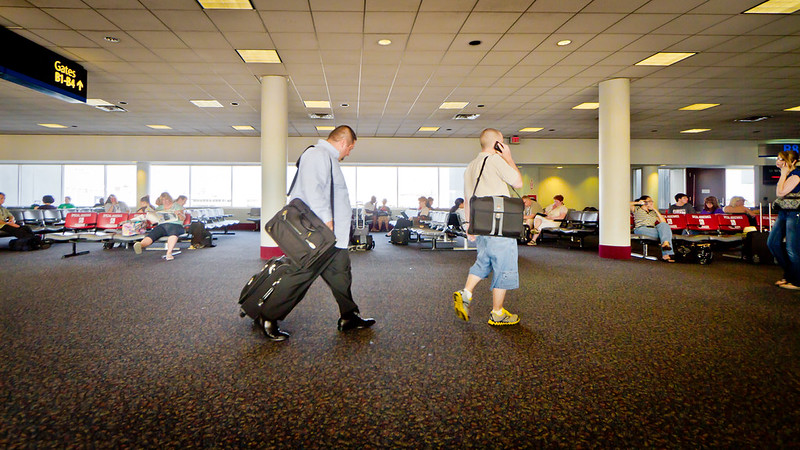
Once you drop your checked bag, you walk through the airport and onto the plane unburdened. No wrestling a heavy roller through security, no hunting for overhead space on a full flight, no gate-checking when the bins fill up. For travelers with mobility concerns or young kids, this ease can be worth every penny.
Gear-heavy trips demand it
Ski and snowboard trips, scuba gear, camping equipment, golf clubs, or a winter wardrobe of bulky layers rarely fit in a carry-on. If your trip revolves around equipment, checking a bag (or two) is often the only realistic option.
What Does Checking a Bag Actually Cost?
Fees vary widely, so always check your specific airline and fare, but here is the general landscape. Budget and basic-economy fares typically charge per checked bag each way, and the fee is usually cheaper if you pay online in advance rather than at the airport. Overweight and oversized bags trigger steep surcharges, so a luggage scale at home pays for itself quickly.
On the other side, many full-service international fares, premium cabins, and airline-branded credit cards include a free checked bag. If you fly the same airline often, a co-branded card that waives bag fees can pay for itself in a trip or two. Our guide to the best travel credit cards for families covers cards where a free checked bag is a standard perk. Always weigh the round-trip bag fee against the convenience before you decide.
How to Decide: Questions to Ask Yourself
Instead of a blanket rule, we run each trip through a few quick questions.
How long is the trip? For a weekend or a week, carry-on almost always wins. Beyond two weeks, the math and the comfort tilt toward checking, though skilled packers still go carry-on for a month.
How many stops and connections? If you are changing cities or hotels frequently, or you have tight connections, traveling light with a carry-on saves enormous hassle. One base for the whole trip makes a checked bag easier to justify.
What is the weather and what are you doing? One climate and casual clothes pack small. Multiple seasons, formal events, or bulky gear eat up space fast and may require checking.
Are you planning to shop? If you expect to bring home wine, ceramics, clothes, or gifts, either check a bag or pack a foldable duffel to check on the way home. Leave room for the trip to surprise you.
Who are you traveling with? Solo travelers and couples flex easily to carry-on. Families with young kids often benefit from checking bags to keep hands free and reduce the in-cabin juggling act.
Our Personal Rule of Thumb
After a lot of trips, here is where we landed. For any trip up to about ten days, we go carry-on only, full stop. We each take a quality carry-on and a personal item, use packing cubes, and plan to do a load of laundry if needed. It keeps us mobile, saves money, and removes the lost-bag worry entirely.
For trips longer than two weeks, winter or gear-heavy trips, or any trip where we know we will shop, we will check one shared bag while still keeping essentials, a change of clothes, and all valuables in our carry-ons. That way, even if the checked bag is delayed, we can function for a day or two. The carry-on is still doing the heavy lifting, and the checked bag is a bonus rather than a lifeline.
How to Make Carry-On Only Work
Going carry-on for a longer trip is a skill, and it is very learnable. A few habits make all the difference.
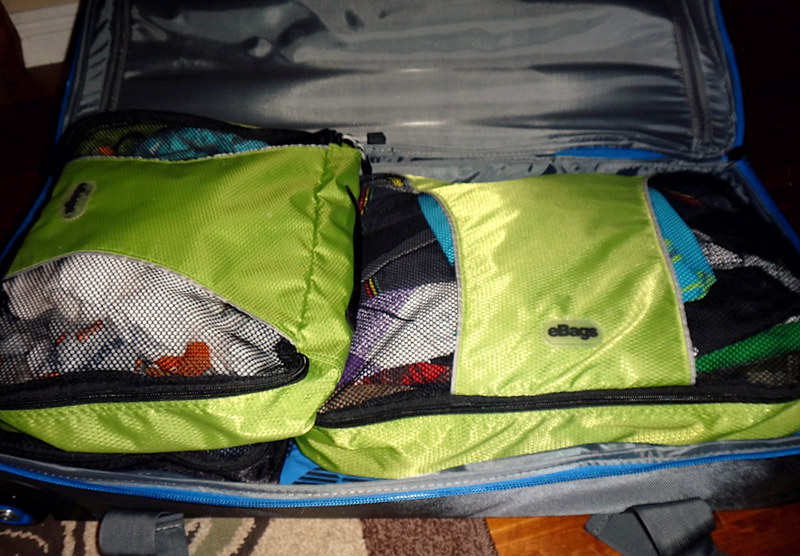
Choose versatile, layerable clothing in a coordinated color palette so everything mixes and matches. Use packing cubes to compress and organize, and roll rather than fold to save space. Wear your bulkiest items (jacket, boots) on the plane. Plan to do laundry once or twice, which lets a week’s worth of clothes cover two or three weeks. Decant toiletries into travel-size containers or buy them at your destination. For the full system, see our ultimate carry-on packing list and our roundup of the best carry-on luggage that maximizes every inch.
How to Check a Bag Smartly
If you do check, a little strategy prevents most of the headaches. Pay your bag fee online in advance to save money, and weigh your bag at home to dodge overweight charges. Always keep valuables, medications, electronics, travel documents, and one full change of clothes in your carry-on, never in the checked bag. Add a bright luggage tag or strap so your bag is easy to spot and identify, and consider a cheap Bluetooth tracker so you always know where it is. Photograph your packed bag and its contents in case you need to file a claim. Our post on the best travel gear we actually use includes the trackers and organizers we rely on.
Frequently Asked Questions
Can I bring a carry-on and a personal item? On most airlines, yes, a standard economy ticket includes one carry-on bag for the overhead bin plus one personal item (a backpack, tote, or laptop bag) that fits under the seat. Budget carriers and basic-economy fares are the big exception: many only include the personal item and charge extra for the overhead carry-on, so always read the fare rules before you book.
Is a backpack or a roller bag better for carry-on? It depends on your trip. Roller bags are easier on your back and great for cities, smooth airports, and business travel. Travel backpacks shine when you face cobblestones, stairs, trains, or lots of walking between stops, since your hands stay free. We own both and choose based on the destination.
What if my carry-on gets gate-checked? On full flights, the overhead bins fill up and the gate agent may ask to check carry-ons at the door. This is free, but your bag then rides in the hold and waits at the carousel. To avoid it, board in an earlier group and always keep valuables, medication, and documents in your personal item so a surprise gate-check never strands your essentials.
Does a carry-on count toward my weight limit? On many US domestic flights there is no strict carry-on weight limit, only a size limit. But plenty of international and budget airlines enforce a carry-on weight cap (often around seven to ten kilograms), so weigh your bag if you are flying those carriers.
Where to Book
Once your packing strategy is set, it is time to book the trip itself.
- Hotels: We use Booking.com to compare accommodations worldwide, most with free cancellation so you can lock in a rate and adjust later.
- Tours and experiences: Viator is our go-to for booking tours, skip-the-line tickets, and day trips at your destination.
The Verdict
There is no universal winner in the carry-on versus checked bag debate, only the right choice for the trip in front of you. Carry-on only saves money, saves time, and removes the risk of a lost bag, which is why it is our default for most travel. Checking a bag buys space, flexibility, and hands-free ease, which earns its keep on long, gear-heavy, or family trips.
Our advice: default to carry-on, and check a bag only when the trip genuinely calls for it. Master the art of packing light and you will find that most trips need far less than you think. Whichever you choose, packing with intention (rather than tossing in everything just in case) is the real secret to stress-free travel. Nail that, and you will glide through the airport while everyone else waits at the belt.
Ready to pack smarter? Pair this with our ultimate carry-on packing list, our guide to the best travel gear we actually use, and our tips on the best time to book flights so the whole trip comes together.