Disclosure: This post contains affiliate links. If you book through our links, we may earn a small commission at no extra cost to you. Thanks for supporting Faceted Travel!
Table of Contents
- When to Visit Budapest
- Getting to Budapest and Getting Around
- Buda vs Pest: Understanding the Two Halves
- Top Things to Do in Budapest
- What to Eat in Budapest
- A Perfect 3-Day Budapest Itinerary
- How Many Days Do You Need in Budapest?
- Where to Stay in Budapest
- Day Trips from Budapest
- Budapest on a Budget
- Practical Tips for Visiting Budapest
- Where to Book
- Final Thoughts
We almost skipped Budapest. It was a late add to a Central Europe trip, squeezed in after Vienna and Prague, and we figured it would be the third-best city of the three. We were wrong, and we have been telling people so ever since.
Budapest turned out to be our favorite of the bunch: grand and a little gritty, soaked in thermal spring water, lit up gold along the Danube at night, and a fraction of the price of its western neighbors. This Budapest travel guide covers when to go, how to get around, the thermal baths and ruin bars that make the city unique, what to eat, and a 3-day itinerary that hits the essentials without burning you out. Pour a coffee and let us talk you into the trip we almost missed.
When to Visit Budapest
Budapest works year-round, but the seasons feel quite different.
Spring (April to June) is lovely, with mild temperatures, blooming parks, and fewer crowds than summer. We think late spring is close to ideal.
Summer (July to August) brings warm, sometimes hot weather, lively outdoor terraces, and the city’s biggest festivals, including the enormous Sziget music festival in August. It is also the busiest and priciest stretch, though still affordable by Western European standards.
Fall (September to October) is our top pick. The summer crowds fade, the weather stays pleasant, and the thermal baths feel even better as the air cools. The light along the Danube in October is gorgeous.
Winter (November to February) is cold but atmospheric. The Christmas markets around Vorosmarty Square and St. Stephen’s Basilica are some of the best in Europe, and soaking in a steaming outdoor thermal bath while snow falls is an experience you will not forget.
Getting to Budapest and Getting Around
Budapest’s airport (BUD) sits about 30 minutes from the center and connects to most major European hubs, with a growing number of long-haul options. From the airport, the 100E direct bus runs to the city center cheaply, or a prebooked transfer or taxi is easy.
Budapest also sits on the classic Central European rail circuit. The train from Vienna takes about 2.5 hours, and Prague is roughly 6.5 hours by rail. If you are building a multi-city trip, our Vienna, Austria travel guide and Prague travel guide cover the two cities most travelers combine with Budapest.
Once you arrive, Budapest is wonderfully walkable, and its public transport is excellent and cheap. The metro (including Line 1, the oldest on continental Europe and a sight in itself), trams, and buses all run on a single ticket system. Tram 2, which glides along the Pest riverbank past Parliament, is practically a sightseeing tour for the price of a transit ticket. We mostly walked and used trams to save our feet.
Buda vs Pest: Understanding the Two Halves
Budapest is actually two former cities joined across the Danube. Knowing the difference helps you plan.
Buda, on the west bank, is the hilly, older, quieter half. This is where you will find Castle Hill, the Fisherman’s Bastion, and leafy residential neighborhoods with views back across the river.
Pest, on the east bank, is the flat, bustling, modern heart of the city. Most of the hotels, restaurants, ruin bars, the grand boulevards, Parliament, and the Jewish Quarter sit here. You will likely sleep in Pest and cross over to Buda for sightseeing.
The bridges between them, especially the iconic Chain Bridge, are attractions in their own right, particularly after dark.
Top Things to Do in Budapest
Soak in the Thermal Baths
Budapest sits on a network of natural hot springs, and its thermal bathhouses are the soul of the city. This is the one thing you absolutely cannot skip.
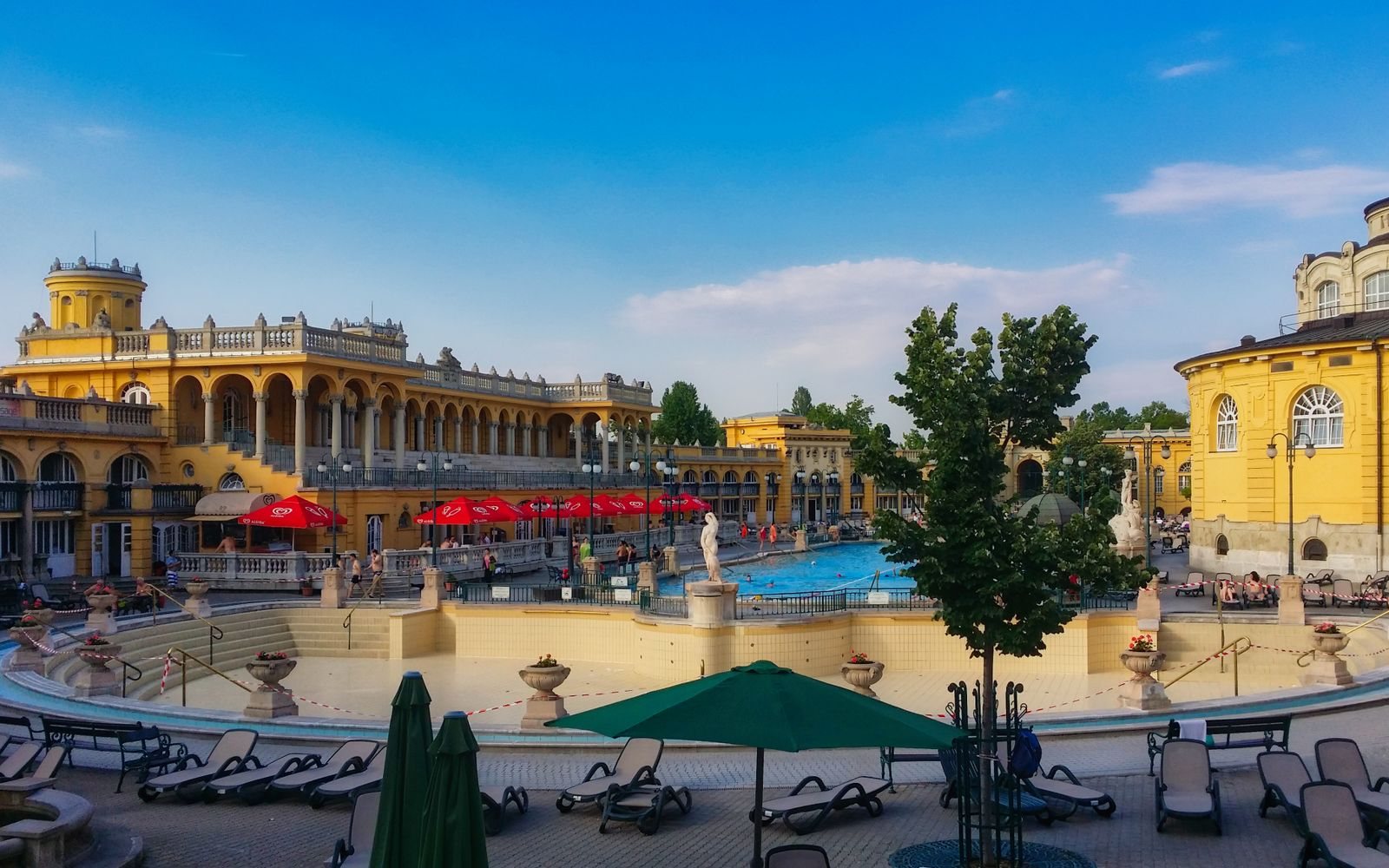
Szechenyi Baths, in City Park, is the grand one: a sprawling yellow palace with huge outdoor pools where locals play chess in the steam. Gellert Baths is the most beautiful, with Art Nouveau tilework that feels like bathing in a museum. Rudas Baths is the historic Ottoman-era option with a rooftop pool overlooking the Danube. Bring flip-flops, a towel (or rent one), and your sense of relaxation. We spent an entire afternoon at Szechenyi and consider it one of the best afternoons of the whole trip.
Explore the Castle District
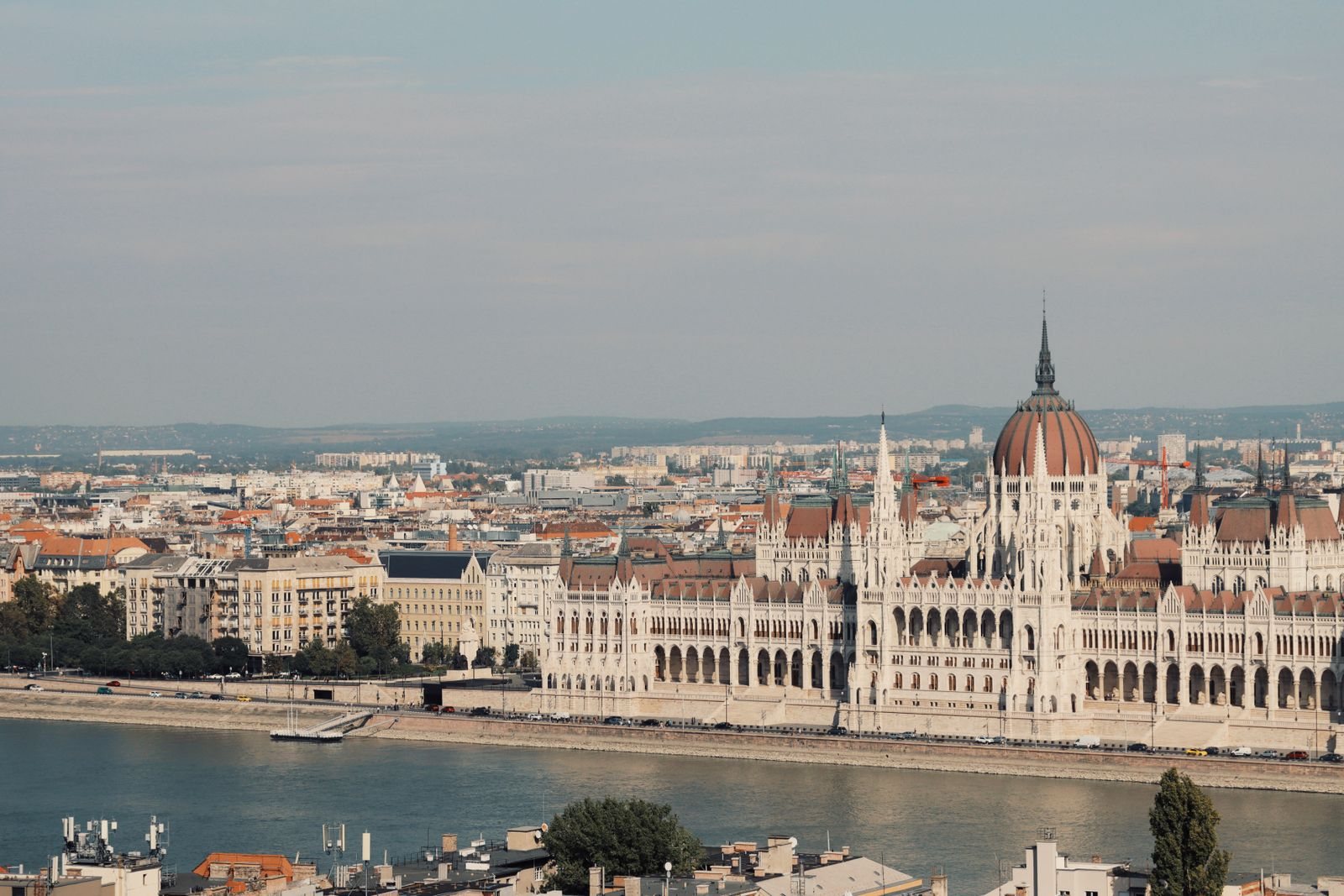
Up on Castle Hill in Buda, you will find Buda Castle, Matthias Church with its colorful tiled roof, and the fairy-tale Fisherman’s Bastion, whose white turrets frame the single best view of Parliament across the river. Take the funicular up or walk, wander the cobbled streets, and time your visit for late afternoon when the light is best and the tour groups thin out.
See Parliament and the Danube Promenade
The Hungarian Parliament Building is one of the most stunning in the world, a neo-Gothic masterpiece best viewed from the Pest promenade or, even better, from across the river in Buda. Book a guided interior tour in advance if you want to see the crown jewels and the grand staircase. Nearby, the Shoes on the Danube memorial is a moving tribute to victims of World War II and worth a quiet, respectful visit.
Ruin Bars in the Jewish Quarter
Budapest’s ruin bars are unlike nightlife anywhere else. Starting in the 2000s, locals turned crumbling, abandoned buildings in the old Jewish Quarter into eclectic bars filled with mismatched furniture, art installations, and string lights. Szimpla Kert is the original and the most famous, a sprawling warren of rooms that doubles as a farmers market on Sunday mornings. Even if you are not big drinkers, walk through one just to see it.
Central Market Hall
For food, color, and souvenirs, the Great Market Hall is a beautiful covered market on three levels. Browse paprika, Tokaji wine, and Hungarian salami downstairs, then head upstairs for cheap, hearty lunch stalls serving langos (more on that next).
What to Eat in Budapest
Hungarian food is hearty, paprika-forward, and deeply comforting. A few things to seek out:
- Goulash (gulyas): the national dish, a rich paprika beef and vegetable soup, not the thick stew you may know from elsewhere.
- Langos: deep-fried dough slathered with sour cream and cheese, the ultimate street snack. Get one at the Central Market Hall.
- Chicken paprikash: tender chicken in a creamy paprika sauce, usually served with little dumplings.
- Chimney cake (kurtoskalacs): a sweet spiral pastry roasted over coals and rolled in cinnamon or nuts.
- Hungarian wine: skip the assumption that Europe means only French and Italian. Tokaji dessert wine and Eger reds are excellent and cheap.
Budapest is also a serious coffee-house city, with grand historic cafes like the New York Cafe that are worth a visit for the setting alone.
A Perfect 3-Day Budapest Itinerary
Day 1: Pest. Start at St. Stephen’s Basilica, walk to Parliament and the Danube promenade, see the Shoes memorial, and explore the Jewish Quarter. Lunch at the Central Market Hall. End with dinner and a ruin bar in the evening.
Day 2: Buda. Cross the Chain Bridge, take the funicular up to Castle Hill, and explore Buda Castle, Matthias Church, and Fisherman’s Bastion. Spend the afternoon and evening at the Szechenyi or Gellert thermal baths. This is your big relaxation day.
Day 3: Your pace. Ride Tram 2 along the river, visit a museum or two (the House of Terror is sobering and important), browse Andrassy Avenue, and consider a Danube river cruise at sunset. The evening cruise, when Parliament and the bridges light up gold, is touristy and completely worth it.
How Many Days Do You Need in Budapest?
Two full days lets you hit the headline sights: one day in Pest for Parliament, the basilica, and the Jewish Quarter, and one day in Buda for Castle Hill and an afternoon at the baths. Three days is the sweet spot, adding a river cruise, a museum, and time to simply wander without rushing. If you are combining Budapest with Vienna and Prague, three days here is plenty and leaves room for the others. Could you happily spend a week? Absolutely, especially with day trips, but most travelers find three days hits the mark.
Where to Stay in Budapest
We recommend basing yourself in Pest, ideally in District V (the central Belvaros) or District VI/VII near the Jewish Quarter. You will be walking distance from most sights, restaurants, and nightlife.
District V is the most polished and central, great for first-timers. The Jewish Quarter (District VII) is the liveliest and best for nightlife, though it can be noisy on weekends. For a quieter, more local feel with easy transit, look just outside the very center. Budapest hotels and apartments are a tremendous value compared to Vienna or Prague, so your money goes further here than almost anywhere in Europe.
Day Trips from Budapest
If you have extra time, a few day trips are worth considering. The Danube Bend, including the artists’ village of Szentendre and the historic town of Esztergom with its massive basilica, makes an easy half or full day by train or boat. Lake Balaton, central Europe’s largest lake, is a summer escape about 1.5 hours away. And the Tokaj wine region appeals to anyone who falls for that golden dessert wine in the city.
Budapest on a Budget
Here is the best part: Budapest is one of the most affordable capital cities in Europe. A sit-down dinner with wine often costs a fraction of what you would pay in Western Europe, thermal bath entry is reasonable, and public transit is cheap. To stretch your forint even further, eat lunch at market stalls, buy a transit pass, and visit free sights like the promenade and the churches. For a fuller breakdown of what a Central Europe trip actually costs, our guide on how much a trip to Europe costs lays out real numbers, and we always recommend reading up on travel insurance for Europe before you go.
Practical Tips for Visiting Budapest
A few things we wish we had known before our first visit. Hungary uses the forint (HUF), not the euro, so carry some local cash for markets and small cafes even though cards are widely accepted. Always pay in forint rather than euros when given the choice, and decline the “pay in your home currency” option on card machines, since the exchange rate is poor. Tipping around 10 to 12 percent is customary in restaurants, and check whether a service charge is already added. Tap water is safe to drink. Budapest is a generally safe city, but watch for pickpockets on crowded trams and around the main tourist sights, and be cautious with unofficial taxis (book through the Bolt app or a reputable company instead). Finally, validate your transit ticket when you board, because inspectors do check.
Where to Book
These are the platforms we use to plan our own European trips:
- Hotels: Booking.com has the widest selection of Budapest hotels and apartments, with free cancellation on most. The value here is genuinely excellent.
- Tours and experiences: Viator offers Danube dinner cruises, thermal bath packages, guided Castle Hill walks, and day trips to the Danube Bend.
Final Thoughts
Budapest is the rare city that feels both grand and unpretentious, a place where you can tour a parliament that looks like a cathedral in the morning and soak in a steaming thermal palace by afternoon, all without emptying your wallet. It became our favorite stop on a trip full of beautiful cities, and we suspect it will surprise you the same way it surprised us. Give it three days, get in the water, and cross a bridge at night with the whole city glowing below.
Building a Central European adventure? Read our Vienna, Austria travel guide and Prague travel guide for the two cities most often paired with Budapest, and our Munich, Germany travel guide if you are extending the trip westward.