Disclosure: This post contains affiliate links. If you book through our links, we may earn a small commission at no extra cost to you. Thanks for supporting Faceted Travel!
Table of Contents
- Why Munich Belongs on Your Europe List
- The Best Things to Do in Munich
- Day Trips From Munich
- Where to Stay in Munich
- Where to Book Your Munich Trip
- What and Where to Eat in Munich
- When to Visit Munich
- Getting Around Munich
- Munich Travel Tips We Learned the Hard Way
- Munich on a Budget
- How Many Days Do You Need in Munich?
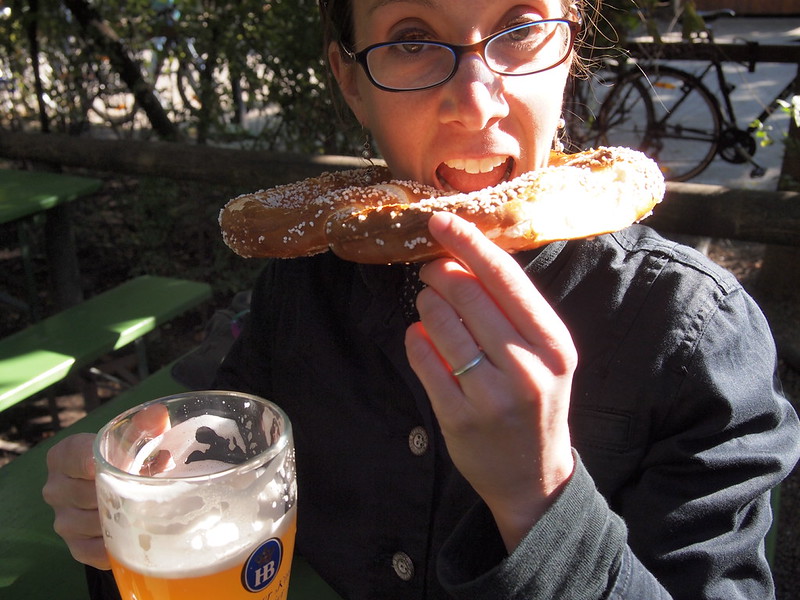
We stepped off the train at Munich Hauptbahnhof expecting a buttoned-up business city, and within two hours we were sharing a wooden table under chestnut trees with a retired Bavarian couple, a liter of helles in hand, while a brass band played in the distance. Munich does not ease you into Bavaria. It hands you a pretzel the size of your head and insists you relax.
This Munich travel guide covers the best things to do, the beer garden culture you absolutely should not skip, where to stay and eat, easy day trips to castles and the Alps, when to visit, and the practical tips we learned on the ground.
Why Munich Belongs on Your Europe List
Munich is Germany’s most livable big city, and you feel it immediately. The historic center is compact and walkable, the English Garden is bigger than Central Park, the Alps are visible from rooftops on a clear day, and the city runs with a precision that makes travel easy. Trains arrive when they say they will. Museums are world class. And then there is the beer culture, which is less about drinking and more about a centuries-old social ritual that happens outdoors, under trees, with families and dogs and strangers who become friends.
We came for Oktoberfest research and left convinced that Munich is even better the other 49 weeks of the year.
The Best Things to Do in Munich
Marienplatz and the Glockenspiel
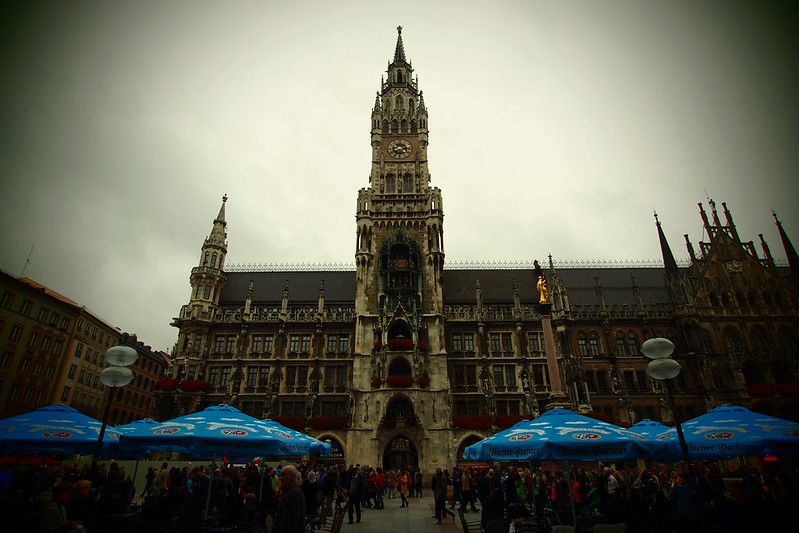
Munich’s central square has been the heart of the city since 1158. The neo-Gothic New Town Hall dominates one side, and at 11am (plus 12pm and 5pm in summer) its famous Glockenspiel clock springs to life with 32 life-sized figures reenacting a royal wedding and a coopers’ dance. Yes, it is touristy. Watch it once anyway, then climb the tower of St. Peter’s Church across the square for the best view of the old town with the Alps behind it.
The English Garden
One of the largest urban parks in the world, the Englischer Garten is where Munich actually lives. Locals sunbathe on the meadows, bike the shaded paths, and gather at the Chinese Tower beer garden, one of the city’s largest. The park’s most surprising sight is the Eisbach wave, a standing river wave near the south entrance where wetsuit-clad surfers ride year-round, even in snow. We watched for half an hour and could not look away.
The Residenz
The former royal palace of the Wittelsbach dynasty is one of Europe’s great palace museums, and it is somehow still underrated. The Antiquarium hall, a 66-meter Renaissance barrel vault covered in frescoes, made us gasp out loud. Give it two hours minimum, and add the Cuvilliés Theatre if you love over-the-top rococo.
Viktualienmarkt
Munich’s open-air food market has operated for over 200 years. Come hungry: there are stands for fresh pretzels, Bavarian cheeses, wurst of every kind, and the market’s own beer garden where the tap rotates between Munich’s six big breweries. We grabbed obatzda (a paprika-spiked cheese spread), a radish, and a warm pretzel and called it the best cheap lunch of the trip.
Beer Halls and Beer Gardens
The Hofbräuhaus is the famous one, and it is genuinely fun once you accept the oompah-band chaos. But the beer gardens are where Munich’s soul lives. Our favorites: Augustiner-Keller (the locals’ pick, near the station), the Chinese Tower in the English Garden, and Hirschgarten, the largest beer garden in the world with 8,000 seats and deer grazing next door. Beer garden etiquette: you can bring your own food to the self-service areas, but always buy your drinks.
World-Class Museums
The Kunstareal district packs three world-famous art museums (Alte Pinakothek, Neue Pinakothek, Pinakothek der Moderne) into a few blocks. Science and tech lovers should block a half day for the Deutsches Museum, one of the largest science museums on earth. On Sundays, many state museums charge just one euro admission, one of the best museum deals in Europe.
Olympiapark and BMW World
The 1972 Olympic grounds are now a gorgeous park with a tent-roofed stadium you can climb (and even zipline off). Next door, BMW Welt and the BMW Museum are free-to-enter showcases and genuinely fun even for non-car people.
Day Trips From Munich
Neuschwanstein Castle
The fairy-tale castle that inspired Disney sits two hours south of Munich, draped on a forested crag below the Alps. It is the most popular day trip in Germany, and it earns the hype. Book timed castle tickets well in advance, and walk up to Marienbrücke bridge for the iconic photo. Going with a guided tour from Munich removes all the logistics stress.
Dachau Memorial
The Dachau Concentration Camp Memorial, 25 minutes from the city, is a sobering and important visit. Entry is free, the audio guide is excellent, and we would call it essential for understanding 20th-century history. Allow at least half a day.
The Bavarian Alps
Garmisch-Partenkirchen, about 90 minutes by train, is the gateway to the Zugspitze, Germany’s highest peak, reachable by cogwheel train and cable car. The nearby Partnach Gorge is a stunning, easy walk between dripping rock walls. If you love alpine scenery, this pairs beautifully with the rest of a Bavaria itinerary, and if you are continuing south, our Switzerland on a budget guide covers the next country over.
Salzburg, Austria
Mozart’s hometown is under two hours by train, making an easy international day trip. Baroque churches, a clifftop fortress, and Sound of Music scenery. Trains run hourly with the regional Bayern ticket keeping costs low.
Where to Stay in Munich
Altstadt (Old Town): The most convenient base, steps from Marienplatz and the Viktualienmarkt. Prices are highest here, but you walk everywhere.
Hauptbahnhof area: The neighborhood around the main station is not charming, but it is packed with well-priced hotels and is ultra-connected for day trips. We stayed here and had zero regrets.
Schwabing: The leafy, bohemian district near the English Garden, full of cafes and indie boutiques. Great for a slower, more local-feeling stay.
Haidhausen: Across the Isar river, quiet and pretty, with the Deutsches Museum nearby and excellent restaurants.
Book early if your dates are anywhere near Oktoberfest (late September to early October), when prices triple and the city sells out months ahead.
Where to Book Your Munich Trip
Hotels: Search Munich hotels on Booking.com. Staying inside the Altstadt ring or near the Hauptbahnhof keeps everything walkable or one S-Bahn stop away.
Tours & Activities: Browse Munich tours on Viator including skip-the-line Neuschwanstein day trips, Dachau memorial tours with transport, beer hall and brewery tours, and Bavarian Alps excursions.
Getting Here Cheaply: Munich airport is a major hub with frequent nonstops from the US, and fare sales pop up often. Our guide to finding cheap flights covers the exact strategies we use.
Travel Insurance: For any international trip, especially one with alpine day trips, we recommend coverage. See our travel insurance guide for what we actually buy.
What and Where to Eat in Munich
Bavarian food is hearty, unpretentious, and perfect after a day of walking. The classics to try: weisswurst (white veal sausage, eaten before noon with sweet mustard and a pretzel), schweinshaxe (crispy pork knuckle), käsespätzle (the Alpine answer to mac and cheese), and apfelstrudel with vanilla sauce.
For a proper sit-down Bavarian dinner, we loved Wirtshaus in der Au, famous for dumplings, and Augustiner Bräustuben, where the beer comes straight from wooden barrels in the brewery next door. For something lighter, the cafes of Schwabing and the stalls of Viktualienmarkt have you covered. Munich also has a serious coffee scene now, plus some of the best Turkish and Vietnamese food in Germany around the station.
When to Visit Munich
May through September is prime time: beer gardens in full swing, alpine day trips at their best, and long daylight hours. Oktoberfest (mid-September to early October) is a bucket-list experience but completely changes the city; book everything far ahead and expect crowds. December brings one of Europe’s loveliest Christmas market scenes, with the Marienplatz market glowing under the New Town Hall. We visited in early summer and would pick that window again: warm days, lively gardens, manageable crowds.
Winter outside of December is quiet and cheap, and the museums plus beer halls make Munich a surprisingly good cold-weather city break.
Getting Around Munich
Munich’s public transit (U-Bahn, S-Bahn, trams, buses) is fast, clean, and integrated under one ticket system. A day pass covers unlimited rides and pays for itself in three trips, and the city center is so compact that we walked most of it. Bikes are everywhere, and the flat terrain plus the English Garden paths make cycling a joy in good weather. You do not need a car unless you are doing a larger Bavaria road trip, and even then the regional trains with a Bayern day ticket cover most highlights for less.
From the airport, the S1 and S8 trains reach the center in about 40 minutes. If you land jet-lagged, the airport’s own Airbräu brewery (the only brewery inside an airport in Europe) pours a surprisingly good welcome beer while you wait for your train. It set the tone for our whole trip.
Munich Travel Tips We Learned the Hard Way
Cash still matters in Germany: many beer gardens, market stalls, and casual restaurants are cash-only or card-reluctant, so hit an ATM early. Shops close on Sundays (museums and restaurants stay open), so plan errands accordingly. Validate paper transit tickets in the blue stamping machines before boarding. Tap water is excellent but rarely offered in restaurants; ask for leitungswasser. And if you visit a beer garden, do not sit at a table marked Stammtisch, which is reserved for regulars. Pack layers even in summer, since alpine weather swings fast. Our Europe packing list covers exactly what to bring.
Munich on a Budget
Munich is one of Germany’s priciest cities, but it is full of free and cheap wins. The English Garden, Viktualienmarkt browsing, the Glockenspiel, Olympiapark, and BMW Welt all cost nothing. State museums drop to one euro on Sundays. Beer gardens let you bring your own picnic food, which turns dinner for two into a 15-euro evening with a world-class atmosphere. Lunch menus (Mittagsmenü) at sit-down restaurants run a third cheaper than dinner, and bakery chains sell excellent pretzel sandwiches for pocket change. For day trips, the Bayern regional day ticket covers unlimited regional trains across all of Bavaria for one flat price, and it gets cheaper per person as you add travelers. Skip taxis entirely; transit covers everything.
How Many Days Do You Need in Munich?
Two full days covers the old town, the English Garden, the Residenz, and a proper beer garden evening. Three days adds the museum quarter and Olympiapark at a relaxed pace. With four or five days, Munich becomes the perfect base for Neuschwanstein, the Alps, and Salzburg, which is exactly how we would plan it. Munich rewards slowing down: the entire point of Bavarian culture is gemütlichkeit, that untranslatable coziness of good company, good food, and nowhere urgent to be.
Munich surprised us in the best way: a big city that feels like a friendly town, with the Alps as a backdrop and a liter of sunshine-colored beer never far away. Prost!
For more European city inspiration, pair Munich with our guides to Vienna, Prague, and Zurich and Bern on a budget for an unforgettable Central Europe trip.