Disclosure: This post contains affiliate links. If you book through our links, we may earn a small commission at no extra cost to you. Thanks for supporting Faceted Travel!
Table of Contents
- The Short Answer
- Where Albania’s Reputation Comes From
- Crime: What to Actually Expect
- Is Tirana Safe?
- Road Safety: The Real Risk
- Nature and Outdoor Safety
- Is Albania Safe for Women and Solo Travelers?
- Is Albania Safe for LGBTQ+ Travelers?
- Health and Practical Safety
- How Albania Compares to Its Neighbors
- Common Questions About Safety in Albania
- Our Top Safety Tips for Albania
- Where to Book
- Final Thoughts
When we told friends back in Denver we were spending a few weeks in Albania, the most common reaction was a nervous laugh and the question, “Is that safe?” A few of them had clearly seen Taken one too many times. Then we got there, and the scariest thing that happened was an old man in Gjirokaster insisting we drink a third glass of homemade raki at ten in the morning.
The short answer is yes: Albania is a safe country for travelers, and in some ways safer than the places people visit without a second thought. But “safe” is not the same as “zero risk,” and there are a few things worth knowing before you go. Here is our honest take, from someone who has actually driven the roads, hiked the mountains and wandered the cities after dark.
The Short Answer
Albania is generally very safe for tourists. Violent crime against visitors is rare, petty crime is lower than in most of Western Europe, and Albanian hospitality is famous for good reason. The real risks are more mundane: driving, road conditions, the sea and the mountains. If you take those seriously, you will likely find Albania one of the most relaxed and welcoming places you have ever traveled.
Before any trip, check the current US State Department travel advisory for Albania and register with the STEP program. Advisories change, and it is worth reading the specifics rather than relying on reputation.
Where Albania’s Reputation Comes From
Albania spent nearly five decades under one of the most isolated communist regimes in the world, followed by a chaotic transition in the 1990s. The 1997 financial collapse, when pyramid schemes wiped out savings across the country, led to widespread unrest. Organized crime networks with Albanian links have also had a lot of press abroad.
That history shaped how the rest of the world sees Albania, but it does not describe the country travelers find today. Albania is a NATO member, an EU candidate country, and one of the fastest growing tourism destinations in Europe. Tourists are welcomed, not targeted, and organized crime has essentially nothing to do with visitors.
Crime: What to Actually Expect
Petty theft
Pickpocketing and bag snatching are uncommon compared to Rome, Barcelona or Paris, but they do exist in busy places like Tirana’s bus stations, crowded beaches in Saranda and Ksamil in August, and the minibuses. Use common sense:
- Keep your phone and wallet in front pockets or a zipped bag.
- Do not leave valuables unattended on the beach.
- Use the hotel safe for passports and spare cards.
- Lock your rental car and keep bags out of sight.
Scams
Albania has fewer tourist scams than most of Europe. The ones to watch for are minor:
- Taxis without meters. Agree on a price before you get in, or use a ride app where available in Tirana.
- Beach chair pricing. In Ksamil, some beach clubs quote one price and charge another. Confirm first.
- Currency confusion. Prices are sometimes quoted in “old lek” (ten times the current value) by older Albanians. If a number sounds absurd, ask.
Violent crime
Violent crime against tourists is very rare. Where it does occur in Albania, it is almost always tied to disputes between people who know each other.
Blood feuds
You may read about the Kanun, the traditional code of northern Albania, and the blood feuds associated with it. These are real but increasingly rare, and they involve specific families in specific communities. They do not involve tourists. When we visited Theth, the lock-in tower (where men once hid during feuds) was a museum, not a warning. Read more in our Theth and Valbona guide.
Is Tirana Safe?
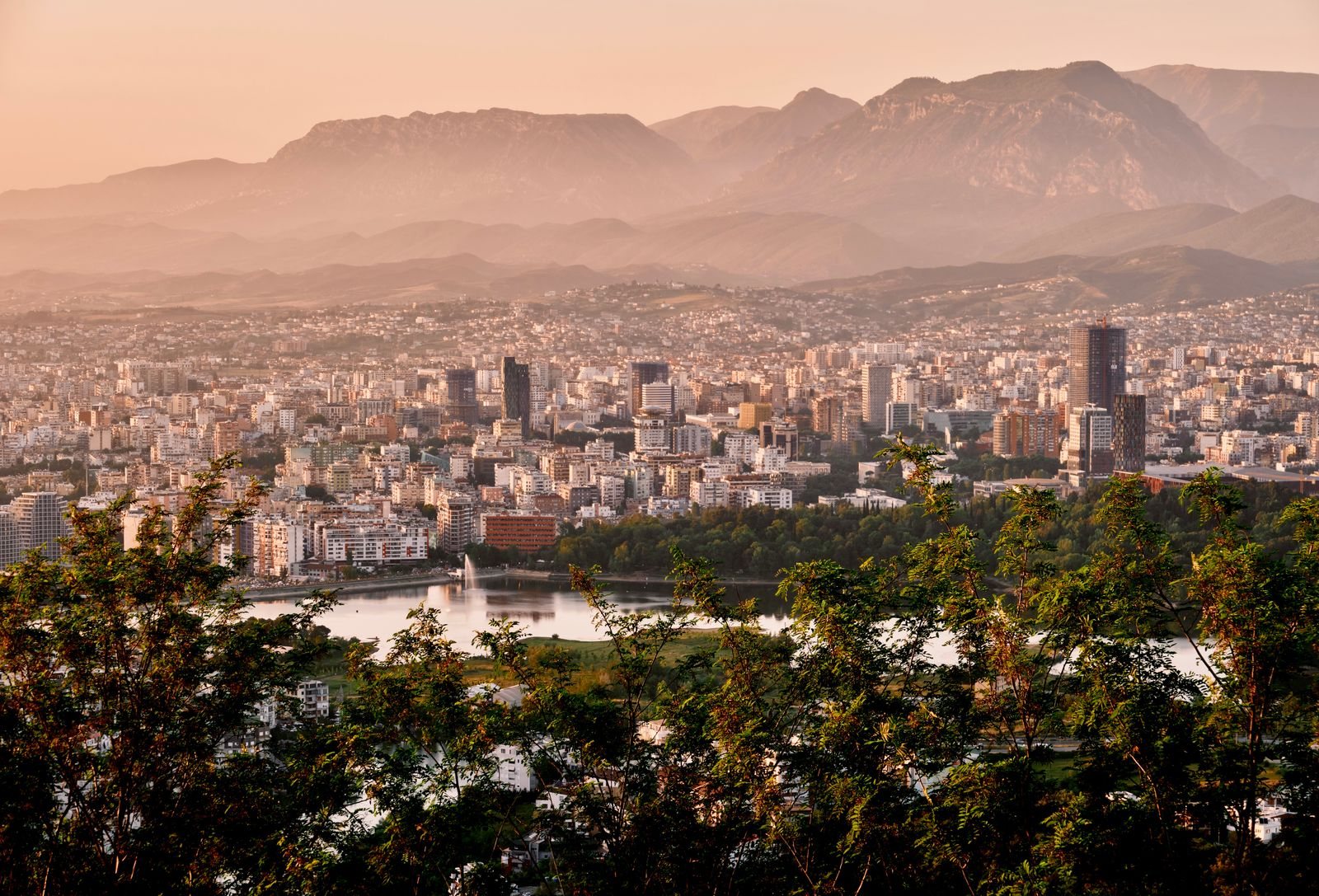
Tirana is one of the safest capital cities we have visited in Europe. We walked all over the center, including the Blloku bar district late at night, and never felt uneasy. The streets are busy well past midnight, families are out walking in the evenings, and the police presence is visible.
The main hazards in Tirana are traffic (crossing the street takes confidence) and uneven sidewalks. Our Tirana travel guide covers the best neighborhoods to stay in.
Road Safety: The Real Risk
If there is one thing to take seriously in Albania, it is the roads. This is where travelers are genuinely most at risk.
- Driving style is aggressive. Expect overtaking on blind curves, sudden stops and loose lane discipline.
- Road conditions vary wildly. The main highways are good, but secondary roads can have potholes, missing guardrails and gravel.
- Animals share the road. Cows, goats, sheep and donkeys are common, especially in the south and the mountains.
- Night driving is risky. Many roads are unlit, and pedestrians walk on the shoulder.
None of this means you should not drive; a car is the best way to see the country. It means drive defensively, avoid night driving, take the full rental insurance and give yourself extra time. Our Albania road trip itinerary plans for exactly this.
Minibuses (furgons) are the main public transport between towns. They are generally safe, though drivers can be fast. Sit near the front if you get carsick on mountain roads.
Nature and Outdoor Safety
The sea
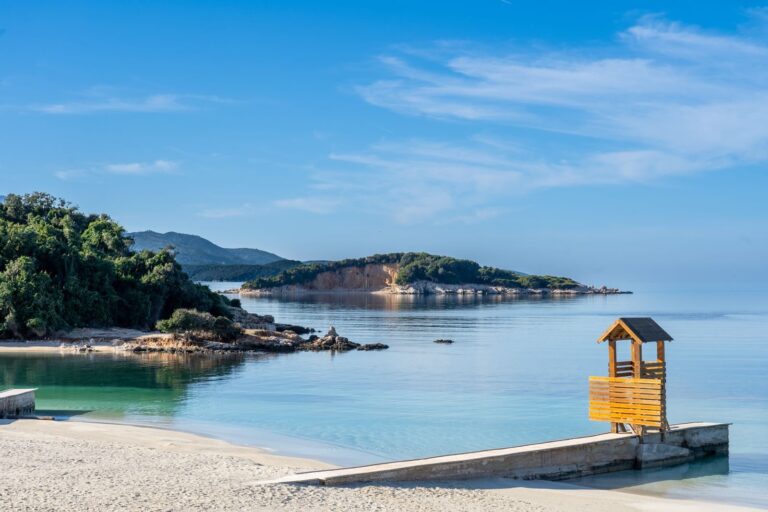
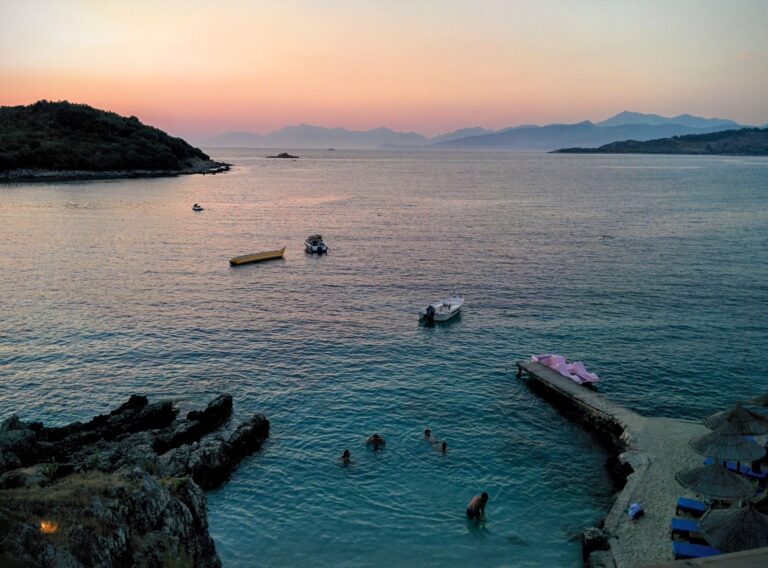
The Ionian coast is gorgeous and mostly calm, but a few beaches have strong currents on windy days. Few Albanian beaches have lifeguards outside the main resort areas. Watch for sea urchins on rocky entries; water shoes help.
The mountains
The Albanian Alps are remote. Mobile signal is patchy, rescue can take a long time, and weather changes fast. If you are hiking Valbona to Theth or other trails in the north:
- Only go in good weather and in the summer season.
- Tell your guesthouse your plan and expected arrival time.
- Carry water, layers, a map and a charged phone.
- Consider a guide if you are not an experienced hiker.
Stray dogs
Stray and shepherd dogs are common, especially in rural areas and on hiking trails. Most are harmless, but shepherd dogs guarding flocks can be aggressive. Give flocks a wide berth, do not run, and pick up a stone (or pretend to), which usually sends them away.
Heat
July and August temperatures regularly hit the mid 30s Celsius (mid 90s Fahrenheit) and higher inland. Drink plenty of water, avoid midday sightseeing, and plan beach time around the heat. This is one reason we prefer shoulder season; see the best time to visit Albania.
Is Albania Safe for Women and Solo Travelers?
Many women travel solo in Albania and report feeling safe. Albanian culture is traditional and hospitable, and harassment is less common than in parts of southern Europe. Dress is relaxed in Tirana and on the coast, while slightly more modest clothing is appreciated in rural villages and mosques.
Solo travelers of any gender will find Albania easy: hostels are social, guesthouse hosts look out for guests, and locals are eager to help. The usual precautions apply, like sharing your plans with someone and keeping an eye on your drink in bars.
Is Albania Safe for LGBTQ+ Travelers?
Albania has anti-discrimination laws and Tirana hosts an annual Pride event, but broader attitudes remain conservative, especially outside the capital. Most LGBTQ+ travelers visit without problems, but public displays of affection may draw attention in smaller towns.
Health and Practical Safety
- Tap water: Generally treated in cities, but most locals and travelers drink bottled water. We did too.
- Food safety: Excellent overall. Busy local restaurants are your best bet.
- Healthcare: Tirana has decent private hospitals and clinics. Rural areas have limited facilities, so serious issues usually mean a transfer to Tirana.
- Emergency numbers: Police 129, ambulance 127, fire 128.
- Pharmacies: Common in towns and well stocked.
Healthcare is the reason travel insurance matters here. A medical evacuation from the mountains or a flight home would be expensive. We recommend a policy with good medical and evacuation coverage; see our guide to the best travel insurance for Europe.
How Albania Compares to Its Neighbors
If you have felt comfortable in Croatia, Montenegro or Greece, you will feel comfortable in Albania. The safety picture is broadly similar across the region, with the main differences being road quality and infrastructure rather than crime. We wrote a similar breakdown for Bosnia, and the conclusions are much the same.
Common Questions About Safety in Albania
Is it safe to use ATMs and cards?
Yes. ATMs in towns and cities are reliable; stick to machines attached to banks and cover the keypad as you would anywhere. Cards are widely accepted in Tirana, hotels and larger restaurants, but small guesthouses, cafés and village shops often want cash. Carry enough lek for a day or two and keep a backup card somewhere separate.
Are the border crossings safe?
Yes. The crossings from Montenegro, Greece, Kosovo and North Macedonia are routine. Expect queues in summer, especially at the Greek border on weekends, and have your passport and car papers ready. Rental cars need a green card to cross.
Is it safe to take the ferry from Corfu?
Yes. The Corfu to Saranda ferries are run by established operators, take roughly 30 minutes to just over an hour depending on the boat, and are one of the most popular ways into the country. Book ahead in peak season.
Should I worry about earthquakes?
Albania is seismically active, and a strong earthquake struck near Durres in 2019. Serious quakes are rare, but it is worth knowing the basics: if you feel shaking indoors, drop, cover and hold on, and move outside once it stops.
Our Top Safety Tips for Albania
- Drive defensively and avoid driving at night.
- Take full coverage on your rental car.
- Carry some cash, but not all your cash.
- Agree on taxi prices before you get in.
- Only hike the mountains in good weather, with a plan.
- Watch for currents and urchins at the beach.
- Buy travel insurance with medical evacuation cover.
- Check the current State Department advisory before you go.
Where to Book
For well reviewed stays in safe, central neighborhoods, we use Booking.com. Filter by review score and location, and look for places with 24 hour reception or free parking. Search Albania stays on Booking.com.
If you would feel more comfortable with a local guide for part of your trip, especially for the mountains or Butrint, Viator has well rated tours throughout the country. Browse Albania tours and day trips on Viator.
Final Thoughts
Albania is safe, friendly and far more relaxed than its reputation suggests. The biggest risks are on the road and in nature, not from people. Go with a little common sense and an open mind, and you will likely come home telling your friends the same thing we did: go, and go soon.
Ready to plan? Start with how to plan a trip to Albania, check how much a trip to Albania costs, and then head for the beach with our Albanian Riviera guide.