Disclosure: This post contains affiliate links. If you book through our links, we may earn a small commission at no extra cost to you. We only recommend places and things we've personally used or vetted.
The Big Island is where Hawaii stops being a beach destination and becomes something else entirely. Yes, there are beaches — including some of the most otherworldly beaches you'll ever see, black sand and green sand included. But the Big Island is also home to an active volcano that's been continuously erupting for decades, the clearest night skies in the Northern Hemisphere, a snow-capped summit you can drive to, a rain forest that receives 180 inches of precipitation per year, and a coffee growing region that produces some of the most prized beans in the world.
The island is enormous — nearly twice the size of all other Hawaiian Islands combined — which means you genuinely need a car, you'll spend meaningful time driving, and the two sides of the island feel so different they might as well be separate destinations. This guide is built to help you decide which parts to prioritize and how to actually see them.
When to Visit the Big Island
Best overall: April–June and September–October. The weather is excellent on the west (Kona) side year-round — sunny, warm, and dry. The east (Hilo) side is greener and wetter regardless of season; these months offer the best balance.
Winter (December–February): Humpback whales arrive in Hawaiian waters from December through April — one of the most spectacular wildlife events in the Pacific. The Kona coast is still sunny; Hilo and the Hamakua coast can be wetter. Summit snowfall on Mauna Kea is possible and surreal.
Summer (June–August): The Kona coast is at its most reliably sunny. This is peak season — book accommodations in advance, particularly for popular areas like Waikoloa and Kailua-Kona.
Volcanic activity note: Check the USGS Hawaiian Volcano Observatory before your trip for current eruption status at Kilauea. When active, lava viewing is one of the most extraordinary experiences on the island; when not actively erupting, the park itself is still magnificent — just different.
The Two Sides of the Big Island
Understanding the island's geography is essential to planning your trip:
West Side (Kona and Kohala Coast): Sunny, dry, and resort-heavy. The Kohala Coast has the big luxury resorts (Mauna Kea, Mauna Lani, Four Seasons Hualalai) and the best white-sand beaches. Kailua-Kona town is the activity hub — snorkeling, sport fishing, manta ray dives, and the Kona coffee belt. Most visitors spend most of their time here.
East Side (Hilo and Puna): Lush, green, rainy, and dramatically different in character. Hilo is a charming working town with excellent farmers markets, the best Japanese food in Hawaii, and proximity to Hawaii Volcanoes National Park. The Puna district hosts active volcanic activity and some of the most otherworldly landscapes in the state.
The advice: Don't try to drive the whole island in a day — it's 225 miles around. Base yourself on the west side and do a dedicated Hilo/volcano day trip, or split your stay between both sides.
Best Things to Do on the Big Island
Hawaii Volcanoes National Park
The crown jewel of the Big Island and one of the most extraordinary national parks in the country. Kilauea is one of the world's most active volcanoes, and the park encompasses two volcanic calderas, extensive lava tube systems, fern forests, and (when eruptions are active) actual flowing lava.
Must-sees within the park:
- Kilauea Overlook: The main caldera view — especially dramatic at night when glow from the lava lake illuminates the steam.
- Thurston Lava Tube: A walk-through lava tube draped in ferns at the entrance — otherworldly and accessible.
- Chain of Craters Road: A 19-mile descent from the summit to the coast, through lava flows of different ages and colors.
- Devastation Trail: A short boardwalk through a cinder cone field — lunar landscape within a fern forest.
Arrive early. The park fills up and sunrise at the caldera is exceptional. Book a guided tour through Viator for access to ranger knowledge and off-the-beaten-path lava hikes.
Manta Ray Night Snorkel (Kona)
This is the Big Island experience people mention first when asked about Hawaii highlights — and it's warranted. Manta rays (wingspans of 8–14 feet) come to a specific spot off the Kona coast each night to feed on plankton. Snorkelers float face-down holding a lit board while the mantas barrel-roll beneath them within inches of your mask.
There is nothing like it. Book through GetYourGuide or Viator — choose operators who brief you thoroughly on manta-safe behavior. No touching, ever.
Black Sand Beaches: Punaluu
On the south side of the island, Punaluu Beach is a striking stretch of jet-black volcanic sand — formed when lava hit the sea and shattered. Green sea turtles regularly haul out on the beach to rest; it's one of the most reliable places in Hawaii to observe them on land. Don't touch or approach the turtles (federal law, serious fine). The beach itself has no services — bring water and shade.
Green Sand Beach (Papakolea)
One of only a handful of green sand beaches in the world, Papakolea gets its color from olivine crystals in the eroded volcanic cinder cone. The hike to reach it is 2.5 miles each way over rough terrain, with no shade — go early morning with plenty of water, or hire a local truck at the trailhead for a bumpy but much faster ride.
Stargazing on Mauna Kea
Mauna Kea's summit (13,796 feet) hosts the world's most significant astronomical observatory complex, and the skies are legendary — the clearest, darkest, driest in the Northern Hemisphere. The Visitor Information Station at 9,200 feet runs free public stargazing programs on most clear nights. For the full summit experience, go at sunset and stay for darkness — but acclimatize at the visitor station for at least 30 minutes first.
Guided summit tours handle the driving and altitude logistics — book through Viator.
Note: The summit road requires a 4WD vehicle. Many rental car agreements prohibit driving to the summit; check before you go.
Snorkeling at Two-Step (Honaunau)
A natural rock formation creates a two-step entry into the ocean near Puuhonua o Honaunau National Historical Park on the south Kona coast. The snorkeling is excellent — spinner dolphins often sleep in the bay in the morning, sea turtles are common, and the reef is healthy and colorful. Arrive before 9am for calm water and the best dolphin chances.
Waipio Valley
On the Hamakua coast north of Hilo, Waipio is a hidden valley accessible only via a brutally steep road (25% grade) to the black sand beach and taro farms below. The valley view from the lookout at the top is one of the most dramatic in Hawaii — lush walls descending to a beach framed by waterfalls. A guided Waipio tour from Hilo is the most straightforward way to experience it.
Kona Coffee Belt
The slopes of Hualalai volcano above Kailua-Kona grow some of the most coveted coffee in the world. The combination of volcanic soil, elevation, and afternoon cloud cover creates conditions that produce a remarkably smooth, low-acid cup. Farm tours run along the Belt Road between Kona and Captain Cook. Mountain Thunder Coffee Plantation and Greenwell Farms are both excellent.
Best Beaches on the Big Island
The Big Island has fewer classic white-sand beaches than Maui or Kauai — but what it has is exceptional and often less crowded.
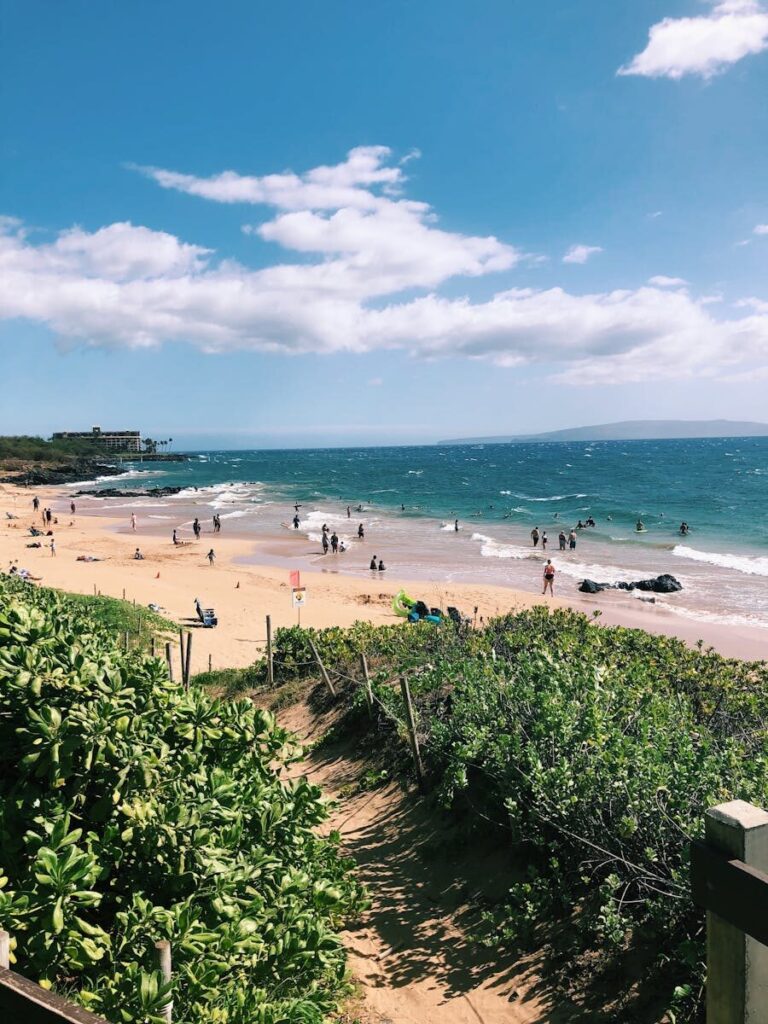
Hapuna Beach State Park: The best white-sand beach on the island — wide, long, excellent swimming and snorkeling, good facilities. Can get crowded on weekends; arrive early.
Mauna Kea Beach: A stunning crescent of white sand in front of the historic Mauna Kea Resort. Public beach access exists (limited parking passes available at the resort entrance).
Punaluu Black Sand Beach: Black sand and turtles on the south coast.
Spencer Beach Park: A calm, family-friendly beach near the Kohala coast resorts, good for young swimmers.
Where to Stay on the Big Island
Kohala Coast (West Side Luxury)
The Mauna Kea Beach Hotel is a Hawaiian icon — the original luxury resort on the island, with impeccable beach access and a sense of place that newer properties can't replicate. The Four Seasons Resort Hualalai, Mauna Lani, and Fairmont Orchid are all excellent.
Kailua-Kona (West Side Mid-Range)
Kona town has condos, mid-range hotels, and vacation rentals at prices significantly below the Kohala Coast resorts. You sacrifice the beach-right-there luxury but gain a town with excellent restaurants and activity options.
Hilo (East Side)
Hilo has very affordable hotels — several historic downtown properties with character and easy access to the national park and farmers market. A good base if volcano access is your priority.
Browse Booking.com — filter by area (Kona vs. Hilo vs. Kohala) carefully, as the island is large enough that location significantly affects your experience.
Where to Eat on the Big Island
Merriman's (Waimea): One of the pioneering farm-to-table restaurants in Hawaii, sourcing from Big Island farms and fishermen since 1988. Excellent for a special dinner.
Hilo Farmers Market (Wednesday and Saturday mornings): One of the best farmers markets in Hawaii — locally grown tropical fruits, prepared foods, fresh flowers, and exceptional variety. An essential Hilo experience.
Umekes Fish Market Bar and Grill (Kona): Outstanding poke bowls in Kailua-Kona — generous portions of fresh ahi at prices that are fair for the quality.
Big Island Brewhaus (Waimea): A local brewery with excellent craft beer and surprisingly good food in a fun, casual setting.
Kona coffee anywhere: Order it black if you can, from any local roaster. The mainland stuff called "Kona blend" is not the same.
Combining the Big Island with Other Hawaiian Islands
The Big Island is a natural pairing with Maui, Kauai, or Oahu. Hawaiian inter-island flights are short (30–45 minutes) and affordable. Our full guides:
- One Week in Maui Itinerary — the classic pairing with Big Island
- Best Things to Do in Kauai — the most natural and remote of the main islands
- Oahu Travel Guide — Pearl Harbor, North Shore surf, and Honolulu's food scene
Quick 5-Day Big Island Itinerary
Day 1: Arrive Kona, Kailua-Kona town, sunset at Puuhonua o Honaunau
Day 2: Manta ray night snorkel (book for the evening), daytime Two-Step snorkeling, Kona coffee farm tour
Day 3: Full day Hawaii Volcanoes National Park — arrive at sunrise for caldera glow, Chain of Craters Road, Thurston Lava Tube, Hilo dinner
Day 4: Hilo Farmers Market, Waipio Valley lookout (and valley tour), Hamakua coast waterfalls
Day 5: Mauna Kea stargazing (afternoon drive up, sunset, stars), Hapuna Beach morning
Practical Tips
Rent a car: Non-negotiable. The island is too large and the sights too spread out for anything else.
Check volcanic activity: USGS volcanic observatory updates are the most accurate source. When active, the park adds viewing opportunities that don't exist otherwise.
Altitude on Mauna Kea: Acclimatize at 9,200 feet before going to the summit. Pregnant women, young children, and anyone with cardiac or respiratory issues should not go above the visitor station.
Sunscreen: Reef-safe only in Hawaii — it's the law. Standard sunscreens containing oxybenzone and octinoxate are banned.
Where to Book
- Hotels: Booking.com — filter by Kona vs. Hilo and read the map carefully
- Tours: Viator and GetYourGuide for manta rays, volcano tours, and Mauna Kea stargazing
- Flights: Our cheap flights guide — fly into Kona (KOA) or Hilo (ITO) depending on your first-night plans
Final Thoughts
The Big Island is the Hawaii that surprises people the most — visitors who come expecting another Maui find an island of staggering geological variety, genuinely uncrowded spaces, and experiences (active volcano, manta rays, green sand, 14,000-foot summit) that exist nowhere else in the state.
Give it at least five days. Drive both sides. Watch the sun set over the caldera at least once. Float above the mantas on a dark ocean and wonder what exactly you're doing with your life.
It'll make you want to see the rest of Hawaii too — and we have guides for all of it.