Cape town travel guide — we’ve been researching and testing travel strategies for years, and this guide covers everything you need to know. This post contains affiliate links. If you book or buy something through our links, we may earn a small commission at no extra cost to you. Thanks for supporting Faceted Travel!
Table of Contents
- Why Cape Town Belongs on Your Africa Itinerary
- Table Mountain: The Essential Cape Town Experience
- Cape Point and the Cape Peninsula
- Boulders Beach: African Penguins
- The Cape Winelands: Stellenbosch and Franschhoek
- Bo-Kaap: Cape Town’s Most Colorful Neighborhood
- Safari from Cape Town
- Where to Stay in Cape Town
- Cape Town Travel Tips
- Where to Book Your Cape Town Trip
Cape Town is the kind of city that recalibrates your sense of what a city can be. Mountains rising straight from the ocean. Vineyards an hour from the beach. Wildlife within driving distance of world-class restaurants. We went expecting to love it and came home genuinely overwhelmed by how much more it delivered than we’d anticipated.
This is your complete Cape Town travel guide — covering the iconic sights, the wine lands, the wildlife, and everything you need to plan an unforgettable trip to one of Africa’s most spectacular cities.
Why Cape Town Belongs on Your Africa Itinerary
Cape Town offers a combination of experiences that exists nowhere else on Earth: dramatic natural scenery (Table Mountain, Cape Point, the Atlantic coastline), world-class wine within day-trip distance, Big Five safari within a few hours’ drive, and an urban energy that’s cosmopolitan, creative, and genuinely surprising.
The food scene has exploded over the past decade. The beaches — Clifton, Camps Bay, Boulders Beach with its penguin colony — are extraordinary. And the people, from the warmth of the Cape Malay community in Bo-Kaap to the energy of the local craft beer scene, make Cape Town one of the most memorable cities we’ve ever visited.
Table Mountain: The Essential Cape Town Experience
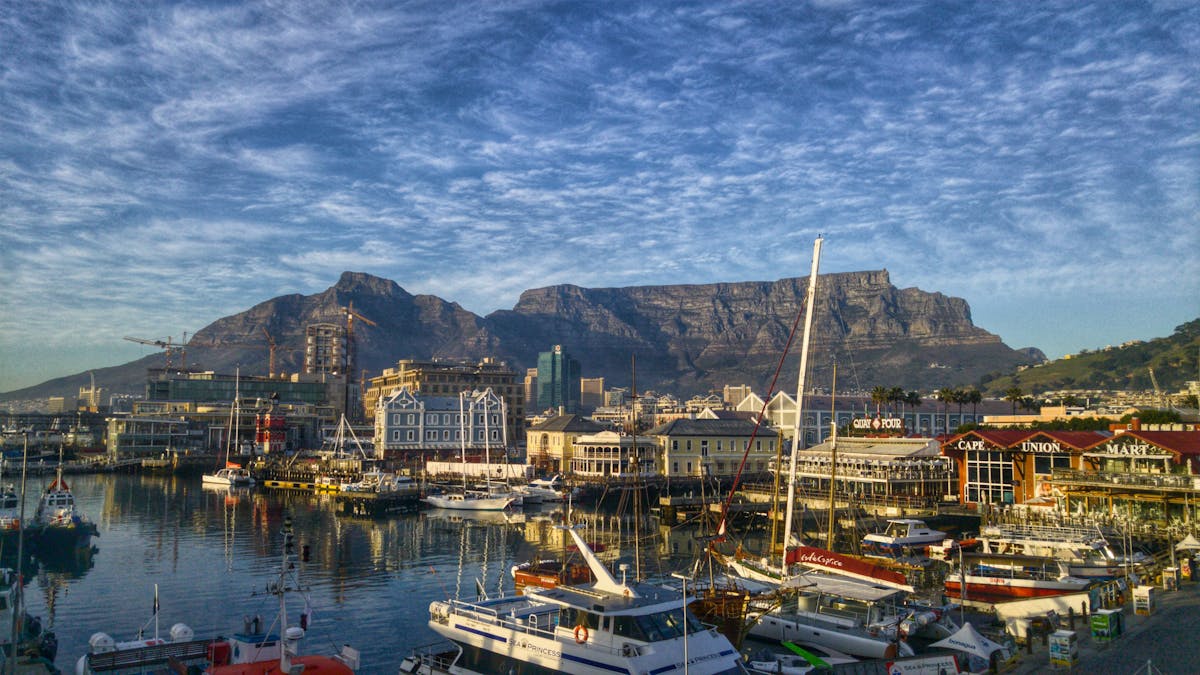
Table Mountain dominates Cape Town’s skyline and skyline and your first day. The cable car to the summit takes about five minutes and deposits you on a flat-topped plateau with 360-degree views that take your breath away — the city spread below, the Atlantic on three sides, and on clear days, views stretching to the Winelands and beyond.
Book cable car tickets in advance — the cable car closes in strong winds (frequently) and the queue without advance tickets can be long. Download the Table Mountain Aerial Cableway app to check real-time wind closures. Alternatively, several hiking routes ascend the mountain if you prefer earning the view.

Book a guided Table Mountain experience through Viator’s Cape Town tours for options combining the cable car with city highlights.
Cape Point and the Cape Peninsula
The Cape Peninsula day trip is one of the most spectacular drives in Africa. The route takes you along Chapman’s Peak (a dramatic cliff-road above the Atlantic), through Noordhoek, past the penguin colony at Boulders Beach in Simon’s Town, and out to Cape Point — the dramatic headland at the southwestern tip of Africa where two oceans famously meet.
Cape Point is inside the Table Mountain National Park (entry fee applies). The hike up to the old lighthouse takes about 30 minutes and gives stunning views. Budget a full day for the peninsula loop — there’s too much to rush. This is one of the best self-drive routes in South Africa if you’re comfortable driving on the left.
Book a guided Cape Peninsula tour through Viator Cape Town if you’d prefer a driver — highly recommended so you can focus on the scenery.
Boulders Beach: African Penguins
The African penguin colony at Boulders Beach in Simon’s Town is one of Cape Town’s most delightful surprises — hundreds of penguins nesting, waddling, and swimming among the boulders while visitors watch from boardwalks just meters away. African penguins (also called jackass penguins for their donkey-like bray) are an endangered species, making this encounter genuinely meaningful as well as adorable. Entry fee applies; book in advance at Cape Nature.
The Cape Winelands: Stellenbosch and Franschhoek
The Cape Winelands are just 45 minutes from Cape Town and home to some of the finest wine in the Southern Hemisphere. Stellenbosch is the main wine town — beautiful Cape Dutch architecture, a historic university town atmosphere, and dozens of excellent estates producing world-class Cabernet Sauvignon, Chenin Blanc, and Pinotage.
Franschhoek is smaller, more upscale, and arguably even more beautiful — a French Huguenot village in a narrow valley surrounded by mountains and vineyards. The Franschhoek Wine Tram connects many estates and is a wonderful way to spend a lazy afternoon. The restaurant scene in Franschhoek is exceptional — this is widely considered one of the best food destinations in South Africa.
Book a guided Winelands tour through Viator’s Cape Town wine tours so you can drink freely without worrying about driving.
Bo-Kaap: Cape Town’s Most Colorful Neighborhood
Bo-Kaap is the neighborhood of brightly painted houses on the slopes of Signal Hill, home to Cape Town’s Cape Malay community. The pastel facades (every house a different color) are one of Cape Town’s most iconic images. The neighborhood has a fascinating history as a community of freed slaves and political exiles who developed a distinct culture, cuisine, and identity over centuries. The Bo-Kaap Museum tells this story well. Come early morning for the best light and fewer crowds.
Safari from Cape Town
Cape Town is uniquely positioned as a safari gateway — several private reserves offering Big Five experiences are within a 2–4 hour drive. Aquila Private Game Reserve (2 hours) and Inverdoorn (3 hours) are the most popular options for a day or overnight safari from the city.
For a more immersive safari experience, Kruger National Park requires a flight (2 hours to Johannesburg, then another short hop). But even a day trip safari from Cape Town will give you lion, elephant, rhino, buffalo, and giraffe sightings — a genuinely extraordinary day. Book through Viator’s Cape Town safari day trips.
Where to Stay in Cape Town
- V&A Waterfront: Most convenient, safest, excellent restaurants and shopping. Best for first-timers.
- Gardens / City Bowl: Central, close to Table Mountain cable car, good value.
- Camps Bay / Atlantic Seaboard: Beach access, sunset views, glamorous. More expensive.
- De Waterkant: Boutique neighborhood, great food scene, LGBTQ+ friendly.
Book on Booking.com or Expedia for the best rates.
Cape Town Travel Tips
- Safety awareness: Cape Town has high inequality and petty crime — stay aware in crowds, don’t display expensive electronics, use Uber rather than street taxis
- Rent a car for the Cape Peninsula — you’ll want the flexibility
- Best time to visit: November through April (Southern Hemisphere summer) — warm and dry. Winter (May–October) brings cooler temperatures but beautiful green landscapes and lower prices
- Load-shedding (Eskom power outages) is a reality — your hotel will have backup power, but be aware when planning activities
- Travel insurance is essential — see our complete travel insurance guide
Where to Book Your Cape Town Trip
- Safari tours, wine tours & city excursions: Viator Cape Town
- Hotels: Booking.com | Expedia
- Flights: Our guide to finding cheap international flights
Cape Town earns its reputation as one of the world’s great cities, and no description fully prepares you for the experience of standing at the cable car summit with the city and ocean and mountains spreading in every direction. Plan at least a week — you’ll need it.
Planning resources: For the latest details, visit Cape Town Tourism official site, Table Mountain National Park (SANParks), and South African Tourism – Cape Town guide.